
Key facts at a glance
By car you only get as far as the Kesselfall Alpenhaus. After that come a shuttle bus, the Laerchwand inclined lift and a connecting bus to the Mooserboden, roughly 45 to 75 minutes per direction. Allow five to six hours for the whole excursion and pay close attention to the time of the last descent. Summer operation only, roughly mid-May to mid-October, depending on snow.
Part of our complete guide: Mooserboden & the Kaprun High Alpine Reservoirs at 2,040 m
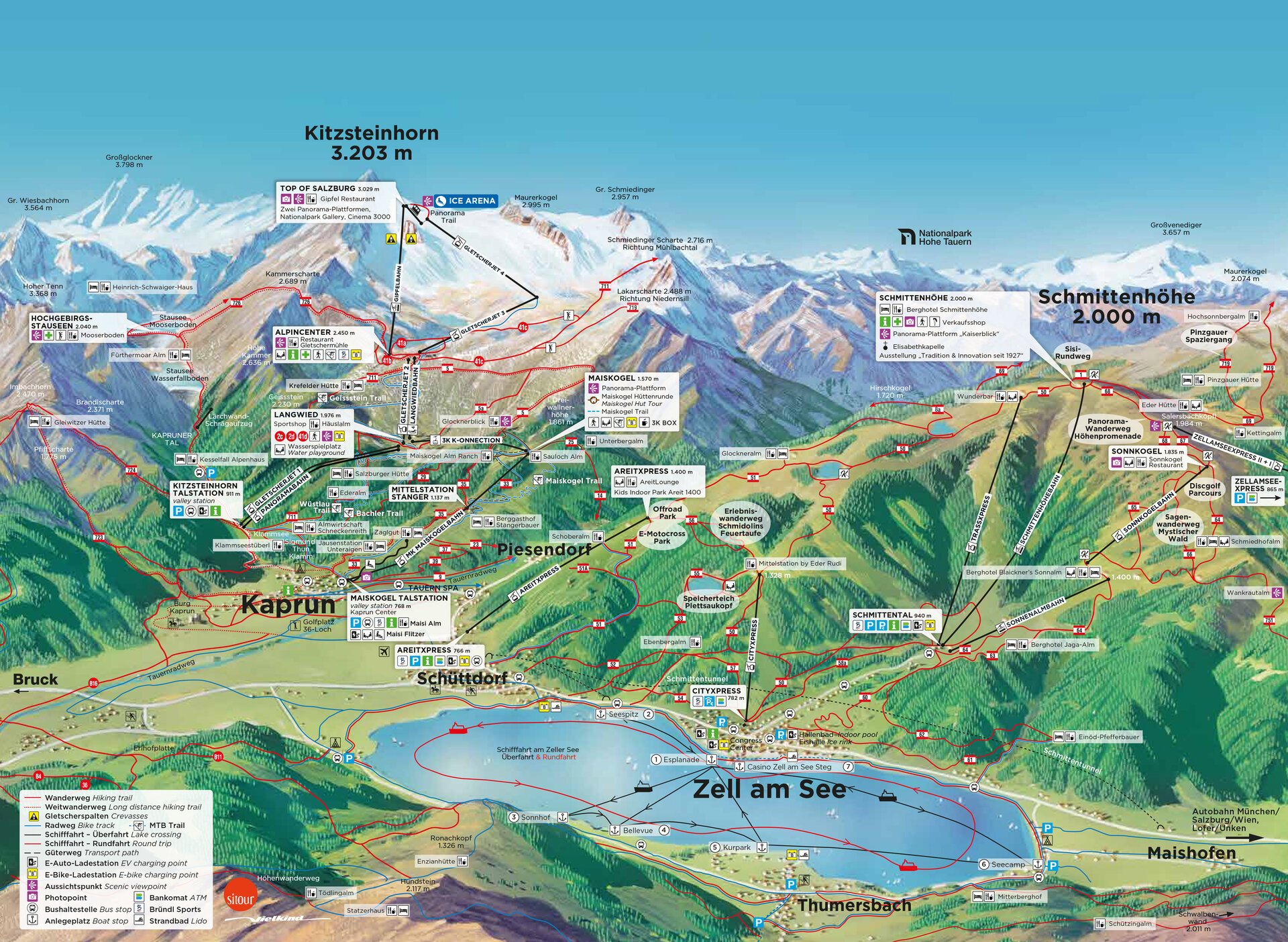
The journey to the Kaprun high mountain reservoirs is no ordinary mountain road: in your own car you only get as far as the car park at the Kesselfall Alpenhaus. From there a multi-part chain leads upwards: a shuttle bus, the Laerchwand inclined lift, a connecting bus and finally a short walk to the dam at the Mooserboden. For the ascent alone allow around 45 to 75 minutes including waiting, and for the whole excursion with a stay at the top realistically five to six hours. And the most important point first: the last descent in the afternoon is a hard limit around which the whole day has to be arranged.
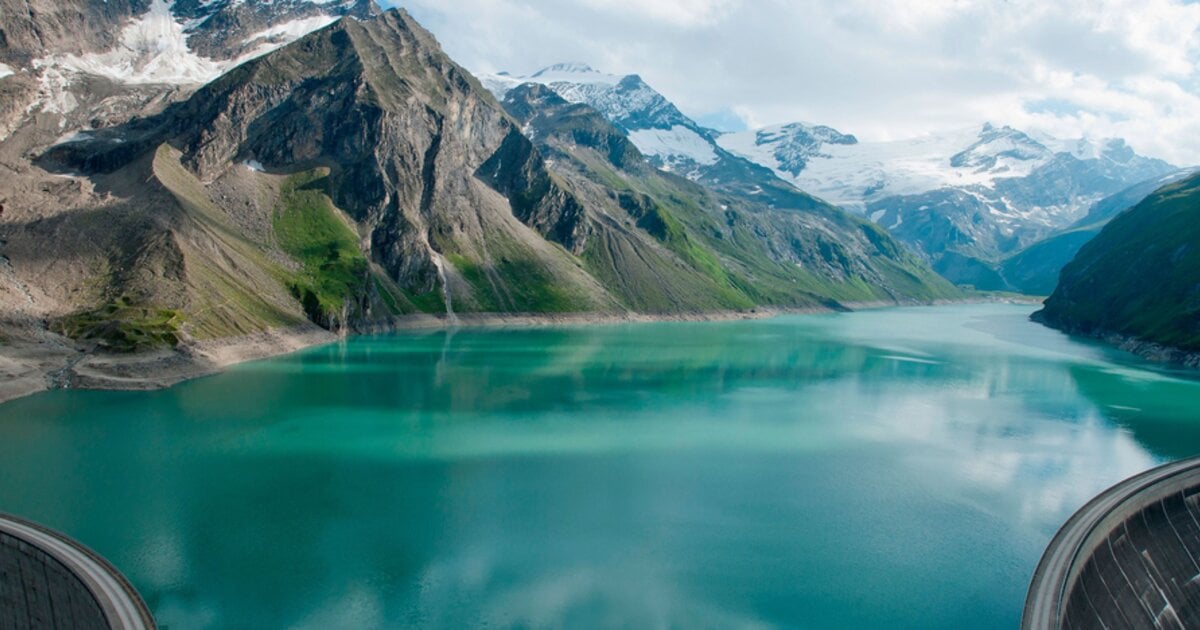
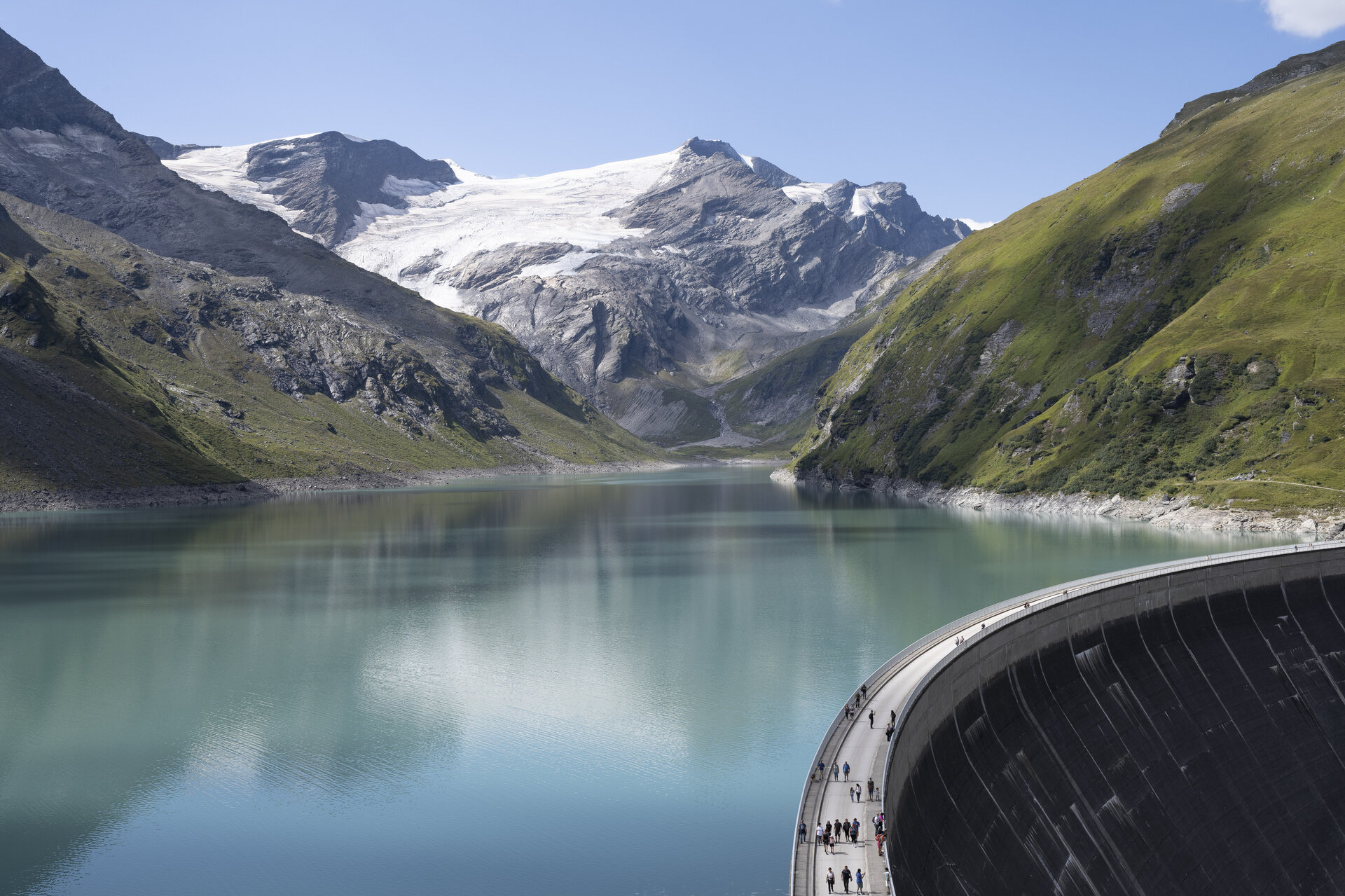
What awaits you up top, the two reservoirs Wasserfallboden and Mooserboden, the dams and the circular paths, is described in the detailed article Kaprun high mountain reservoirs. This article is the purely practical supplement: how do you get up there, how long does it really take, and when does nothing run at all?
The journey in four stages
The reason for the changeover marathon is simple: the works road above the Kesselfall Alpenhaus is a narrow operational road belonging to the power station operator and is closed to private traffic. There is simply no way to drive to the Mooserboden in your own vehicle, not even early in the morning and not with friendly persuasion.
- Stage 1: Kaprun town centre to the Kesselfall Alpenhaus car park, around 6 km by car, roughly 10 to 15 minutes.
- Stage 2: Kesselfall Alpenhaus to the base station of the Laerchwand inclined lift, shuttle bus, roughly 10 minutes.
- Stage 3: up the Laerchwand inclined lift, a few minutes of travel.
- Stage 4: top station to the Mooserboden, connecting bus along the Wasserfallboden reservoir, roughly 20 to 25 minutes.
On top of that come waiting times at every change. Buses and the inclined lift run at a close interval, but not continuously, and once a full lift load has disembarked you may be waiting for the second or third bus.
Stages 1 and 2: to the Kesselfall Alpenhaus and on by shuttle bus
From Zell am See it is around 8 km to Kaprun, and from Kaprun a further 6 km or so uphill on the Kesselfallstrasse to the Kesselfall Alpenhaus. That is the last point where you can leave your car. If you are travelling without a car, a bus line runs in the summer season from Zell am See via Kaprun to the Kesselfall; please check the timetable currently, as the service is seasonal and changes from year to year. If you are weighing up whether a hire car pays off, our article do you need a car in Zell am See? gives an honest answer.
At the Kesselfall Alpenhaus you buy your ticket at the counter and board the shuttle bus, which takes about ten minutes to the base station of the inclined lift. This is the shortest stage, but in high summer often the most sluggish, because this is where the crowds build.
Stages 3 and 4: the inclined lift and connecting bus
The Laerchwand inclined lift is the centrepiece of the whole journey and an attraction in itself: an open inclined railway that hauls a large cabin holding well over a hundred people up the steep rock face, covering several hundred metres of altitude. The ride lasts only a few minutes but feels longer, because the valley opens spectacularly beneath you. If you are not entirely head for heights, stand in the middle of the cabin.
The connecting buses wait at the top. They run on the works road along the Wasserfallboden reservoir, through hairpins and short tunnels, to the Mooserboden at a good 2,000 metres. Allow roughly 20 to 25 minutes. From the stop it is only a few minutes on foot to the dam and the circular path.
How much time you really need
This is the most common misjudgement: guests calculate an hour up, an hour at the top, an hour down, and then find themselves under time pressure. Realistically it looks like this:
- Ascent from the Kesselfall including tickets and waiting: roughly 45 to 75 minutes.
- Time at the top, if it is to be worthwhile: at least 2 hours, or 3 to 4 hours for the circuit at the Mooserboden.
- Descent: another 45 to 75 minutes, and more on peak days.
In total that is half to a whole day, so plan five to six hours from Kaprun, or nearer seven with the circular walk and a stop to eat. For day planning that means the reservoirs are not an afternoon excursion you slot in quickly.
The last descent: plan the return backwards
There is no self-service principle up top. There is a last descent, and if you miss it you have a genuine problem, because no public road leads down that you could walk in any reasonable time. The last bus from the Mooserboden usually leaves in the late afternoon depending on the season, roughly between 4pm and 5pm, and earlier in the shoulder months. The exact time changes through the season and is published daily by the operator, so never rely on a time from last year travel blog, including this one.
So plan the day backwards: last descent, minus 15 minutes of buffer to reach the stop, minus your desired time at the top, minus the ascent time, which gives the latest sensible start time at the bottom. If you want to walk the circuit you should be at the Kesselfall by the morning at the latest. The last descent is posted at the ticket counter, so memorise the time when you buy your ticket, because nobody up the mountain will ask you about it.
Season, tickets and parking at the Kesselfall
The facility is a purely summer operation. The 2026 season runs from 22 May to 11 October according to the operator, depending on snow conditions. In snowy years it starts later, and an early onset of winter can end it sooner. Outside that period the road is closed, no bus runs and the inclined lift stands idle. In January or April a trip up simply makes no sense. Always check the operating status directly with the operator before setting off, since closures can occur at short notice mid-season for storms, thunderstorms or maintenance.
The ticket is a combined ticket for the whole chain, that is the buses plus the inclined lift, return. The guided dam tour is not part of it and is paid for separately. The ascent itself is included in the Zell am See-Kaprun Summer Card, which overnight guests at a partner property receive free of charge. There is a catch in the small print: from 15 July to 15 September the reservoirs – like three other headline attractions – can only be used from the second day of your stay, according to the operator. If you want to go up on your arrival day in that window, you pay the normal fare.
The Bergsteigerbus: the early weekend bus
If you are planning a longer walk at the Mooserboden, the regular ascent gets you up there too late. That is what the Bergsteigerbus is for: an early bus that runs from June to September on Saturdays and Sundays, leaving the Kassa Kesselfall at 6:45 – roughly an hour and a half before normal operations start. The catch is the booking: it has to be made online by 12:00 the previous day, or the bus does not run for you.
When it is busy, in high summer, fine weather, at weekends or in the holidays, the car park is often full by late morning and queues form at the changes. It pays to be there right at opening time in the morning or to switch to a weekday. In poor weather the trip is hardly worthwhile: in cloud you will see nothing at all of the turquoise water. Then it is better to fall back on the ideas in Zell am See in the rain.
Weather and equipment above 2,000 metres
The Mooserboden lies at a good 2,000 m, around 1,200 metres above Kaprun and therefore typically eight to twelve degrees cooler than in the valley. There is almost always wind over the dam, which feels considerably colder again. Step out of the car in a t-shirt and you will be cold up top, guaranteed.
- A windproof jacket and an extra jumper, even on high-summer days.
- Sturdy shoes with a profiled sole, as the paths are well built but gravelly and damp in places.
- Sun protection and sunglasses: UV radiation is noticeably stronger at this altitude.
- Drinks and a snack, even though there are places to eat up top.
- Some cash, and the time of the last descent in your head.
You need no mountain experience. The path over the dam and the circuit along the shore are easy to walk and suitable for families; more demanding routes are in our overview of hiking in Zell am See-Kaprun. The real bottleneck is the timeframe, not fitness.
The Sigmund Thun Gorge on the same day: does it fit?
Yes, and better than most other combinations, because both lie on the same road: you pass the Sigmund Thun Gorge on the way to the Kesselfall Alpenhaus anyway. For the gorge including the return via the Klammsee you need roughly one and a half to two hours.
The order is decisive: the reservoirs first, the gorge afterwards. The reservoirs have a fixed time limit, while the gorge has more generous opening hours and lies practically on the way home. The other way round, a morning in the gorge costs you exactly the hours you will then lack up at the Mooserboden. If you want to do both in a day you still need a genuinely early start, otherwise you see two fine destinations by halves instead of one properly. It is more relaxed to spread them across two days and devote the third to the Kitzsteinhorn.
Frequently Asked Questions
Can you drive your own car to the Kaprun high mountain reservoirs?
No. The last car park for private cars is at the Kesselfall Alpenhaus. The works road above it belongs to the power station operator and is closed to private traffic. From there you continue exclusively by shuttle bus, the Laerchwand inclined lift and a connecting bus.
How long does the journey to the Mooserboden take?
From the Kesselfall Alpenhaus allow roughly 45 to 75 minutes per direction including buying tickets and waiting. With a sensible stay at the top that makes five to six hours in total, or nearer seven with the circular walk at the Mooserboden.
When is the last descent?
Depending on the season usually in the late afternoon, roughly between 4pm and 5pm, and earlier in the shoulder months. The exact time changes through the season and is published daily by the operator, so note it when you buy your ticket. Miss it and you will not get back down.
In which months are the reservoirs accessible?
Summer operation only: according to the operator the 2026 season runs from 22 May to 11 October, and it depends heavily on snow. Outside that period the road and the inclined lift are closed. Always check the operating status directly with the operator before setting off, as closures can occur at short notice mid-season for storms or maintenance.
Roughly what does the excursion cost?
There is a combined ticket for the whole chain of buses and the inclined lift. According to the operator adults pay € 22,- one way and € 39,50 return; children born 2011-2020 pay € 12,- and € 22,-, those born from 2021 travel free, and the family card is € 101,-. The guided dam tour is not included (€ 12,- for adults, € 8,- for children). Parking at the Kesselfall is free for the first hour, then € 5,- per day, up to a maximum of € 20,-.