Key facts at a glance
Zell am See-Kaprun combines two very different mountains: the Kitzsteinhorn above Kaprun with glacier skiing to 3,029 m, snow-sure from October into May, and the Schmittenhöhe above Zell am See with around 77 kilometres of tree-lined pistes and valley runs into town. Locally you ski roughly 130 piste kilometres; the frequently quoted 408 kilometres apply only with the Ski ALPIN CARD including the Skicircus in the Glemmtal – yet in winter that card is simply the lift pass for both mountains, since neither sells one of its own; the trip to the Glemmtal is worth it from about four to six ski days with a car or ski bus. In October and November the glacier alone is running; full operation on both mountains usually starts in December.
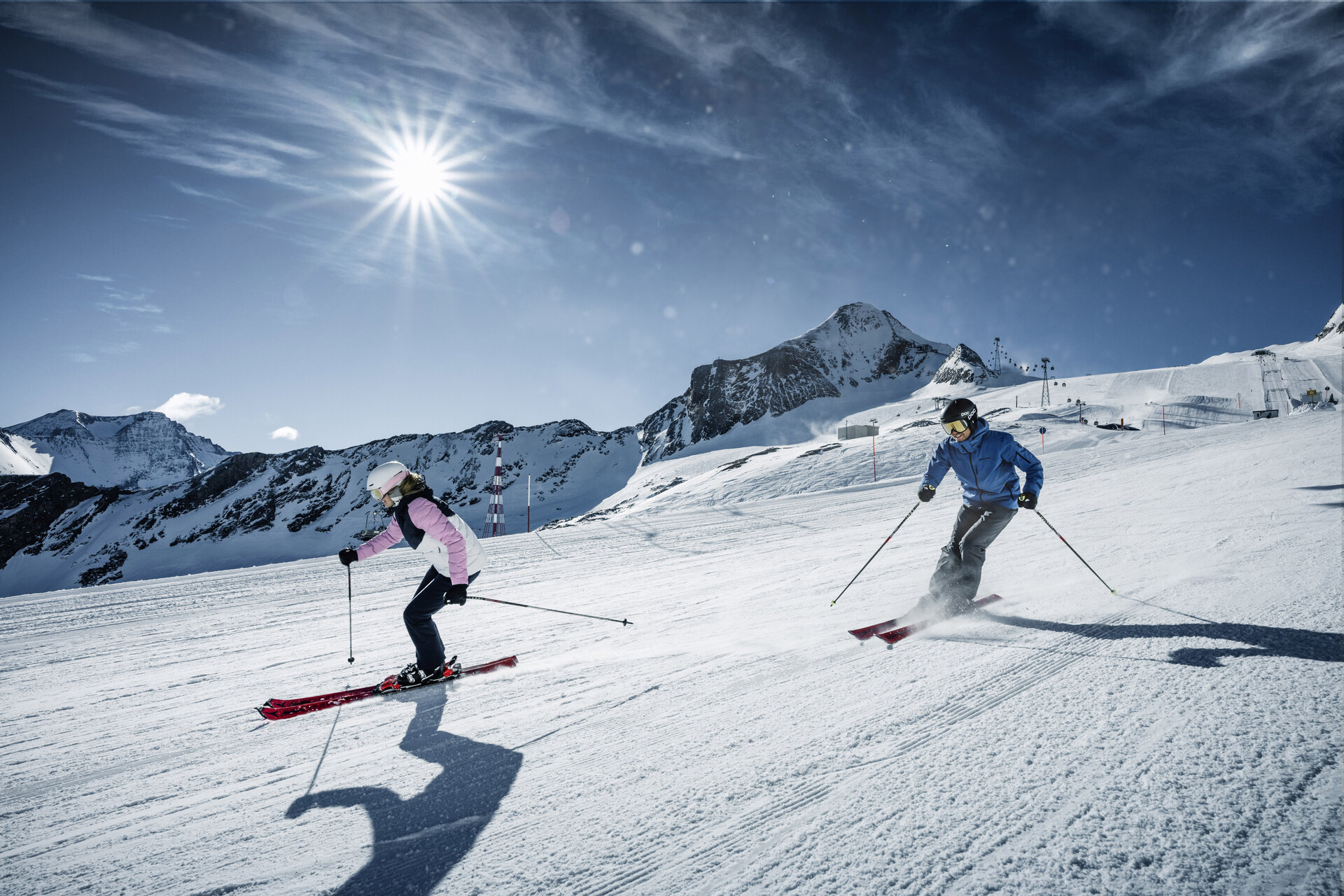
Zell am See-Kaprun is one of the few ski regions in the Eastern Alps where a glacier and a classic local mountain sit side by side. The Kitzsteinhorn above Kaprun reaches 3,029 metres and is among Austria’s most snow-sure ski areas; the Schmittenhöhe above Zell am See offers around 77 kilometres of tree-lined pistes with valley runs right back into town. Together with the Maiskogel that makes a ski area which opens in October and runs into May – and which grows to roughly 408 piste kilometres with the Ski ALPIN CARD.
Two Mountains, Endless Possibilities
Zell am See-Kaprun is not a single linked ski circus but a partnership of independent lift companies. That sounds like a technicality, but it is the single most important point for your planning: the two mountains ski completely differently, and which one suits you matters far more than any piste-kilometre figure.
Kitzsteinhorn and Maiskogel: the glacier above Kaprun
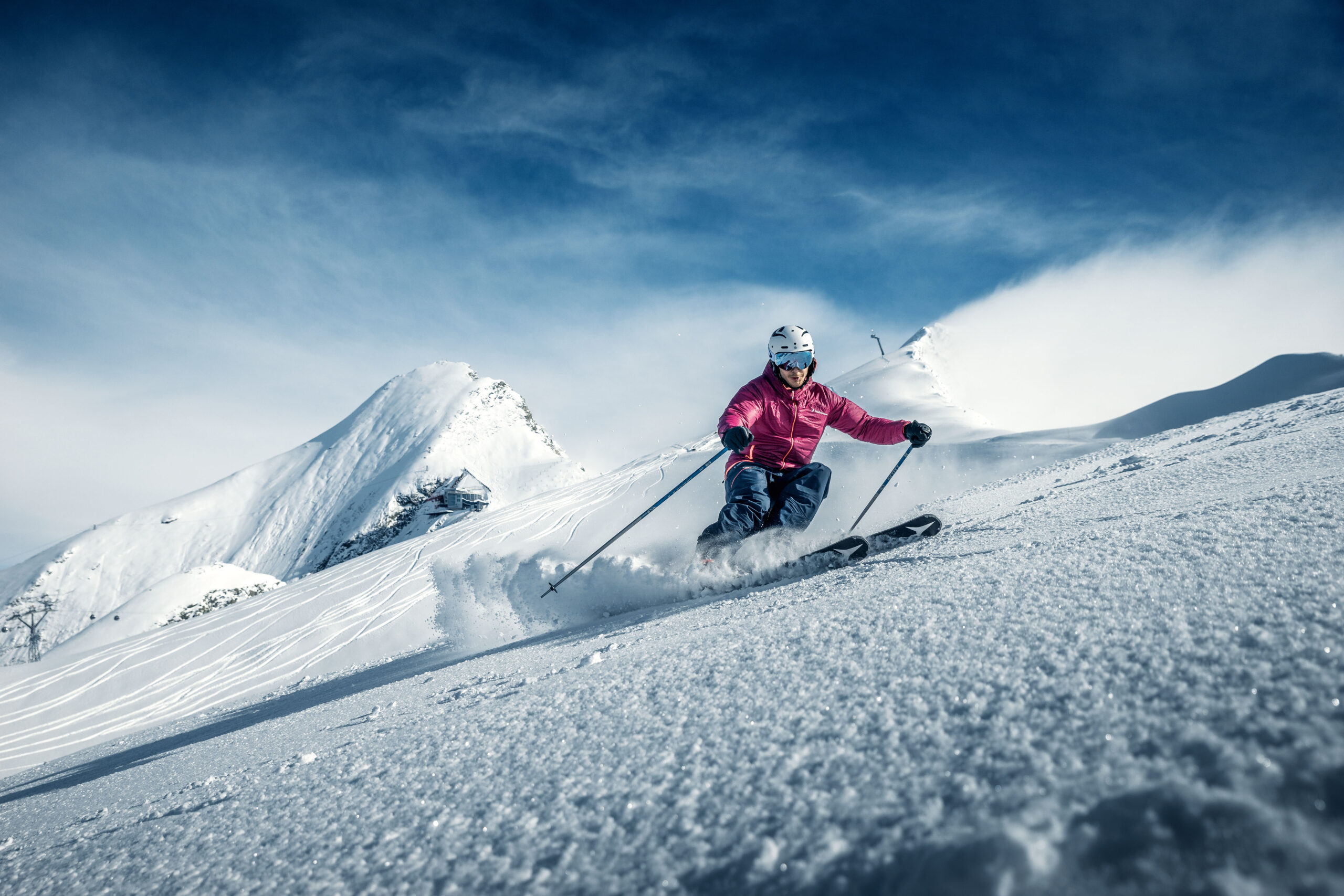
The Kitzsteinhorn is the only glacier ski area in SalzburgerLand. Around the Alpincenter you will find wide, gentle nursery slopes with guaranteed snow; higher up, the classic glacier runs lead into the summit area at 3,029 metres – long, even carving pistes with a panorama across the Hohe Tauern. The Maiskogel, Kaprun’s family mountain, adds a valley run of roughly five kilometres straight back into the village centre.
The two are joined by the MK Maiskogelbahn and the 3K K-onnection, a tri-cable gondola that carries you from the Maiskogel across the valley directly to the glacier. That makes Kaprun one of the very few places in the Alps where you travel from the village centre to 3,000 metres without a car and without a ski depot. The slopes are described in detail in our piste and glacier guide for Kaprun.
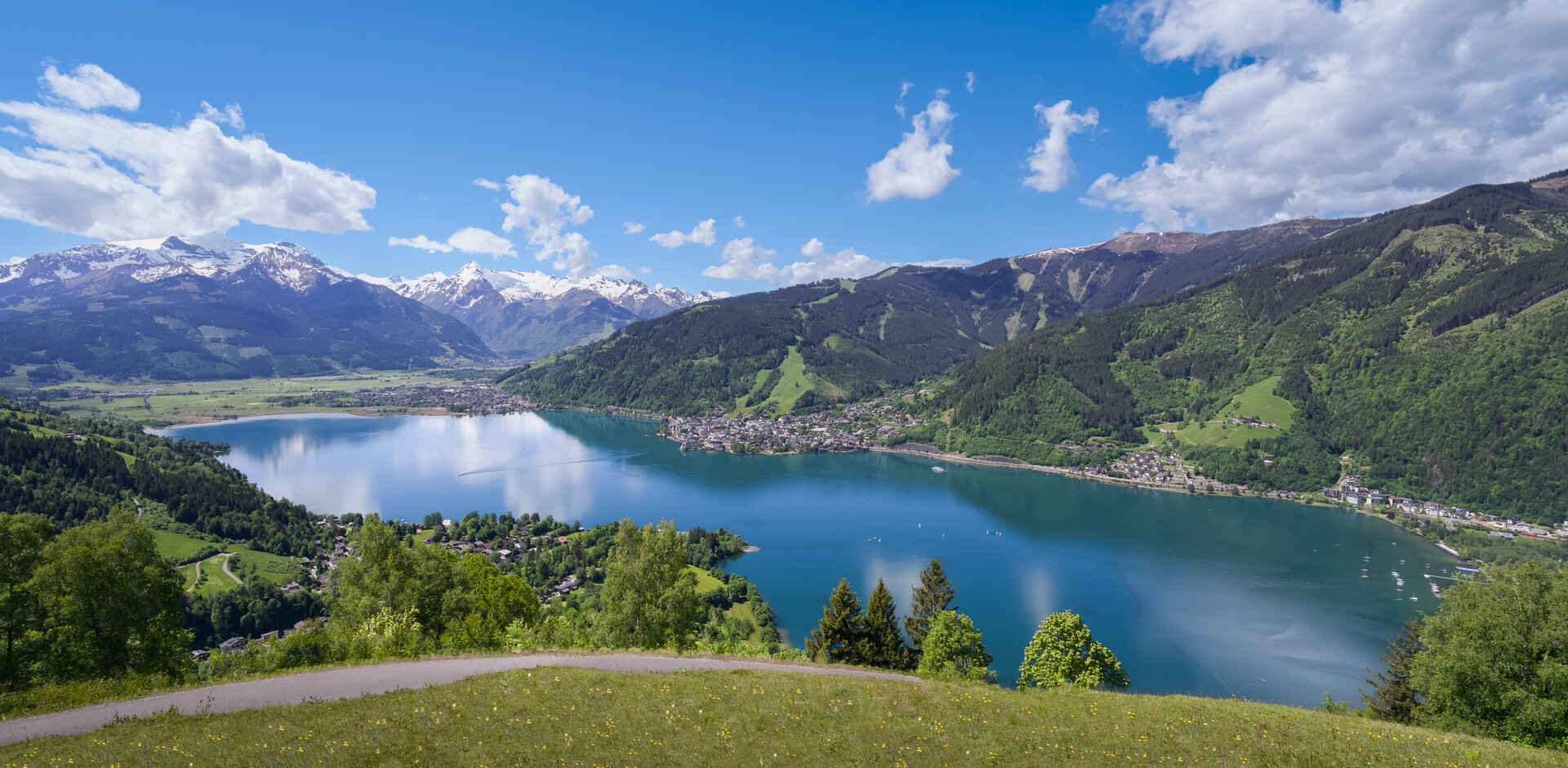
Schmittenhöhe: the home mountain above Lake Zell
The Schmittenhöhe is the counterpoint to the high alpine terrain. At around 1,965 metres it sits considerably lower, but it gives you what the glacier cannot: forest, variety and the Trass panorama with more than 30 three-thousanders. Its roughly 77 piste kilometres cover every level, from broad cruising runs to a demanding black. Valley descents into Zell am See make it the practical choice for anyone arriving without a car.
If you are torn between the two, our direct comparison Kitzsteinhorn or Schmittenhöhe goes through it properly.
Early Start to the Ski Season
Thanks to the glacier, Zell am See-Kaprun is one of the few regions where skiing is possible as early as October, while the valley is still in autumn. The glacier season then carries on through spring, with skiing planned into May. That is the region’s decisive structural advantage – but it does not apply to the whole ski area.
Honestly: in October and November you ski on the glacier only, on a limited set of pistes and with plenty of company on fine weekends. The Schmittenhöhe and the valley runs typically join in December, depending on cold and snowmaking. If you come in early autumn, plan it as high alpine glacier skiing, not as a full ski holiday.
- October to November: glacier operation on the Kitzsteinhorn – ideal for early-season form and ski testing.
- December to April: full operation on both mountains – the actual ski season.
- May: glacier only again, but with spring snow, long days and few people.
How much snow is actually lying is in our snow report for Zell am See.
Freeride, Snowpark and Night Skiing
For freestylers and freeriders the region offers rather more than groomed pistes.
- Freeride terrain on the Kitzsteinhorn: marked but unsecured routes in high alpine terrain. They cross glaciers – a transceiver, shovel and probe, and the ability to actually use them, are a prerequisite here, not a recommendation.
- Snowpark Kitzsteinhorn: one of the highest and longest-open snowparks in the Alps, with graded lines from an easy area up to large kickers.
- Night skiing: on selected evenings under floodlight – an appealing extra, but no substitute for a ski day, since only part of the area is lit.
One point we consider more important than any feature list: freeriding on a glacier is not a by-product of the ski day. Crevasses are present even under a closed snow cover. If you have no avalanche and glacier experience, book a mountain guide – or stay on the piste, which here is genuinely no limitation.
Ski ALPIN CARD: Even More Piste Kilometres
The Ski ALPIN CARD is the combined pass across three areas: Schmittenhöhe, Kitzsteinhorn with Maiskogel, and the Skicircus Saalbach Hinterglemm Leogang Fieberbrunn in the Glemmtal, roughly 30 to 40 minutes away by car. Together that comes to around 408 piste kilometres on one card. You can buy it for a single day (there is also a cheaper ticket from 11:30) or for several consecutive days; what a day costs in each part of the winter is shown in the box below.
Important for expectations: those 408 kilometres are the total of the network, not the local offering. On the two mountains in Zell am See-Kaprun itself you ski around 130 piste kilometres. Everything beyond that assumes you actually travel to the Glemmtal.
That brings us to the question we hear most often – do you actually need the ALPIN CARD? In winter, yes: it is the lift pass for both mountains. From 27 November to 4 April neither the Schmittenhöhe nor the Kitzsteinhorn sells a ski pass of its own; every day or multi-day ticket for them is a Ski ALPIN CARD, with the Skicircus included whether you go there or not. What you really decide is how many days to buy, and whether a day in the Glemmtal fits in – worthwhile with a car or the bus, from roughly four to six ski days. The one cheaper exception is the Maiskogel day ticket for families and beginners, valid on the Lechnerberg too from 5 December, though it will not take you up to the glacier. Before 27 November the Kitzsteinhorn also sells its own autumn tickets. How the tariffs are built and why the same ski day costs different amounts is explained in ski pass prices explained.
Modern Ticket System Without Queues
The ski pass runs on a keycard that stays contactless in your jacket pocket. In practice: buy online, collect the card from a machine or top up an existing keycard online – and skip the lift ticket office entirely.
- A deposit is charged for the keycard itself and refunded on return. If you come often, simply keep the card and top it up online next time.
- Carry only one card per pocket. Two keycards next to each other interfere at the turnstile – the most common reason the gate does not open.
- Buying in advance is not only more convenient but usually cheaper than buying at the ticket office on the morning itself.
Perfect Start to Your Winter Holiday
Zell am See-Kaprun is no insider tip, and that has a practical upside: the surrounding infrastructure is complete. For a first ski day you generally need three things, and all three are well covered here.
- Equipment: rental shops in both villages and at the base stations – details in our ski rental overview. Depots at the lift save carrying gear each day.
- Tuition: the local ski schools run group and private lessons; the Maiskogel and the valley nursery lifts are far pleasanter for learning than the glacier.
- Accommodation: if you want to save time in the morning, stay on the slope – the options are collected under ski hotels directly on the piste.
For orientation on the mountain the piste map helps, and after the last lift the après-ski scene around the base stations takes over.
Which Mountain Suits Your Ski Day?
The short version as a decision aid – no marketing, based on what actually shapes the day:
| If you … | … then |
|---|---|
| ski in October, November or May | Kitzsteinhorn – nothing else is running |
| are travelling with small children | Maiskogel or Schmittenhöhe |
| arrive without a car and stay in Zell am See | Schmittenhöhe, valley run into town |
| are after altitude, spring snow and panorama | Kitzsteinhorn |
| like forest and varied terrain | Schmittenhöhe |
| want a view when the valley is under fog | Kitzsteinhorn – you rise above the inversion |
| are staying only two or three days | a two- or three-day Ski ALPIN CARD – or the Maiskogel day ticket if you are with beginners |
Getting There, Parking and the Ski Bus
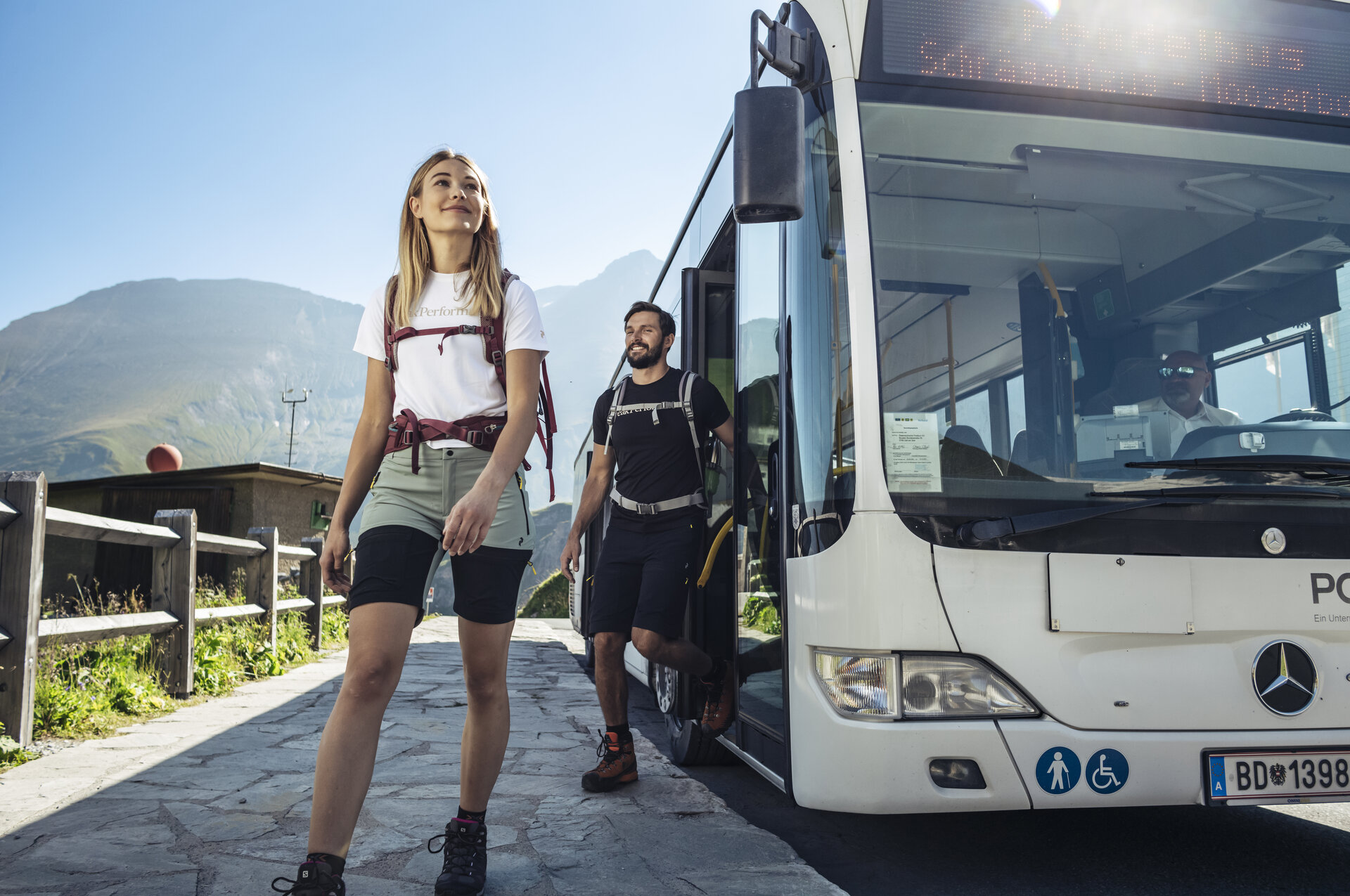
Zell am See is on the railway line, making it one of the few larger Austrian ski areas reachable entirely without a car. From Zell am See station the ski bus takes you to the base stations, and with a valid ski pass it can normally be used at no extra cost.
By car, the key decision is where to park. On fine weekends and during the holiday weeks the parking areas at the base stations are full by late morning. Arrive before nine and you save yourself the search; arrive later and you are often better off parking in the village and taking the ski bus rather than circling at the mountain. The connection between Zell am See and Kaprun takes roughly 15 to 20 minutes depending on traffic.
When to Come
There is no objectively best week, but there are clear differences – and they affect price and crowding more than snow conditions.
- Christmas, New Year and the February half-term weeks are the most expensive and busiest. Snow is usually plentiful then; quiet is not.
- The second half of January is the classic insider choice: cold, good pistes, noticeably cheaper and far emptier.
- March brings long days, sun and spring snow. In the valley the snow can soften – on the glacier that is not an issue.
If you are flexible anyway: a ski day from Sunday to Friday is almost always more pleasant than Saturday, when half of Europe is arriving and departing. What the region offers away from the pistes is in our overview Zell am See in winter and – for anyone not skiing – under winter without skiing.
Frequently Asked Questions
How many piste kilometres does Zell am See-Kaprun really have?
On the two mountains in the region itself – the Schmittenhöhe plus the Kitzsteinhorn with the Maiskogel – you ski around 130 piste kilometres. The frequently quoted 408 kilometres are the total of the whole Ski ALPIN CARD network and include the Skicircus Saalbach Hinterglemm Leogang Fieberbrunn in the Glemmtal, which you only reach if you actually travel there.
When can you ski in Zell am See-Kaprun?
The Kitzsteinhorn glacier usually starts in October, making it one of Austria's longest-running ski areas. In October and November, however, you ski on the glacier alone on a limited set of pistes. The Schmittenhöhe and the valley runs normally join in December, depending on cold and snowmaking.
Kitzsteinhorn or Schmittenhöhe – which is better?
Neither is better; they are different. The Kitzsteinhorn offers altitude to 3,029 m, snow reliability, spring snow and a view above the cloud line. The Schmittenhöhe sits at around 1,965 m, is more wooded and more varied, and is more practical for families and for anyone without a car because its valley run leads back into Zell am See.
Do I need the Ski ALPIN CARD for Zell am See-Kaprun?
For winter skiing on the Schmittenhöhe or the Kitzsteinhorn, yes – between 27 November and 4 April neither mountain sells a pass of its own, so every day or multi-day ticket is a Ski ALPIN CARD, even for a weekend. The Skicircus comes with it; going there makes sense with a car or the ski bus and from about four to six ski days. Only families and beginners who stay on the Maiskogel ski for less, with its own day ticket from 5 December. Before 27 November the Kitzsteinhorn sells separate autumn tickets.
Can you reach Zell am See for skiing without a car?
Yes. Zell am See is on the railway line and is one of the few larger Austrian ski areas reachable entirely without a car. The ski bus runs from the station to the base stations, normally at no extra cost with a valid ski pass. Without a car the Schmittenhöhe is the most flexible choice thanks to its valley run into town.