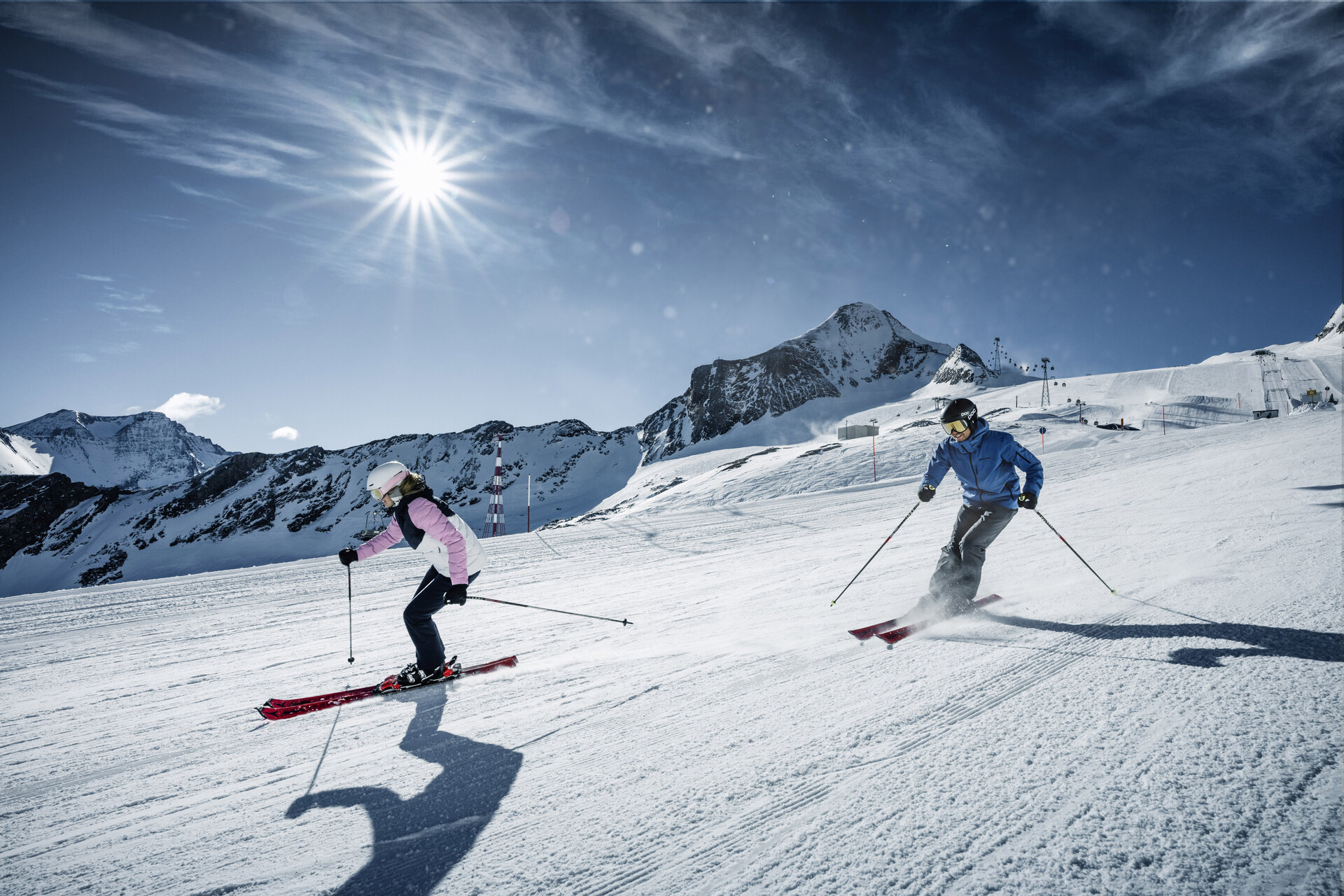
Glacier ski areas are the answer to the most important question in ski planning: is there any snow at all? On the Kitzsteinhorn in Kaprun the ski season begins considerably earlier than in lower-lying areas and lasts well into spring. It is the only glacier ski area in the SalzburgerLand – and therefore the only place in the region with reliable snow in October and in May.
This article explains why that is, how the season runs, and who a glacier day actually suits – and who it does not.
Why a glacier is snow-sure
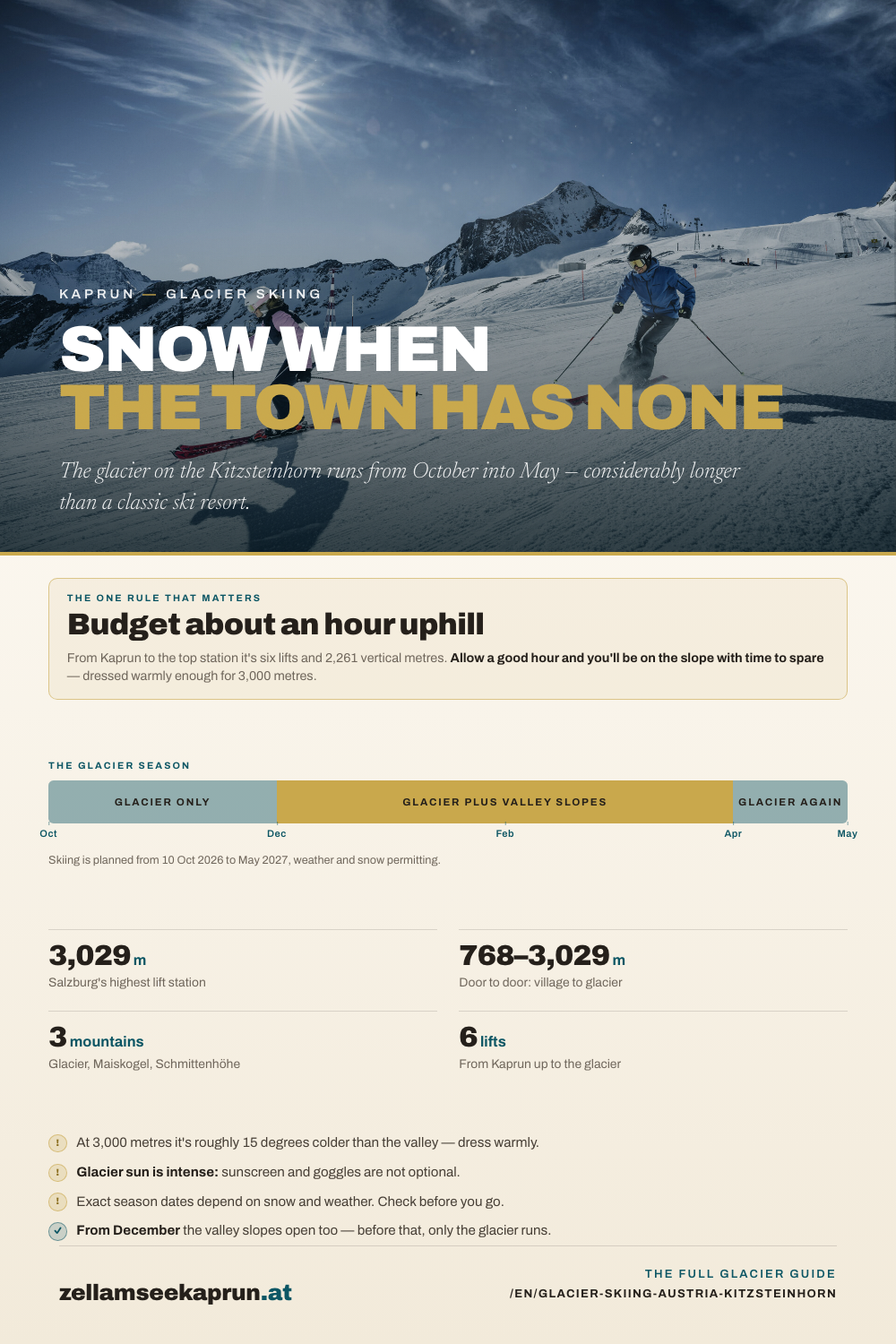
The ski area on the Kitzsteinhorn reaches 3,029 metres. At that altitude precipitation falls reliably as snow, and the snowpack survives even when the valley turns mild. If you want to ski in autumn or late spring, you are far less dependent on the weather here than in many other regions.
There is a second point that often gets overlooked: beneath the winter snowpack lies glacier ice. A conventional ski area has to build a snow cover from nothing every autumn – on a glacier the base is already there. That is why cold and a few snowfalls are enough for proper piste operation here in October, while slopes further down are still green at the same time.
What a glacier does not guarantee is good weather. Snow-sure means there is snow. Whether you can see it is decided by the cloud base – and at 3,000 metres a storm is a realistic reason for the upper lifts to stand still. Plan for that rather than counting on it.
The season on the Kitzsteinhorn
The glacier is usually in operation from autumn into early summer, considerably longer than classic winter sports areas. The exact dates depend on snow and weather conditions and are set anew by the cable car company each season; only their own information is binding.
| Period | What to expect |
|---|---|
| October to November | Skiing on the glacier only, a limited number of pistes, very little traffic midweek. The season of training groups and first turns. |
| December to April | Full operation across the whole area, high season. Busiest around Christmas and in the February holidays. |
| May into early summer | Firn instead of powder, long days, very few people. Getting up early pays off: the snow is best in the morning and softens in the afternoon. |
A common misunderstanding: year-round skiing is no longer the rule on the Kitzsteinhorn. In high summer ski operations pause and the mountain becomes a hiking and sightseeing destination. If you want to ski in July or August, this is not the place to plan it.
The ski area at a glance
The glacier ski area splits roughly into two levels. Around the Alpincenter at 2,450 metres lie the broad, even slopes where most of the skiing happens. Above that, in the glacier area proper up to the summit region, the descents become longer, more even and distinctly more high-alpine.
- Summit: 3,029 metres, with the Top of Salzburg viewing platform and the Gipfelwelt 3000.
- Alpincenter: 2,450 metres, the hub of the ski area with restaurants, rental and the lifts into the glacier terrain.
- Snowpark Kitzsteinhorn: one of the highest and longest-open snowparks in the Alps, with graded lines and a superpipe.
- Setting: in the middle of the Hohe Tauern National Park, the largest protected area in the Alps.
The glacier is complemented by the Maiskogel, Kaprun’s family-friendly local mountain, connected directly by the 3K K-onnection. Together they make up what the region simply calls “Kaprun”. Details on individual pistes are in the guide to the slopes and the Kitzsteinhorn glacier.
Pistes for every ability
Alongside broad glacier pistes for beginners and families there are demanding descents and marked freeride routes. Roughly speaking:
- Beginners: the gentle, wide slopes around the Alpincenter. Open, evenly pitched and without unpleasant surprises.
- Intermediates: the long glacier descents from the summit area. Less steep than their reputation suggests, but long and consistent – ideal for working on technique rather than surviving.
- Advanced skiers: steeper variants, the snowpark and the marked freeride terrain.
One honest caveat: a glacier is the wrong place to learn to ski. It is cold, often windy, and the ascent is long, which makes a first day on skis harder than it needs to be. The Maiskogel and the practice lifts in the valley are warmer, flatter, more sheltered and a much shorter trip back to your accommodation.
Freeriding and ski touring on the glacier
The Kitzsteinhorn is a well-known freeride destination, and the marked routes in the glacier area tempt people into treating them as a kind of piste. They are not: marked does not mean secured.
Crevasses are present even under a closed snow cover – and that is precisely when you cannot see them. An avalanche transceiver, shovel and probe are a requirement, not an accessory, and they only help if you know how to use them. Without avalanche and glacier experience, go with a mountain guide or stay on the piste. This is not a formality: it is the difference between a good day and a rescue operation.
How much snow is currently lying, and how to read the figures, is covered in the snow report.
Getting there and going up
From Kaprun the 3K K-onnection takes you up – a tri-cable gondola that links the Maiskogel across the valley directly with the glacier. It makes Kaprun one of the few places in the Alps where you can travel from the village centre to 3,000 metres without a car and without a ski depot.
- Time to the top: allow around half an hour from the base station to the summit area, including transfers.
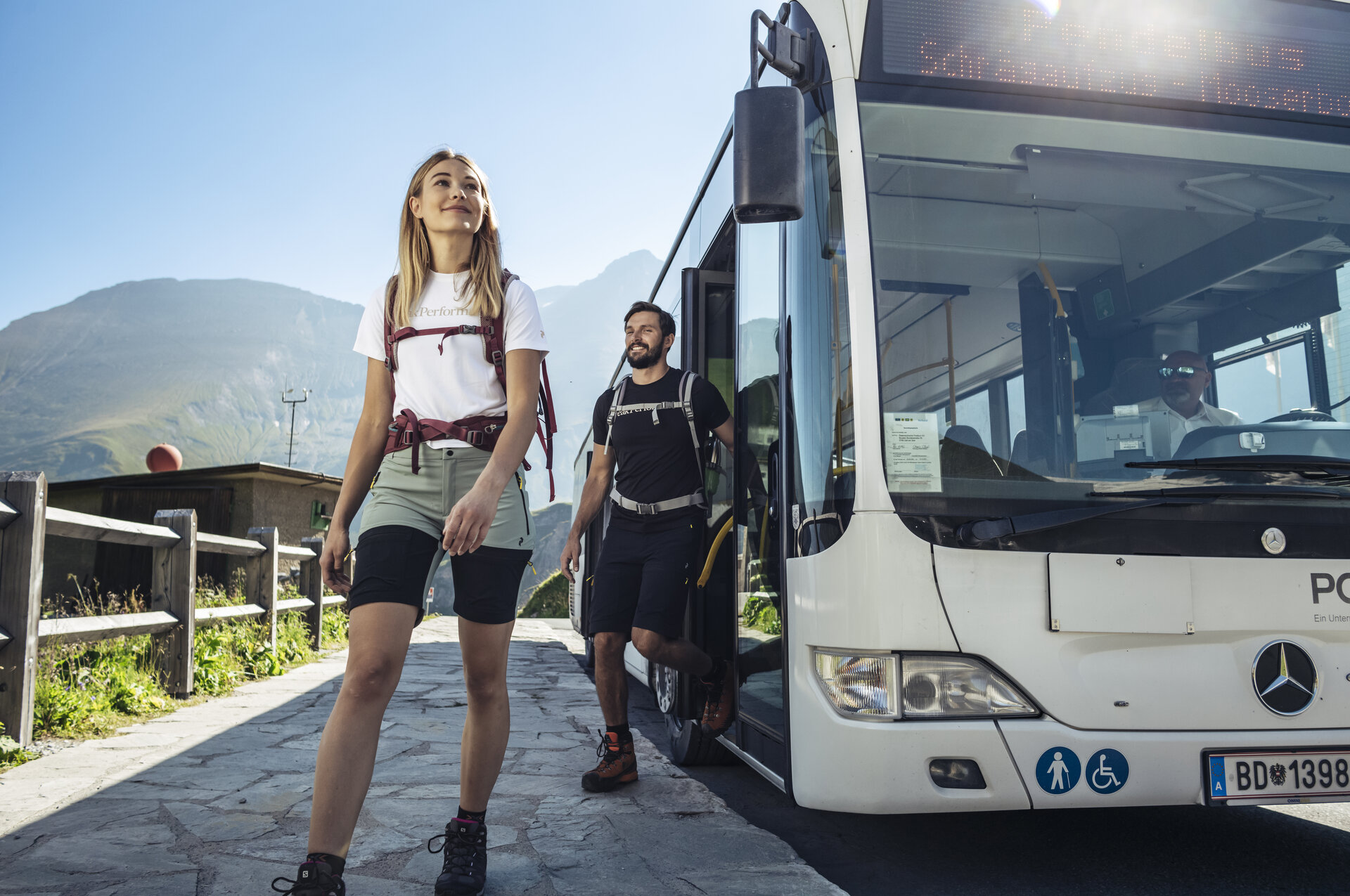
- From Zell am See: around 15 to 20 minutes to Kaprun, somewhat longer by ski bus.
- Parking: car parks at the base station. On fine weekends and in the holiday weeks they are full by late morning – arriving before nine saves you the search.
Plan the way back as well. The last descent to the valley is earlier on a glacier than on a ski mountain with a valley run, and the ascent is only worth it if enough time remains at the top. A glacier day is not a half-day outing.
Glacier and lake in one region
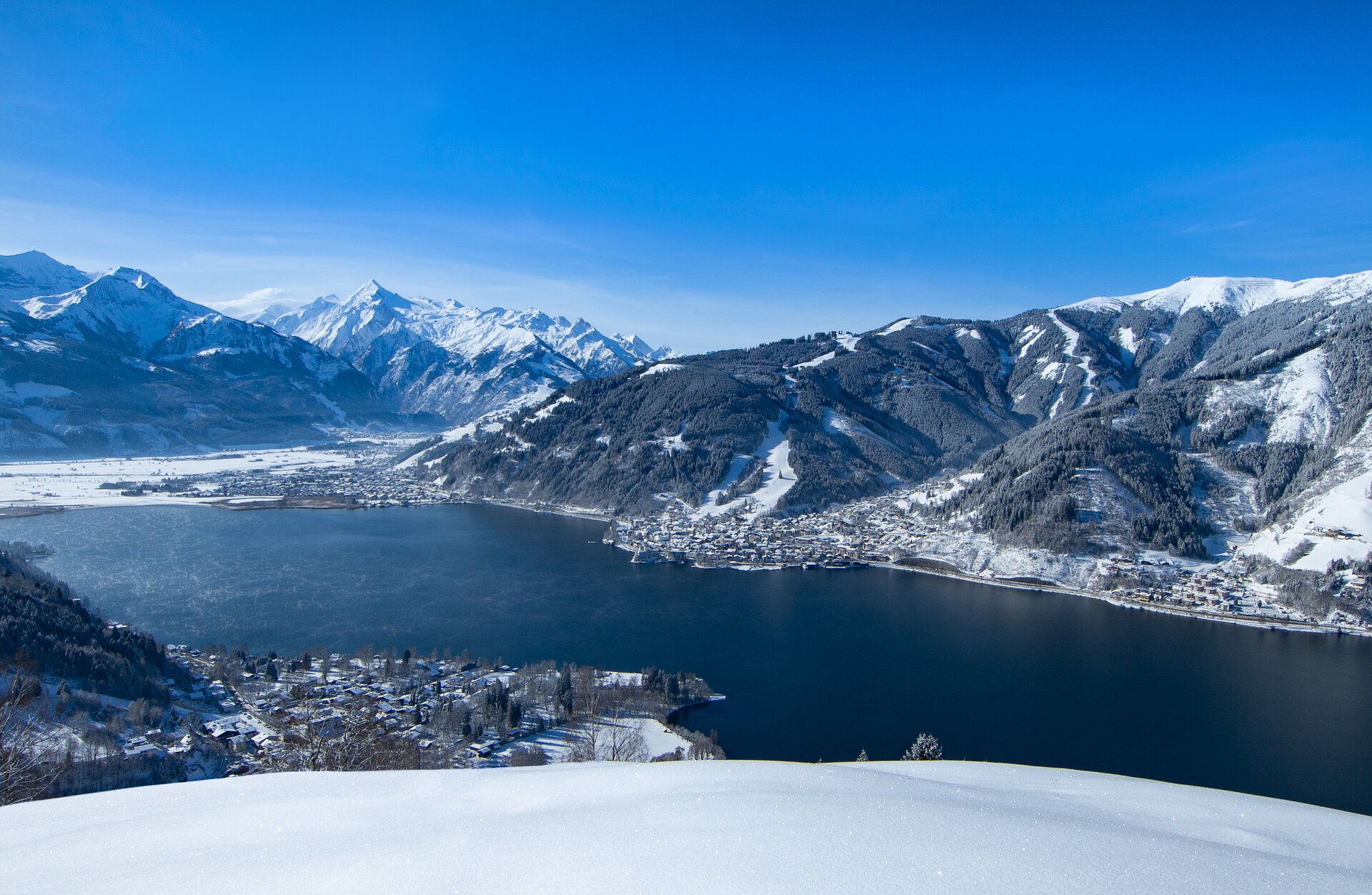
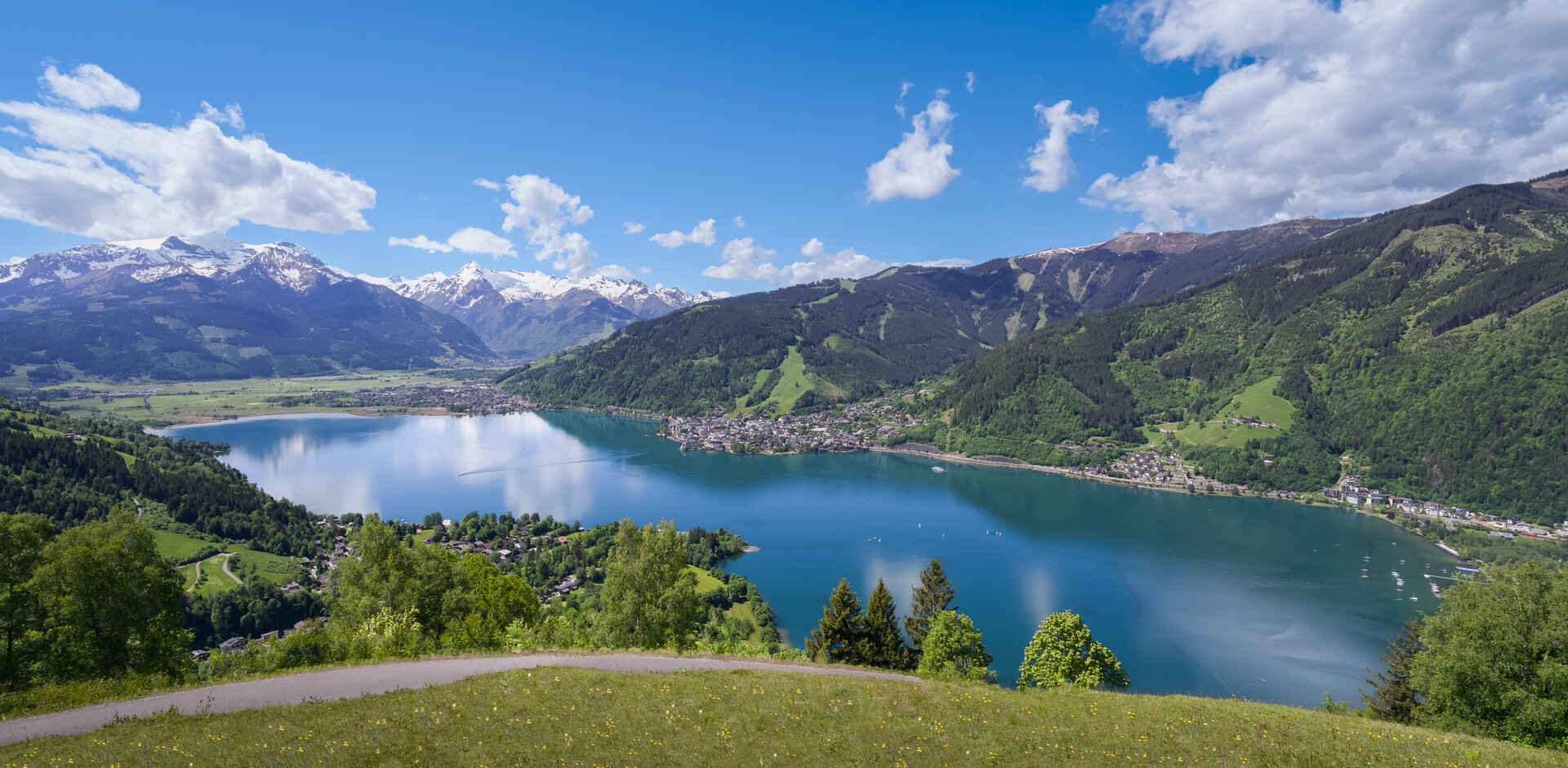
The combination of a glacier ski area and a lower ski mountain – the Schmittenhöhe on the other side of the valley – makes the region weather-independent: the glacier in good weather, and the sheltered, tree-lined descents by the town when it is stormy at 3,000 metres.
That fallback is the region’s real value in winter, more than any figure for kilometres of piste. When fog sits in the valley you ride up and often stand in sunshine; when the glacier is stormy you ski in the trees, where you can actually see something. If you want to use both, our article on the Ski ALPIN CARD covers the combined pass, and ski pass prices explained covers how the tariffs work.
Which mountain suits which kind of holiday is compared in detail under Kitzsteinhorn or Schmittenhöhe.
What to bring
- Warm clothing. At 3,000 metres the temperature is roughly 15 to 20 degrees below the valley reading, plus wind. What is enough down below is not enough up top.
- Sun protection and goggles. Snow and altitude intensify UV radiation considerably, cloud cover included. A spare lens for snowfall is not a luxury.
- Time for the ascent. The journey from the valley to the glacier takes longer than a normal lift ride.
- Something to drink. Altitude and dry air take more fluid out of you than you notice.
- A look at the mountain visibility beforehand. Under a closed cloud cover the glacier is a white room without contrast – on those days a day in the trees is the better day.
Frequently asked questions
Can you ski on the Kitzsteinhorn in summer?
In high summer, usually not. Ski operations run into early summer depending on conditions and then pause, but the mountain stays open as a hiking and sightseeing destination.
Is the glacier suitable for beginners?
For skiing, yes – there are broad, even slopes around the Alpincenter. For learning, less so: the cold, the wind and the long ascent make a first day unnecessarily hard. The Maiskogel and the practice lifts in the valley are the better choice.
How cold is it up there?
At 3,000 metres the temperature is roughly 15 to 20 degrees below the valley reading, plus wind. Even after a mild morning in the valley, winter kit is the right call up top.
Do I need equipment for the freeride routes?
Yes. The routes are marked but not secured, and crevasses are present even under a closed snow cover. A transceiver, shovel and probe are a requirement – without glacier experience, only with a mountain guide.
Is the trip up worth it without skis?
Yes. The Gipfelwelt 3000, with the Top of Salzburg viewing platform and the tunnel of the Nationalpark Gallery, is accessible on foot. More on that in the article about the Kitzsteinhorn.