Key facts at a glance
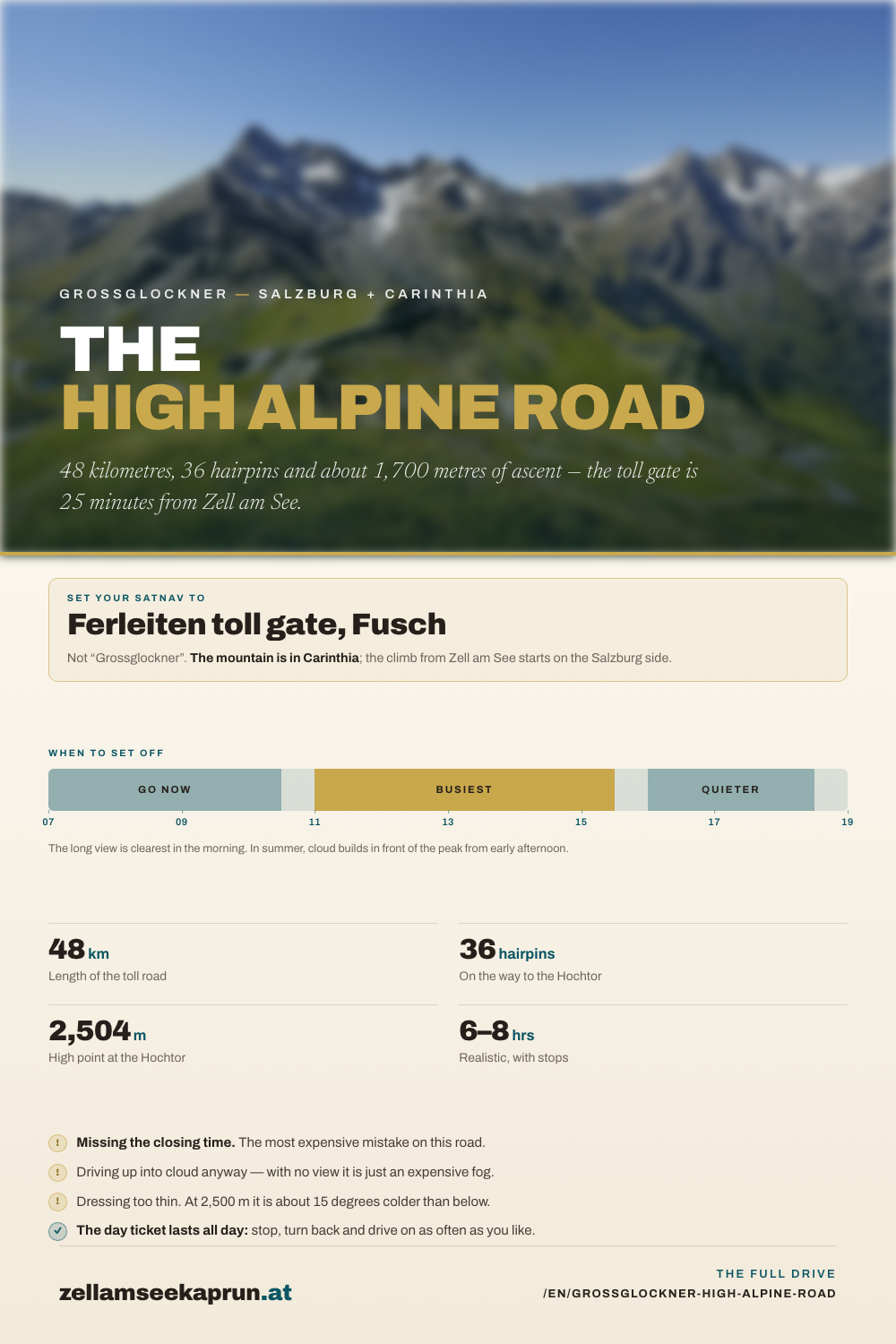
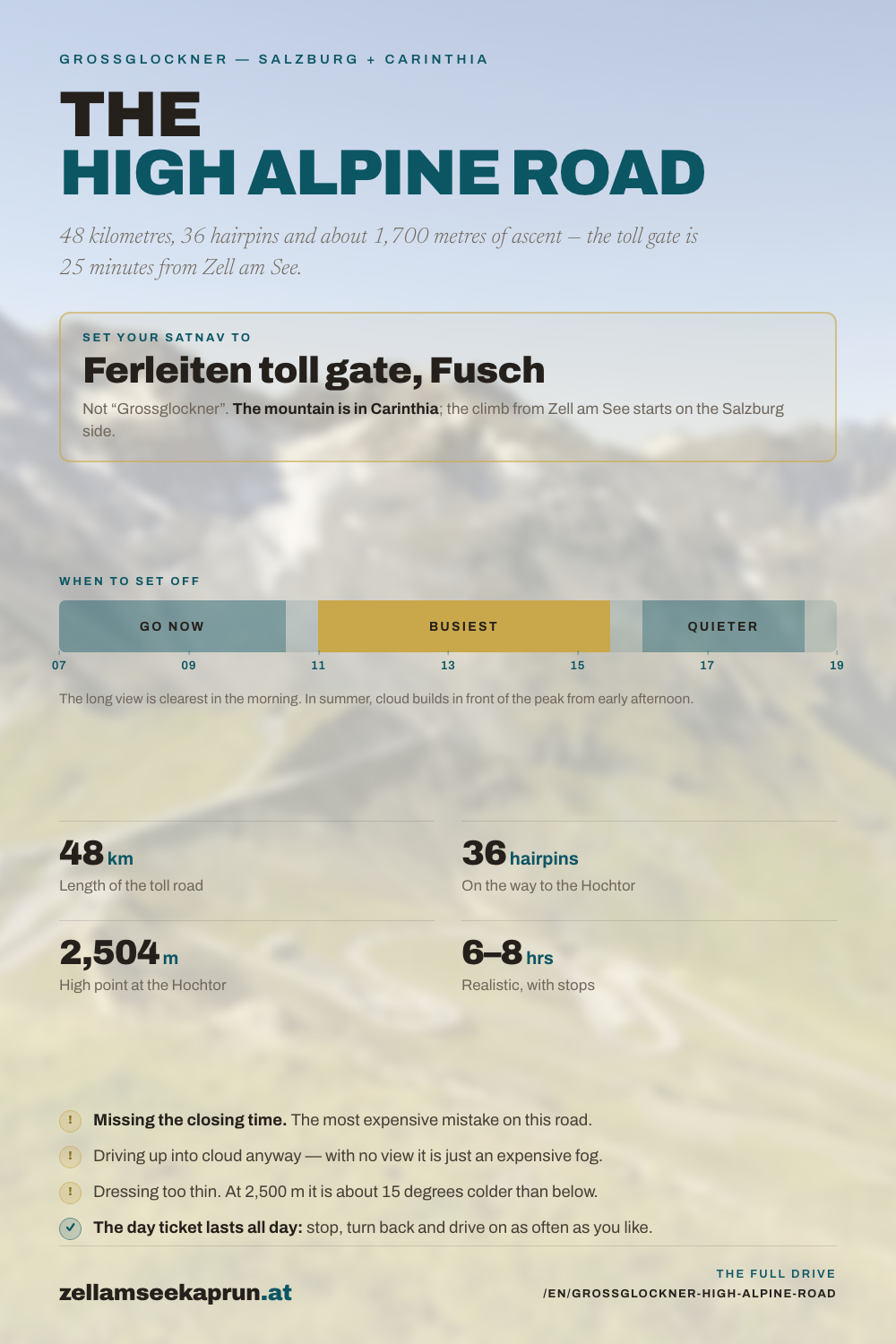
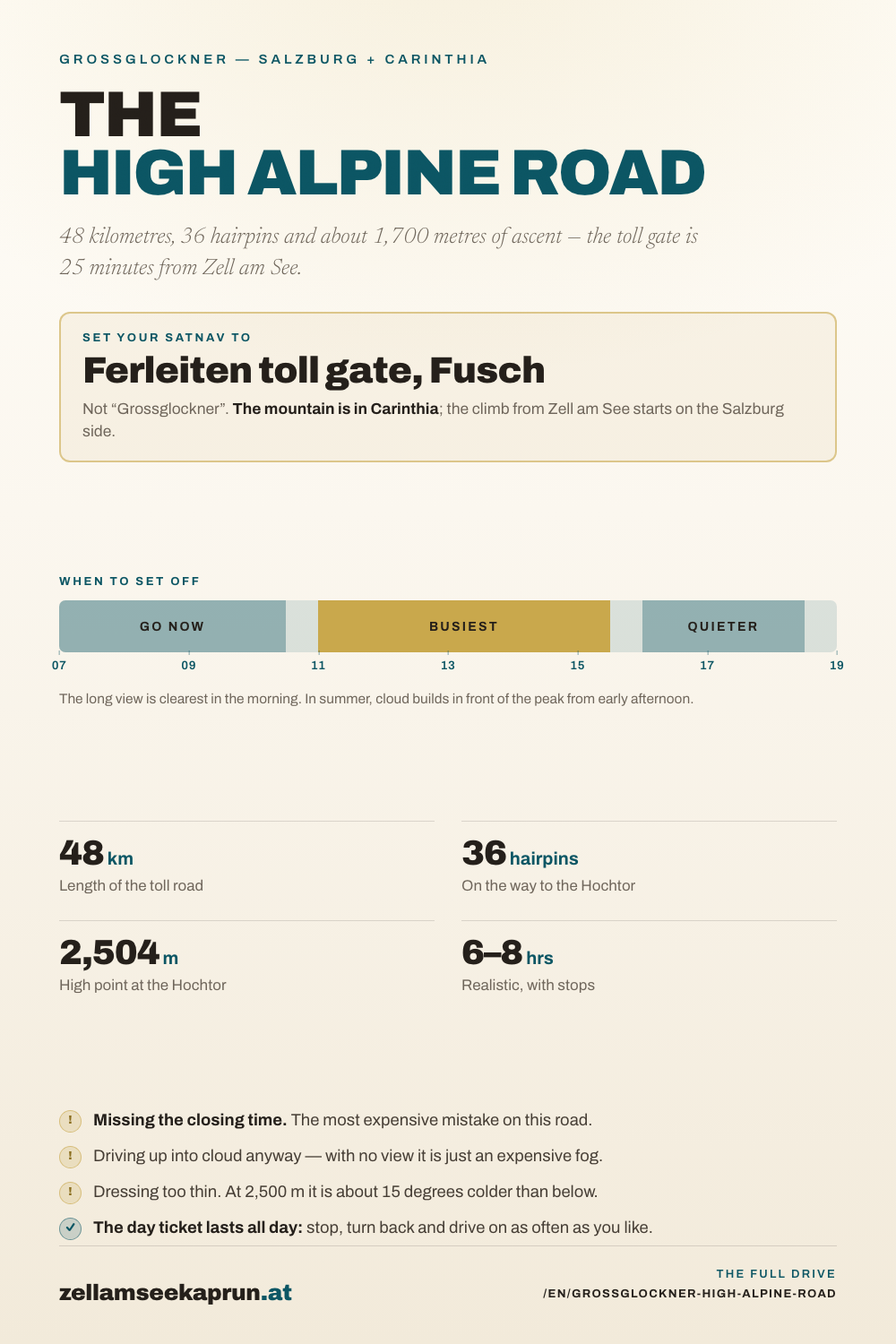
The Großglockner High Alpine Road is around 25 minutes from Zell am See and climbs 48 kilometres and 36 hairpins to 2,504 metres. Allow a whole day, start early — and watch the evening closing time at the toll stations.
Part of our complete guide: Zell am See–Kaprun: The Complete Travel Guide
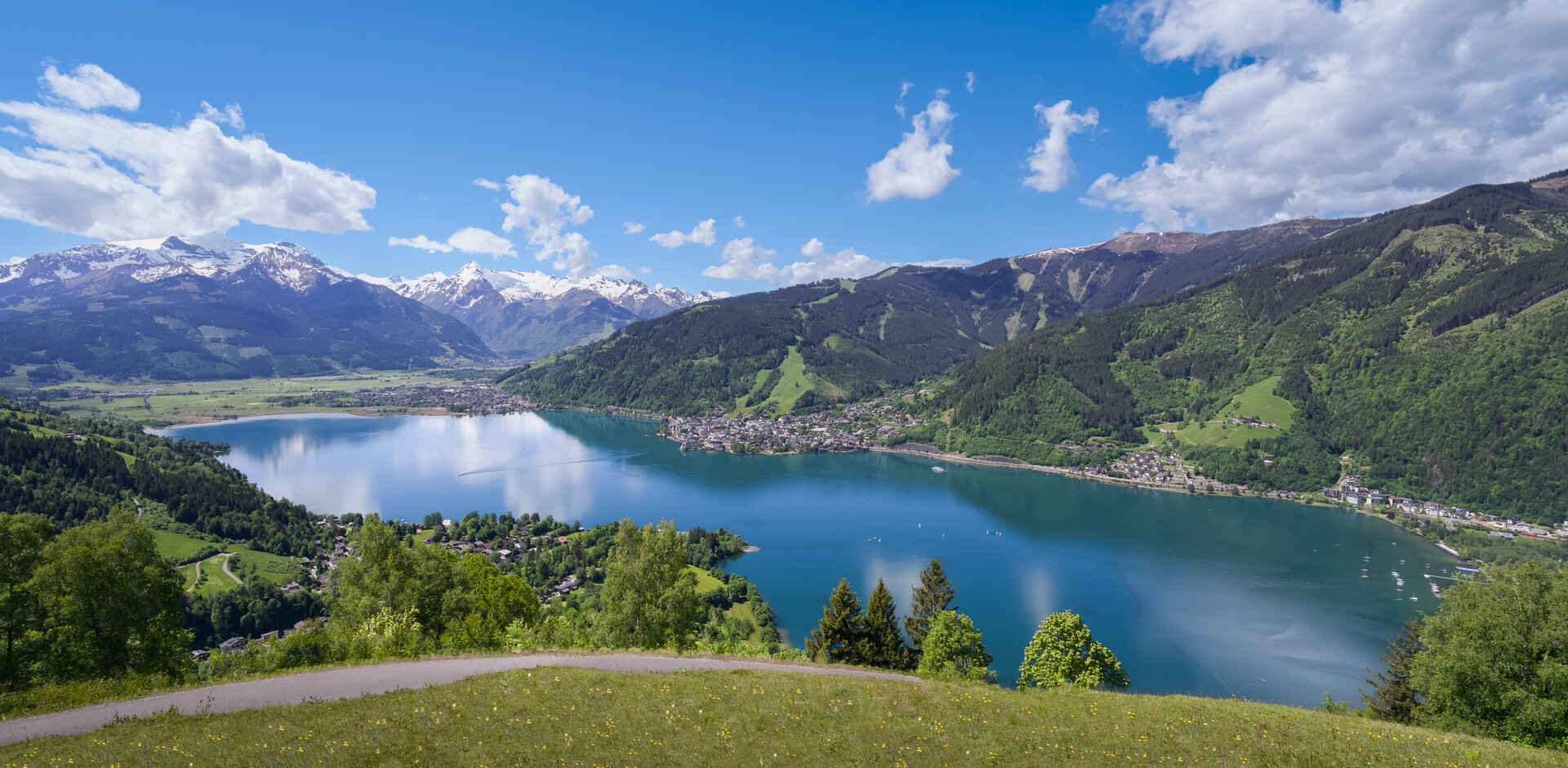
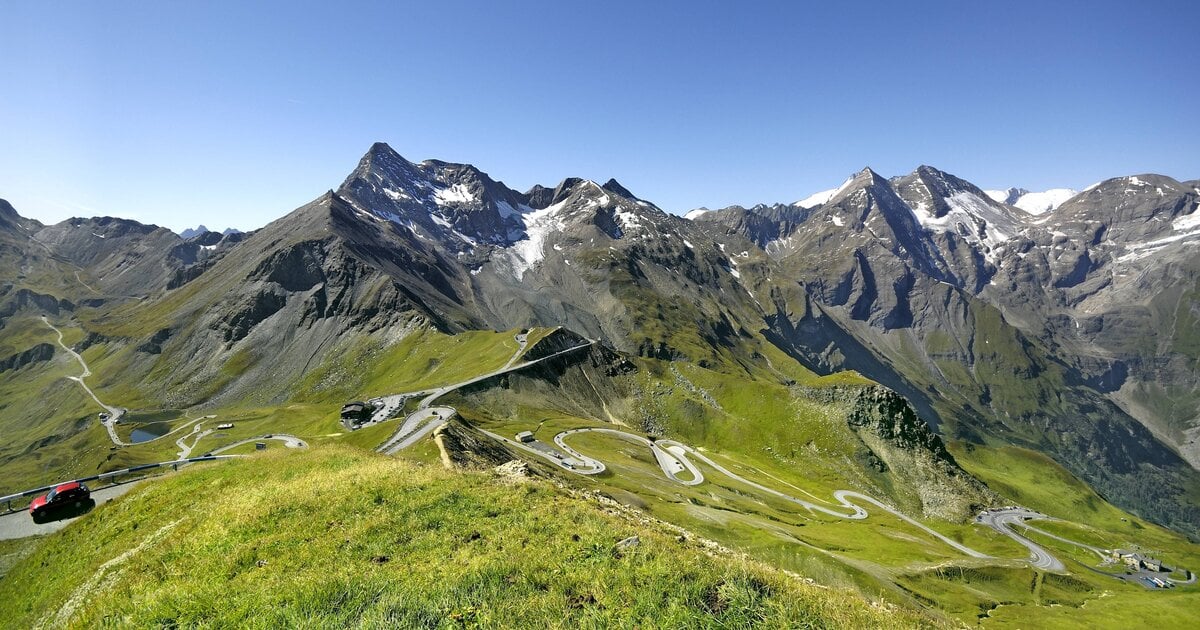
The Großglockner High Alpine Road is one of the most spectacular panoramic roads in the Alps – and reachable from Zell am See-Kaprun in around 25 minutes. Across 48 kilometres and 36 hairpin bends it winds up into the world of the three-thousanders, past glaciers, alpine pastures and viewpoints that take your breath away. A drive up here is not merely a transfer but a destination in itself – and one of the few excursions in the region where planning decides between a great day and a disappointment.
The essentials
- Getting there: around 25 minutes from Zell am See to the Ferleiten toll station near Fusch.
- Length: 48 kilometres, 36 hairpins, high point at the Hochtor at 2,504 metres.
- Time needed: at least half a day, realistically six to eight hours with stops.
- Toll: a day ticket per vehicle, at the toll station or online in advance.
- Season: roughly May to early November depending on snow; closed in winter.
- Closed at night: the barriers shut in the evening – plan your return in good time.
The panoramic road in numbers
From Fusch an der Glocknerstraße in Salzburger Land to Heiligenblut in Carinthia, the toll road climbs around 1,700 metres over 48 kilometres. 36 hairpin bends lead up to the Hochtor at 2,504 metres – every curve opens a new view. You can drive it by car or motorbike, or tackle it on a road bike.
Pure driving time from the toll station to Heiligenblut is about an hour and a half. That is a theoretical figure, though: take in the viewpoints, the Kaiser-Franz-Josefs-Höhe and a walk, and you are out for a whole day.
The finest viewpoints
At around 2,571 metres, the Edelweißspitze is the highest point on the road reachable by vehicle and rewards you with a 360-degree panorama of more than 30 three-thousanders. The spur road up is cobbled, narrow and steep – it is closed to caravans and trailers, and in a large motorhome the climb becomes a test of patience.
At the end of the second spur road waits the Kaiser-Franz-Josefs-Höhe, with what is probably Austria’s most famous mountain panorama. It is the real highlight of the drive – and the point where most visitors spend the most time. Allow two hours here alone.
In between lie numerous smaller car parks and viewing points, for example at the Fuscher Törl and the Hochtor. Do stop often: the landscape changes completely every few bends.
Großglockner and Pasterze
From the Kaiser-Franz-Josefs-Höhe you look straight at the Großglockner, at 3,798 metres Austria’s highest mountain, and at the Pasterze, the country’s largest glacier. The interplay of ice, rock and depth makes this one of the most impressive natural spectacles in the Alps.
The Pasterze has been visibly retreating for decades. Markers along the path show where the ice still lay in earlier years – one of the most striking and, at the same time, most sobering experiences of the whole trip. If you want to walk down to the glacier, do not underestimate the way back: it is steeply uphill, and the altitude makes itself felt.
Wildlife and nature
The road crosses four vegetation zones – from flowering alpine meadows to the bare high mountains. With a little luck you will see marmots, ibex and chamois, while golden eagles and bearded vultures circle high overhead. The Hohe Tauern National Park is ever-present here.
Your best chances of seeing marmots are around the Kaiser-Franz-Josefs-Höhe and along the Gamsgrubenweg, most likely in the early morning and late afternoon. A pair of binoculars is worth more than any telephoto lens.
Exhibitions and trails
Along the route, exhibitions, information points and themed trails invite you to linger. The Gamsgrubenweg with its tunnels leads close to the glacier world, and competitive cyclists test themselves on the legendary »Glocknerkönig« hill climb.
The paths are mostly well built but genuinely high-alpine: sturdy shoes rather than sandals, and take care when it is wet. The first section of the Gamsgrubenweg suits a pushchair; after that it gets rough.
Toll, opening times and that barrier
The road is subject to a toll. The ticket is valid for the whole day, so you can stop, turn around and carry on as often as you like. Rates differ by vehicle type – motorbikes pay less than cars – and there are discounted cards for repeat journeys as well as an evening ticket. Check current prices and operating hours directly with the operator before you set off; they change seasonally.
The most important point, and one many people miss: the High Alpine Road is closed at night. The toll stations shut in the evening, and the times move earlier as the season goes on. Miss the last ascent and you will not get up; return too late and you will face a closed barrier. Note the closing time before you lace up your walking boots at the top.
When to go: time of day and season
Time of day: start early. Long-distance visibility is clearest in the morning, the car parks are empty and the animals are active. From around eleven the Kaiser-Franz-Josefs-Höhe fills noticeably, and in summer cumulus cloud pushes in front of the Großglockner from early afternoon.
Season: in May and June there are still metre-high snow walls at the edges – photogenic, but it can be bitterly cold. July and August offer the most reliable conditions and the most visitors. September is the insider’s choice: clear air, little traffic, golden pastures. From October onwards fresh snow can close the road at short notice at any time.
By motorbike, road bike or motorhome
Motorbike: the road is a classic. Expect heavy traffic on fine weekends and ride defensively – the bends are tight and motorhomes need their space.
Road bike: a serious climb with sustained double-digit gradients in the hairpins. Take a windproof jacket: the descent from 2,500 metres is bitterly cold even in high summer.
Motorhome and trailer: the main road is easily driveable, but the spur road to the Edelweißspitze is closed to trailers and unsuitable for large motorhomes. Allow more time and considerably higher fuel consumption.
With children
36 hairpin bends are a challenge for sensitive stomachs. Seat children as far forward as possible with a view outside, plan stops, and keep a bag handy. The reward: marmots, snowfields in the middle of summer and the glacier view – that carries the day.
You will find more family-friendly excursions in our family itinerary.
The most common mistakes
- Too little time. »We’ll just pop up« regularly ends in a rush. Take the whole day.
- Missing the closing time. The most expensive mistake on this road.
- Driving up anyway when it is cloudy. Without a view it is an expensive pass crossing in fog.
- Dressing too lightly. At 2,500 metres it is around 15 degrees colder than in Zell am See.
- Half a tank. There is no filling station on the route itself – fill up beforehand.
Combines well with
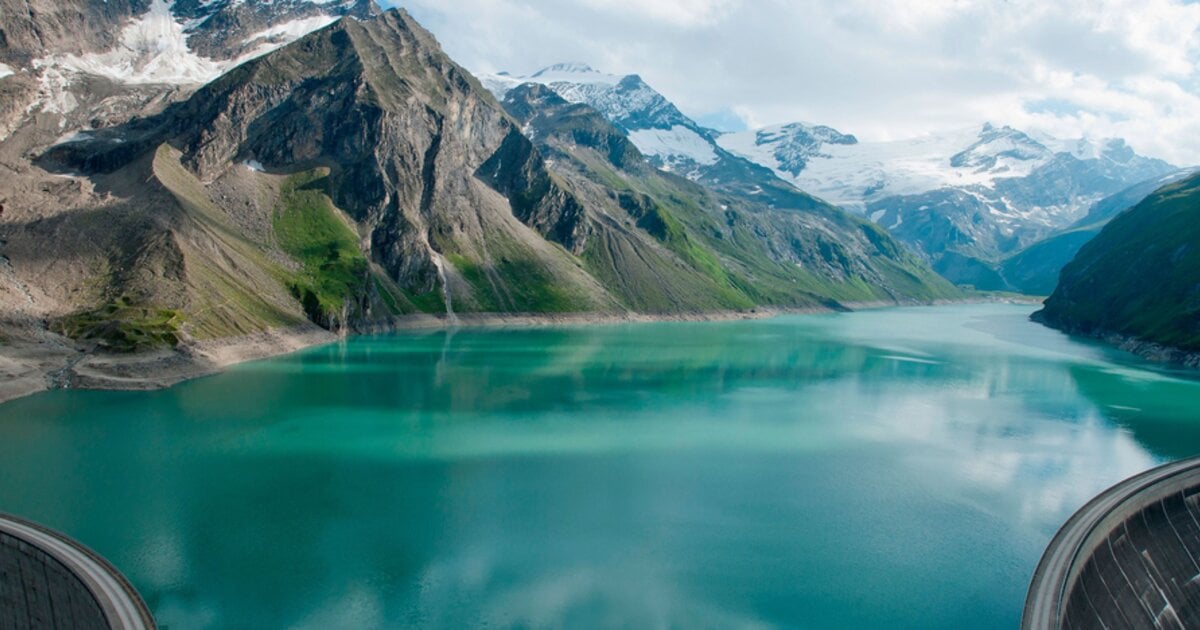
The High Alpine Road fills a day on its own. If you want to compare several panoramic destinations: the Gipfelwelt 3000 on the Kitzsteinhorn takes you above 3,000 metres without your own car, the high mountain reservoirs in Kaprun offer high alpine scenery with a much shorter approach, and the Schmittenhöhe is the panoramic mountain right above Zell am See.
You will find more excursion ideas for your stay in our summer travel guide to Zell am See and in the complete travel guide to Zell am See-Kaprun.
Frequently Asked Questions
How long does it take to drive the Großglockner High Alpine Road?
Pure driving time from the toll station to Heiligenblut is about an hour and a half. With viewpoints, the Kaiser-Franz-Josefs-Höhe and a walk you should allow six to eight hours - realistically a whole day.
When is the Großglockner High Alpine Road open?
Roughly from early May to early November depending on snow; it is closed in winter. Importantly, the road also closes at night. The toll stations shut in the evening and the times move earlier as the season goes on, so check the current closing time before you set off.
What does the toll cost on the Großglockner High Alpine Road?
There is a day ticket per vehicle that allows as many journeys as you like that day. Motorbikes pay less than cars, and there are multi-journey cards and an evening ticket. Rates change seasonally, so check current prices directly with the operator.
How far is the Großglockner High Alpine Road from Zell am See?
It is around 25 minutes from Zell am See to the Ferleiten toll station near Fusch, which makes the panoramic road one of the most quickly reachable high-mountain destinations in the region.
Can motorhomes and caravans use the road?
The main road is easily driveable in a motorhome. The cobbled spur road up to the Edelweißspitze, however, is closed to trailers and caravans and unsuitable for large motorhomes. Allow more time and higher fuel consumption.