Key facts at a glance
Within the province of Salzburg your journeys are already paid for by the Guest Mobility Ticket, Salzburg city included. Kitzbühel is in Tyrol and not covered, but a direct train reaches it in 48 minutes. A taxi is worth it at the edges of the day, with bulky equipment, for groups of five or more and for destinations outside the province; inside the tariff area the fare is set by provincial ordinance.
The honest answer first: for most neighbouring towns you do not need a paid transfer at all. Not because the distances are short, but because your overnight stay has already paid for public transport across the entire province of Salzburg. So the line that decides between “train” and “taxi” is not distance — it is the provincial border. Salzburg city, Bad Gastein and the Krimml waterfalls sit inside it. Kitzbühel, Hallstatt and Berchtesgaden sit outside. That border is where the paying starts, and where the four situations begin in which a transfer genuinely is the right call.
The provincial border decides, not the distance
Since May 2025, every overnight guest in Zell am See-Kaprun receives the Guest Mobility Ticket. It is valid from your first night for the whole of your stay, explicitly including both your arrival and your departure day. Every guest aged six and over gets their own ticket; children under six travel free anyway. You cannot buy it: it is funded by a mobility levy attached to the local visitor’s tax, which the tourist board puts at €0.50 per person aged 15 and over per night until 30 April 2027, and €1.10 after that.
What matters is the scope, because that is routinely described as smaller than it is. The ticket is valid not only in the region but on:
- ÖBB trains within the province of Salzburg — including the line to Salzburg city,
- all SVV regional bus lines in SalzburgerLand, in both directions,
- the Westbahn within the province,
- the Pinzgauer Lokalbahn between Zell am See and Krimml,
- and city transport in Salzburg itself.
According to the tourist board the only exclusions are steam and special trains, and the night bus lines. Cable cars are not included in any case — in summer that is what the Summer Card is for, and in winter the ski pass.
One point where older information no longer holds: according to the tourist board, the Guest Mobility Ticket is valid on ski buses just as on public buses, for example on line 660 between Zell am See and Kaprun and on lines 70, 71 and 680 around Zell am See. Only two feeder shuttles are excluded: line Z4 (Seespitz – areitXpress) and the zellamseeXpress shuttle (Viehhofen – Schönleitenbahn) run on a valid ski pass alone, the Ski ALPIN CARD. With a ski pass you can use every ski bus. Within Kaprun, the K line and the village bus are free for everyone anyway.
In practice: inside the province of Salzburg, one more journey costs you nothing. Kitzbühel is in Tyrol, Hallstatt in Upper Austria, Berchtesgaden in Bavaria — that is where the validity stops.
The neighbouring towns at a glance
The journey times below come from the ÖBB timetable for the July-to-December 2026 period, and the road distances from a routing calculation starting at Postplatz in Zell am See. Austrian regional services change substantially at the December timetable change, so check your specific connection before travelling.
- Saalfelden — 14 km by road, a good 15 minutes by car. Direct train in 9 to 11 minutes, very frequent. Covered by the ticket.
- Saalbach-Hinterglemm — 23 km, about 25 minutes. Bus 680 runs direct in 33 minutes, every 30 minutes during the day. Covered.
- Mittersill — 28 km, about 30 minutes. Pinzgauer Lokalbahn in 38 minutes on the fast service, otherwise 47, hourly, with the last departure from Zell am See around 10 pm. Covered.
- Bad Gastein — 48 km, about 45 minutes. Train in 1 h 10 to 1 h 14 with one change at Schwarzach-St. Veit, twice an hour. Covered.
- Kitzbühel — 55 km, just under an hour. Direct train in 48 to 54 minutes, no change. Not covered, because it is in Tyrol.
- Krimml waterfalls — 55 km, about 55 minutes. Bus 670 direct in 1 h 20, or the Lokalbahn with a connection in 1 h 27. Covered. Note the last departure from the waterfalls at 7.30 pm.
- Königssee and Berchtesgaden — 77 km, about 75 minutes. By public transport 2 h 19 to 2 h 50 with one to three changes. Not covered beyond the German border.
- Salzburg city — 97 km, about 85 minutes on the A10 motorway. Direct train in 1 h 34, no change. Covered.
- Hallstatt — 113 km, about 110 minutes. By public transport 3 h 14 at best, with one to four changes. Covered only on the Salzburg-province leg.
Salzburg: the journey is already paid for
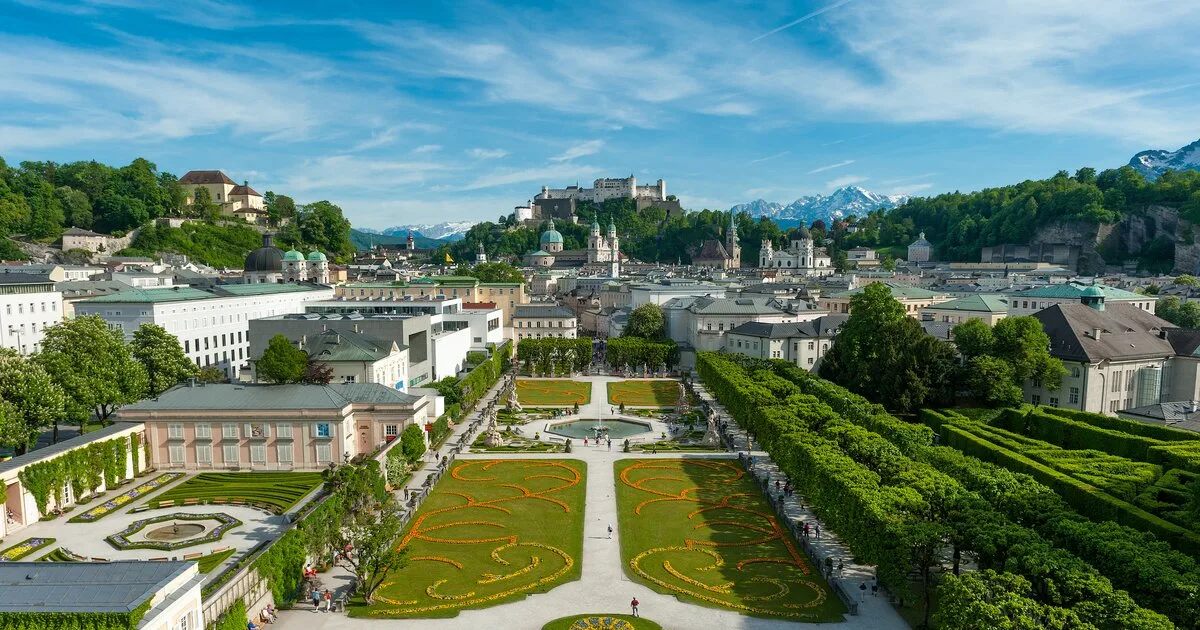
This is the case where a transfer makes least sense. Zell am See sits on the Salzburg-Tyrol railway and the train runs direct, with no change — the fastest in 1 h 34, the stopping service in 1 h 46, roughly twice an hour. Anyone telling you that you must change at Schwarzach-St. Veit is describing one of several possible routings, not the standard one. Because Salzburg city lies within the province of Salzburg, the trip is covered by your Guest Mobility Ticket — including city transport once you arrive.
A paid transfer is worth it here only at the edges of the day: an early-morning flight, a late return after a concert, or a lot of luggage. What is worth booking ahead in the city is covered in Salzburg tours from Zell am See; for arrival from the airport, see the airport comparison. As a slower alternative, bus 260 via Lofer takes about 2 h 10.
Kitzbühel: the direct train nobody seems to know about
One misconception is unusually persistent here. Zell am See and Kitzbühel sit on the same railway line and the train runs without a change: the fast service in 48 minutes, the S 8 in 54, together roughly twice an hour. That beats the car, which needs about 55 minutes for the same trip. Anyone who tells you to change at Wörgl or Saalfelden is thinking of the opposite direction.
The catch is elsewhere: Kitzbühel is in Tyrol. Your Guest Mobility Ticket stops at the provincial border, so you will need a ticket. And because the Salzburg taxi tariff ordinance also applies only within its own area, a taxi ride to Kitzbühel is freely priced — agree a fixed fare before you set off.
The Pinzgauer Lokalbahn — and what is not running through
The Salzburg AG narrow-gauge line is the valley’s second artery: 53 km on 760 mm gauge from Zell am See west to Krimml, hourly from about 5 am to 10 pm, taking 1 h 20 to 1 h 27, or 1 h 06 on the fast service. A single to Krimml station costs €12.80 for adults according to the operator — with the Guest Mobility Ticket you pay nothing.
Two current restrictions that almost no travel site mentions:
- The Mittersill–Krimml section is operated as a rail replacement bus, and the timetable explicitly states that bicycles cannot be carried on it. The romantic idea of riding the narrow-gauge train all the way to the waterfalls does not currently hold.
- In addition, from 7 September to 4 October 2026, buses replace trains between Zell am See and Fürth-Kaprun as well.
Bicycles cost €4 per direction on the train, are carried subject to space only, and should be booked in advance on +43 6562 40600; anything over 30 kg is refused. The heritage steam trains to Mittersill run seasonally on Thursdays — and are explicitly excluded from the Guest Mobility Ticket, so they cost extra.
Grossglockner: where public transport genuinely fails
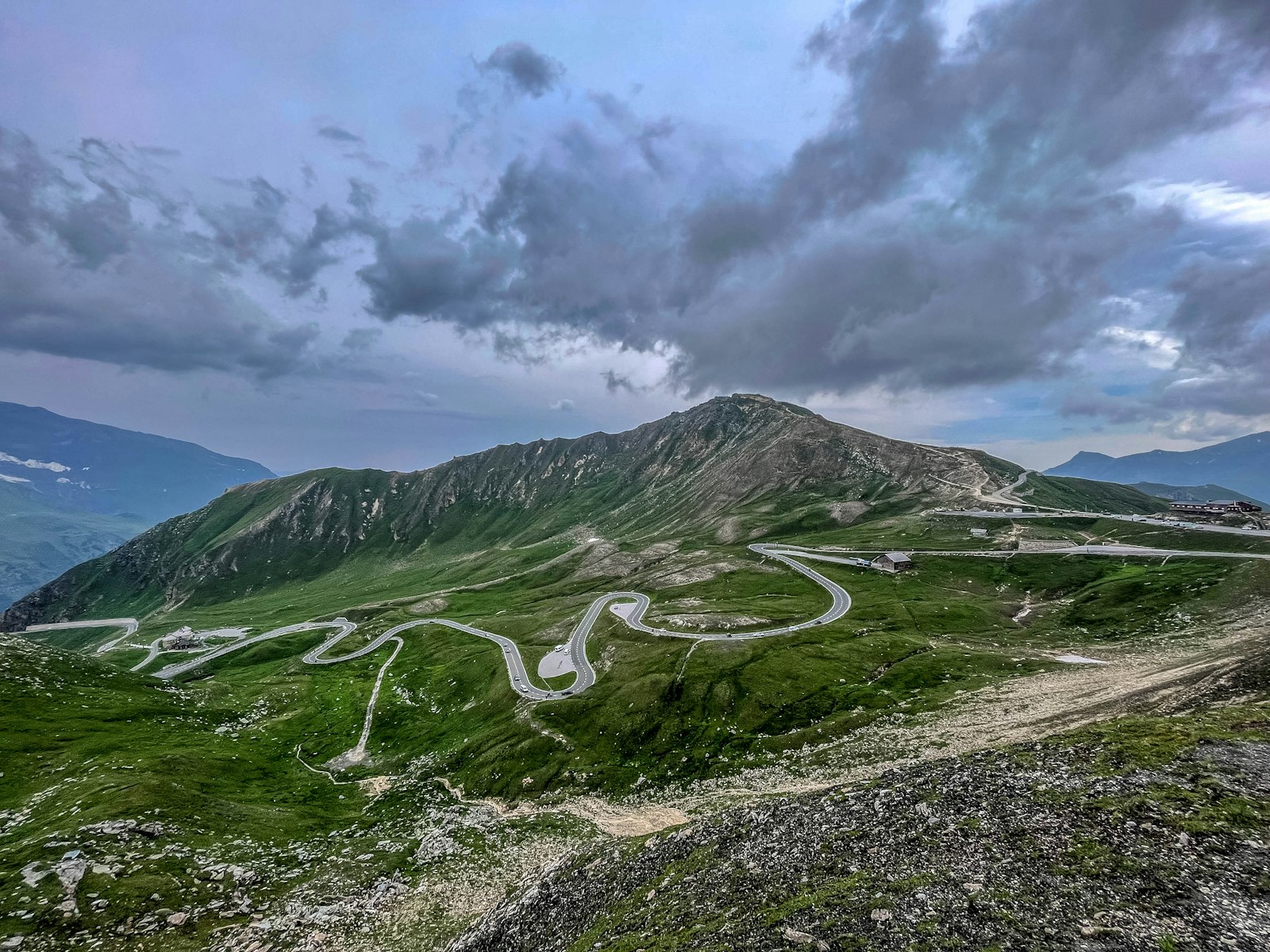
It is only 20 km to the Ferleiten toll gate, about 25 minutes. Bus 650 gets you to Fusch in 25 minutes and as far as Ferleiten in 28 to 38. Beyond that, nothing runs. The High Alpine Road itself is a driving road with no scheduled service, and the connection as far as the toll gate is thinnest exactly when most people want it: on one Sunday in September the timetable showed three departures out and a single return, at 5.15 pm. Travel up by public transport without planning the way back and you will be stranded.
According to the operator the road has been open since 25 April 2026 and stays open into early November. Opening hours shift with the season — from September, 6.00 am to 7.30 pm, with last entry at 6.45 pm — and outside those hours a night driving ban applies. A day ticket for a car costs €46.50, dropping to €36.50 after 6 pm, and €40 for electric cars. If you see €42 quoted elsewhere, that figure is out of date. Everything about the drive itself is in our guide to the Grossglockner High Alpine Road.
What a taxi is allowed to cost
Unlike in many holiday regions, the taxi fare here is not a matter of negotiation. Operators based in Zell am See, Kaprun, Maishofen, Bruck, Saalfelden or Mittersill are governed by a tariff ordinance issued by the Governor of Salzburg in December 2024. The key figures:
- Base fare €7.60 on weekdays between 6 am and 9 pm, €8.80 at night and all day on Sundays and public holidays. The first 1,350 metres are included.
- Distance rate thereafter €0.30 per 97.78 metres begun — roughly €3 per kilometre.
- Mountain surcharges in units of €3.70: one unit up to the Schmittenhöhe and to Thumersbach, two to the Kaprun glacier lift base station. Any road tolls are additional.
- More than four passengers costs a €3.70 surcharge per additional person. This is the line item groups of five and six never budget for.
- If the fare is agreed when you book, a minimum distance rate of €3.20 per kilometre applies — and the agreed price may not be exceeded afterwards.
A passenger right almost nobody knows: for journeys beyond the operator’s home municipality, the driver must tell you the approximate expected fare without being asked. You are entitled to a receipt naming the company and the vehicle’s registration on request. Journeys beyond the tariff area or across the provincial border fall outside the ordinance altogether — so for Kitzbühel or Berchtesgaden pricing is free, and a flat fare is expressly permitted.
These amounts come from the December 2024 ordinance and are index-adjusted every two years under its own escalation clause. Treat them as orientation, not as today’s exact rate.
Four cases where a transfer really is right
- The edges of the day. The last bus from the Krimml waterfalls leaves at 7.30 pm, and the last connection from Hallstatt gets you back only around 10.20 pm. Night bus lines are excluded from the Guest Mobility Ticket anyway. Travel in the evening and public transport simply runs out.
- Luggage and sports equipment. Bicycles cannot be carried on the rail replacement bus to Krimml, and on the train only subject to space and with advance notice. With skis or bikes a taxi is the more reliable option — provided you ask about capacity when booking.
- Groups of five or more. The per-person surcharge makes the ride pricier than expected, but split across six people it still often beats six individual tickets to a destination outside the province.
- Destinations outside the province. Berchtesgaden means one to three changes and up to 2 h 50 by public transport. That is where the arithmetic tips, especially with children.
Transparency notice: this article contains advertising links to Booking.com. If you book through them we receive a small commission — the price stays exactly the same for you.
The operators in Zell am See and Kaprun
The region has a dense taxi and transfer scene, mostly small family businesses. What each one actually documents on its own website varies a great deal — and that is what should decide your choice:
- Taxi Steger, Sportplatzstraße 17, Zell am See, +43 664 1847306 — the clearest documentation of the lot: up to eight passengers with luggage, a taxi bus for ten, child seats, and ski racks in winter, around the clock.
- TOP TAXI, Thumersbacherstraße 5/14, Zell am See, +43 6542 73232 — 24/7, a minibus for one to eight people with eight large cases and a dedicated ski luggage compartment, child seat on request, fixed fares for longer trips. Also trades as “Taxi Zentrale” — the same company, not two operators.
- iTaxi Travel & Tour, Krapfstrasse 13, Kaprun, +43 650 5620298 — the only operator publishing a rate: €2.20 to €2.50 per kilometre depending on vehicle. Six-seat van, ski and snowboard storage, child seats on request.
- Taxi Rainer, Seeuferstraße 6b, Zell am See, with a second base in Saalbach-Hinterglemm, +43 6541 6261 — trading since 1924, with a service area explicitly covering Zell am See-Kaprun, Saalbach-Hinterglemm and Saalfelden-Leogang-Maria Alm, so genuinely resort-to-resort.
- zellamsee.taxi, Brucker Bundesstraße 22a/10, Zell am See, +43 664 1532030 — names regional destinations explicitly, from the Schmittenhöhe via Maria Alm and Saalbach to Krimml and the Grossglockner. Child seat on request.
- Taxi Hofa, Gmachlstraße 1, Kaprun, +43 664 4477827 — local work in Zell am See, Kaprun and Saalbach-Hinterglemm, plus airport transfers.
- Taxi Nedo, Einöd 2, Zell am See, +43 664 3962307, and Brugger’s Taxi, Langfeldstraße 7, Kaprun, +43 660 7575927 — both run trailers for bicycle transport, for up to 14 and 8 bikes respectively. The most useful detail in the region if you are here to cycle.
Two notes that will save you time. First, in Austrian trade law “Mietwagen” means a chauffeur-driven hire car, not a self-drive rental. A taxi firm advertising “Mietwagen” will not rent you a car to drive yourself — where you can actually get one is covered in Car Rental in Zell am See. Second, several of the operator names circulating in travel blogs for this route belong to companies that run no transfers in the region at all — complete with invented prices. Book with a business that has an address in the valley.
What to settle before you book
Not one of the regional operators publishes fixed fares for regional destinations, and none states a minimum booking notice. You will have to ask — preferably in writing:
- The fare for your specific route, both ways, and whether it is a flat fare or metered.
- The number of seats and pieces of luggage — not the same thing, and with ski bags the real constraint.
- Child seats, if needed, always in advance.
- The mountain surcharge, if your accommodation sits up a hillside.
- During the February half-term weeks and around Christmas: book early. The fleets are small and fully committed on changeover Saturdays.
In short
Within the province of Salzburg your journeys are already paid for — Salzburg city direct in 1 h 34, and Krimml, Bad Gastein, Saalbach and Mittersill all on the Guest Mobility Ticket. A direct train reaches Kitzbühel in 48 minutes, but you will need a ticket for it, because Tyrol starts there. A taxi earns its fare when the timetable has run out, when bulky equipment is coming along, when there are five or more of you, or when the destination lies outside the province. And if you do take one: inside the tariff area the price is set by ordinance, outside it the price is free — in both cases, ask for the figure before you get in.
Frequently Asked Questions
Is the trip to Salzburg free with the Guest Mobility Ticket?
Yes. The Guest Mobility Ticket is valid on ÖBB trains throughout the province of Salzburg, and Salzburg city lies within it — including city transport once you arrive. The train runs direct with no change in about 1 h 34, roughly twice an hour.
Is the Guest Mobility Ticket valid on the ski bus?
On most of them, yes. According to the tourist board it is valid on line 660 between Zell am See and Kaprun and on lines 70, 71 and 680. Only the Z4 shuttle (Seespitz – areitXpress) and the zellamseeXpress shuttle (Viehhofen – Schönleitenbahn) take a valid ski pass alone, the Ski ALPIN CARD.
How do I get from Zell am See to Kitzbühel?
By direct train in 48 to 54 minutes, roughly twice an hour — faster than driving, which takes about 55 minutes. You will still need a ticket, because Kitzbühel is in Tyrol and the Guest Mobility Ticket stops at the provincial border.
What is a taxi allowed to charge in Zell am See?
Operators based in the region are governed by a Salzburg provincial tariff ordinance from December 2024: a base fare of €7.60 on weekdays between 6 am and 9 pm and €8.80 at night and on Sundays and public holidays, each including the first 1,350 metres, then €0.30 per 97.78 metres begun — roughly €3 per kilometre. More than four passengers costs a €3.70 surcharge per additional person. The amounts are index-adjusted every two years.
When is a private transfer worth it?
In four cases: at the edges of the day when the timetable has run out — the last bus from the Krimml waterfalls leaves at 7.30 pm — with bulky equipment such as skis or bicycles, for groups of five or more, and for destinations outside the province of Salzburg such as Kitzbühel, Hallstatt or Berchtesgaden.
Does the Pinzgauer Lokalbahn run all the way to Krimml?
Not currently as a through train. The Mittersill to Krimml section is operated as a rail replacement bus, on which the timetable states bicycles cannot be carried. In addition, from 7 September to 4 October 2026 buses replace trains between Zell am See and Fürth-Kaprun as well.