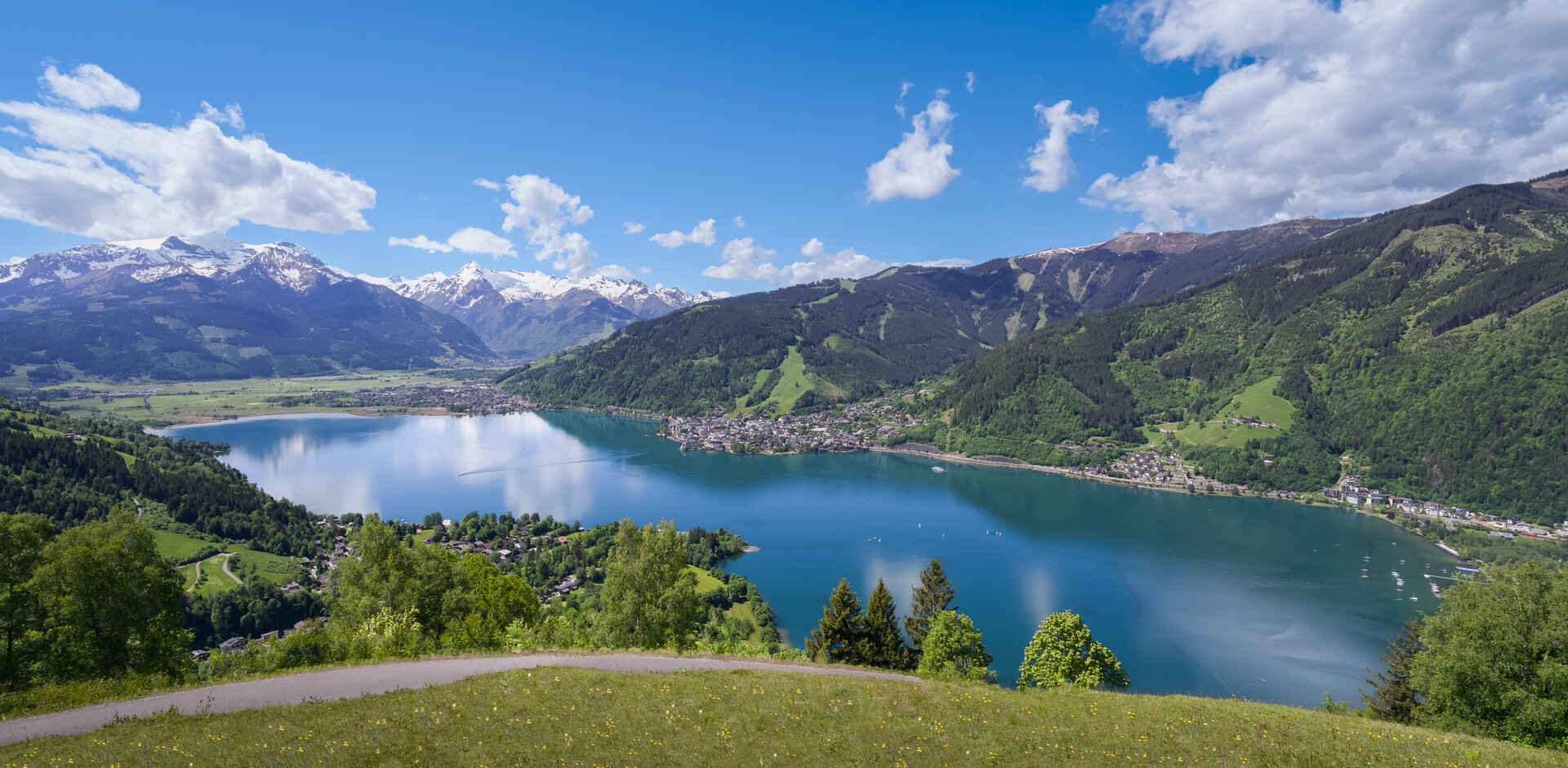

Key facts at a glance
Vienna has the reliable non-stop flights from Riyadh and Jeddah but lies 400 km from Zell am See, adding four hours on the ground. Salzburg is only 85 km away and sees occasional Gulf non-stops in summer. Munich has no Saudi non-stop but is usually the fastest door-to-door with one connection. Saudi passport holders need a Schengen visa, lodged in Riyadh, Jeddah or Dammam; UAE nationals travel visa-free.
First, the geography nobody explains
Zell am See sits in the Pinzgau valley in the province of Salzburg, in the middle of Austria’s alpine belt. It has a small airfield of its own, but it handles sightseeing and sport aviation only — no scheduled flights land there. Every arrival by air therefore ends with a ground leg, and the length of that ground leg is the single biggest variable in your journey.
That is why the cheapest flight is frequently the slowest trip. A fare into Vienna can look excellent next to Munich, right up to the moment you add four hours of train travel at each end. Judge the options on total door-to-door time, not on flight time.
Choosing your airport
| Airport | Distance to Zell am See | Ground leg | Non-stop from the Gulf? |
|---|---|---|---|
| Salzburg (SZG) | 85 km | 1 hr 15 – 1 hr 30 | Occasionally, mostly in summer |
| Munich (MUC) | 200 km | 2 hr 30 – 3 hr | No, but one stop from everywhere |
| Innsbruck (INN) | 150 km | about 2 hr | No |
| Vienna (VIE) | 400 km | 4 hr – 4 hr 30 | Yes, from Riyadh and Jeddah |
Vienna: the dependable non-stop, and the long tail
Vienna is the one Austrian airport with an established non-stop link to Saudi Arabia. Checked in August 2026, Riyadh–Vienna was running roughly nine times a week between Saudia and flynas, and Jeddah–Vienna about three times a week with Saudia. The flight itself is around five and a half hours.
The catch is everything after the aircraft door. Vienna to Zell am See is four to four and a half hours by train, changing in Salzburg — the Vienna–Salzburg Railjet takes about two and a half hours, the Salzburg–Zell am See regional service roughly ninety minutes more. Driving takes a similar amount of time. Vienna makes sense if you value a non-stop flight over a short transfer, or if you were going to spend a night or two in Vienna anyway. Families with small children and a lot of luggage often find that second leg harder than the flight.
Salzburg: the short transfer, if the schedule cooperates
Salzburg is by far the closest airport, and the drive up the valley takes only about an hour and a quarter. It is a small airport, and its Middle East services are correspondingly small and changeable: flydubai has served Salzburg from Dubai, and flynas has operated Salzburg–Riyadh as a summer route. Both have shifted season to season, so treat any list of routes — including this one — as something to confirm rather than rely on.
It is worth the ten minutes to check. If a non-stop into Salzburg exists on your dates, it removes roughly three hours of ground travel in each direction compared with Vienna, and it is the single biggest saving available on this trip.
Munich: no non-stop, usually the fastest anyway
Munich has no direct service from Saudi Arabia, but it is a major international hub with dense year-round schedules and one-stop connections from Riyadh, Jeddah, Dammam, Doha, Dubai, Abu Dhabi and Kuwait via the usual carriers. The ground leg is two and a half to three hours by road. For most Gulf itineraries that combination — one connection, a well-served airport, a manageable drive — produces the shortest total travel time, and it is the option we would check first alongside Salzburg.
Munich is also the most forgiving airport if something goes wrong. A missed connection there has several re-booking options the same day; a missed connection into Salzburg may not.
Innsbruck: rarely the answer in summer
Innsbruck is about 150 kilometres away, roughly two hours by road, and its schedule is built around winter charter traffic. Unless you are combining Zell am See with a stay in Tyrol, it is unlikely to be your best entry point.
Comparing fares and dates across all four is the practical first step, since the answer changes with the season and with how far ahead you book.
Search flightsVisas and entry
If you hold a Saudi passport
Saudi Arabia is on the EU’s visa-required list, so you will need a Schengen C visa for a holiday in Austria. For Austria, applications in Saudi Arabia are lodged at the VFS Global centres in Riyadh, Jeddah and Dammam, by appointment, and you have to attend in person for biometrics. Austria also processes applications for Estonia and Slovenia at the same centres.
Two timing rules matter. You may lodge an application up to six months before travel, and no later than fifteen calendar days before your intended departure. In practice, apply well beyond that minimum: summer is peak season for appointment slots, and fifteen days leaves you no room if a document is queried.
One piece of good news that many applicants still do not know: since April 2024 the EU applies a more generous “cascade” to Saudi nationals, under which qualifying applicants — including first-time applicants — can be issued a five-year multiple-entry visa rather than a single-trip one. It is worth asking about, because it changes what a second or third visit costs you in effort.
Which country do you apply to?
This trips people up when they fly into Munich. A Schengen visa is applied for at the country of your main destination — where you will spend the most nights — not the country you happen to land in. If your nights are in Zell am See and you are only changing planes or driving through Germany, Austria is the country to apply to, even with a Munich flight booking. If your trip genuinely splits between Bavaria and Austria, the country with the longer stay takes it, and where the nights are equal, the country of first entry.
If you hold a UAE passport
Emirati nationals travel to the Schengen area visa-free for short stays and need no advance visa. From the last quarter of 2026 the EU is introducing ETIAS, an online travel authorisation for visa-exempt nationalities, which will apply to UAE passport holders once it is live. It is an online form and a small fee, not a visa, but it will need to be done before departure. Nationals of Qatar, Kuwait, Bahrain and Oman should check their own current status, which has been under active review.
Whatever your nationality, entry rules change. Confirm against the Austrian foreign ministry or your nearest Austrian embassy close to your travel date rather than relying on any travel site, this one included.
The last leg into the valley
The general comparison of airports and ground options, without the Gulf-specific angle, is in from the airport to Zell am See.
Train
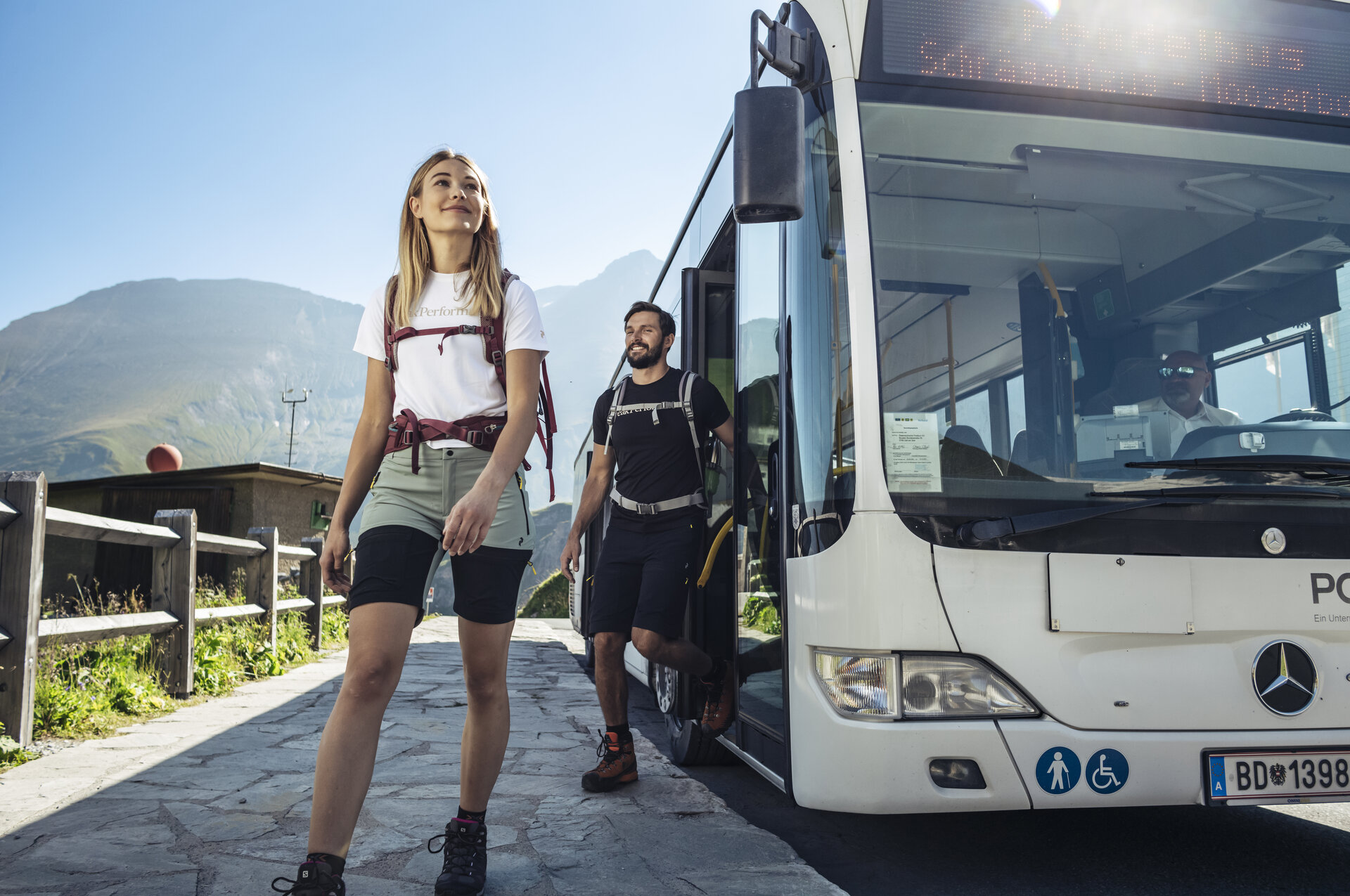
Zell am See is on the Salzburg–Tyrol line and the station sits in the middle of town, a short walk or a very short taxi ride from most hotels. From Salzburg airport you take a bus or taxi to the main station and continue from there, about ninety minutes. From Vienna it is four to four and a half hours with one change. Austrian trains are comfortable, have space for large luggage, and run to timetable. For a family arriving tired after a long flight, this is often the least stressful option, and it removes any question of parking.
Private transfer or airport taxi
A pre-booked car meeting you in arrivals is the most comfortable way to cover the ground leg, particularly from Salzburg or Munich with several suitcases and children. Book it in advance in high season rather than arranging it on landing, and give the driver the hotel address rather than “Zell am See” — the region spreads across several villages. Many hotels will also arrange a transfer if you ask when you book.
Book an airport transferRental car
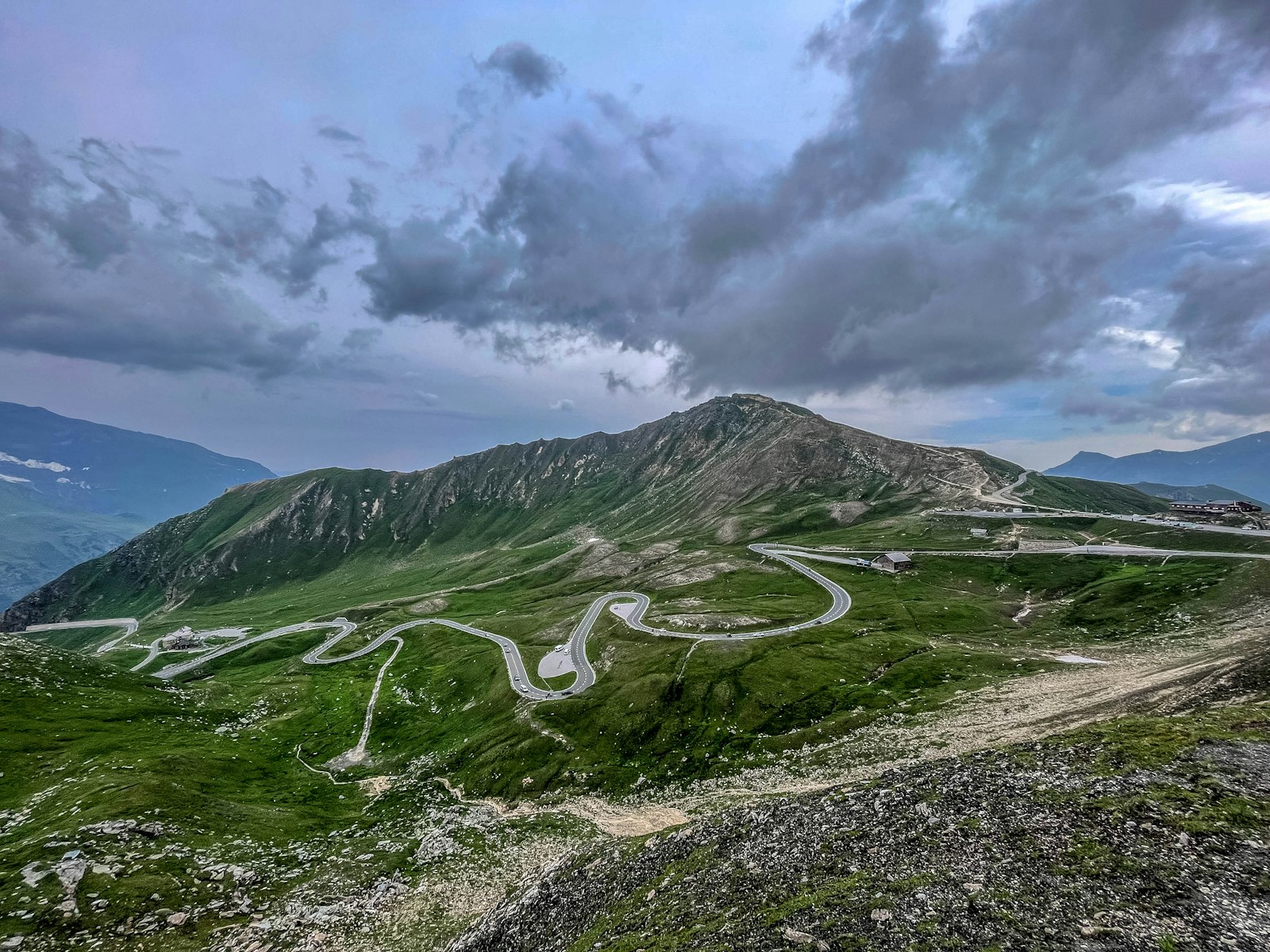
A car is worth having if you plan to range beyond the immediate area — the Grossglockner high alpine road, the Krimml waterfalls, day trips to Salzburg. Within Zell am See and Kaprun themselves you can manage comfortably without one. Three things to know before you book:
- Your licence. A Saudi licence is printed in Arabic script, and Austria requires either an International Driving Permit or a certified English translation alongside it. Rental desks enforce this. Arrange the IDP at home before you fly — you cannot obtain one on arrival.
- The motorway sticker. Austrian motorways require a vignette, and the Tauern motorway from the south carries an additional toll on top of it. Rental cars usually come with one, but confirm rather than assume. The details are in our guide to the vignette and Austrian tolls.
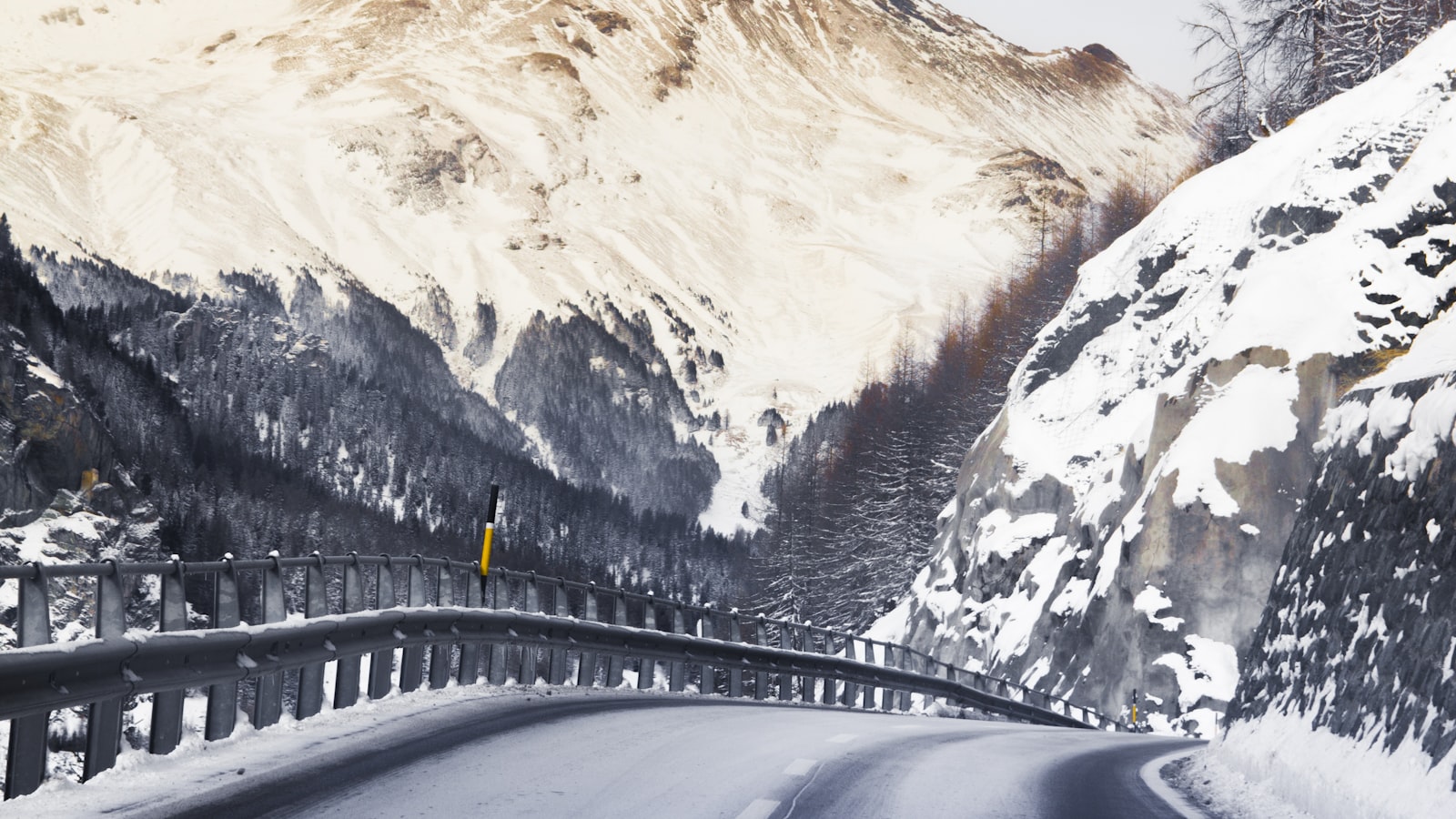
- Mountain roads. Alpine passes are narrow, steep and occasionally single-lane with passing places. If you have not driven roads like these before, take the first day gently, and be aware that some high roads are seasonal and closed outside summer.
When to come
For visitors escaping the Gulf summer, the window is roughly June to mid-September. July and August are the greenest and the busiest, with everything open — cable cars, lake swimming, mountain restaurants. What surprises most first-time visitors is that alpine summer is genuinely cool rather than merely less hot: daytime temperatures usually sit in the low to mid twenties, evenings drop into single figures, and rain arrives without much warning. Pack layers and a waterproof jacket even in August. We go through this in detail in what Gulf visitors should actually expect from the summer weather.
Accommodation in July and August books out months ahead, so the sequence that works is: fix your dates, book the hotel, then book flights around it — not the other way round.
What to sort out before you fly
- Food. Austria has no state halal certification, so halal status is something you confirm business by business rather than look up on a seal. Our guide to halal food in Zell am See-Kaprun explains how to check and where the Middle Eastern restaurants and grocers cluster.
- Prayer. There is no mosque or public prayer room in Zell am See town itself; the nearest facilities are in Saalfelden and Mittersill, and both are small community associations rather than visitor centres. See prayer facilities and faith communities around Zell am See for the addresses, the qibla direction and what to expect.
- Money. Austria uses the euro. Cards are accepted almost everywhere, though a few small mountain huts and cable-car kiosks are still cash-only. Tipping is modest: rounding up, or about five to ten per cent in a restaurant.
- Connectivity. An eSIM bought before departure is the simplest option; Austrian coverage in the valley is good, and patchier on the high trails.
- Power. Austria uses 230 V with the round two-pin Type C/F socket, the same as most of continental Europe.
- Health. Tap water is drinkable everywhere and comes from the mountains. Pharmacies (Apotheke) operate a rota for nights and Sundays, posted on the door of each one.
Where to stay once you have your dates
Zell am See sits on the lake and has the town centre, the promenade and the Schmittenhöhe cable car; Kaprun is quieter, ten minutes south, and closer to the glacier and the reservoirs. Families frequently prefer Kaprun for space and Zell am See for convenience. Our lists of lakefront hotels in Zell am See and family hotels in Zell am See-Kaprun break the choice down, and the travel guide to the region is the place to start if this is your first visit.
Transparency notice: this article contains advertising links to Booking.com, DiscoverCars.com. If you book through them we receive a small commission — the price stays exactly the same for you.
Frequently Asked Questions
Can I fly directly to Zell am See?
No. Zell am See has only a small sport airfield with no scheduled flights. You land at Salzburg, Munich, Innsbruck or Vienna and cover the last stage by train, private transfer or rental car.
Which airport is best from Saudi Arabia?
Vienna has the established non-stops from Riyadh and Jeddah but is 400 km away, roughly four hours by train. Munich has no Saudi non-stop yet is often fastest door-to-door with one connection, at 200 km. Salzburg is closest at 85 km and occasionally has Gulf non-stops in summer, so check your dates there first.
Do Saudi citizens need a visa for Austria?
Yes. Saudi Arabia is on the EU's visa-required list, so a Schengen C visa is needed. For Austria, applications are lodged at the VFS Global centres in Riyadh, Jeddah or Dammam, up to six months before travel and no later than fifteen calendar days before departure. Since April 2024 qualifying Saudi applicants can receive a five-year multiple-entry visa.
Do UAE nationals need a visa?
No. Emirati passport holders travel to the Schengen area visa-free for short stays. From the last quarter of 2026 they will need an ETIAS travel authorisation, which is an online form and a small fee rather than a visa.
Can I drive in Austria on a Saudi driving licence?
Only together with an International Driving Permit or a certified English translation, because a Saudi licence is printed in Arabic script. Arrange it at home before you fly; rental desks in Austria enforce the requirement and you cannot obtain the permit on arrival.
When is the best time to visit from the Gulf?
Roughly June to mid-September. July and August are the greenest and busiest, with cable cars, lake swimming and mountain restaurants all open. Expect daytime temperatures in the low to mid twenties and cool evenings, so pack layers and a waterproof jacket.