Key facts at a glance
Kesselfall is not a village but the end of the mountain road about six kilometres past Kaprun: a car park, a ticket office and the Alpenhaus at roughly 1,040 metres. The ascent to the high mountain reservoirs starts here, and only in summer.
Part of our complete guide: Mooserboden & the Kaprun High Alpine Reservoirs at 2,040 m
In short: Kesselfall is not a village, it is the end of the road. About six kilometres past Kaprun the mountain road stops, and there you find a car park, a ticket office and the Kesselfall-Alpenhaus at roughly 1,040 metres — and from here, and only from here, the journey up to the Kaprun high mountain reservoirs begins. Anyone typing “Kesselfall” into a map is usually looking for the starting point rather than a place to stay. This page explains what is actually up there, how to reach it, and why you almost certainly do not want to sleep here.
What Kesselfall is — and what it is not
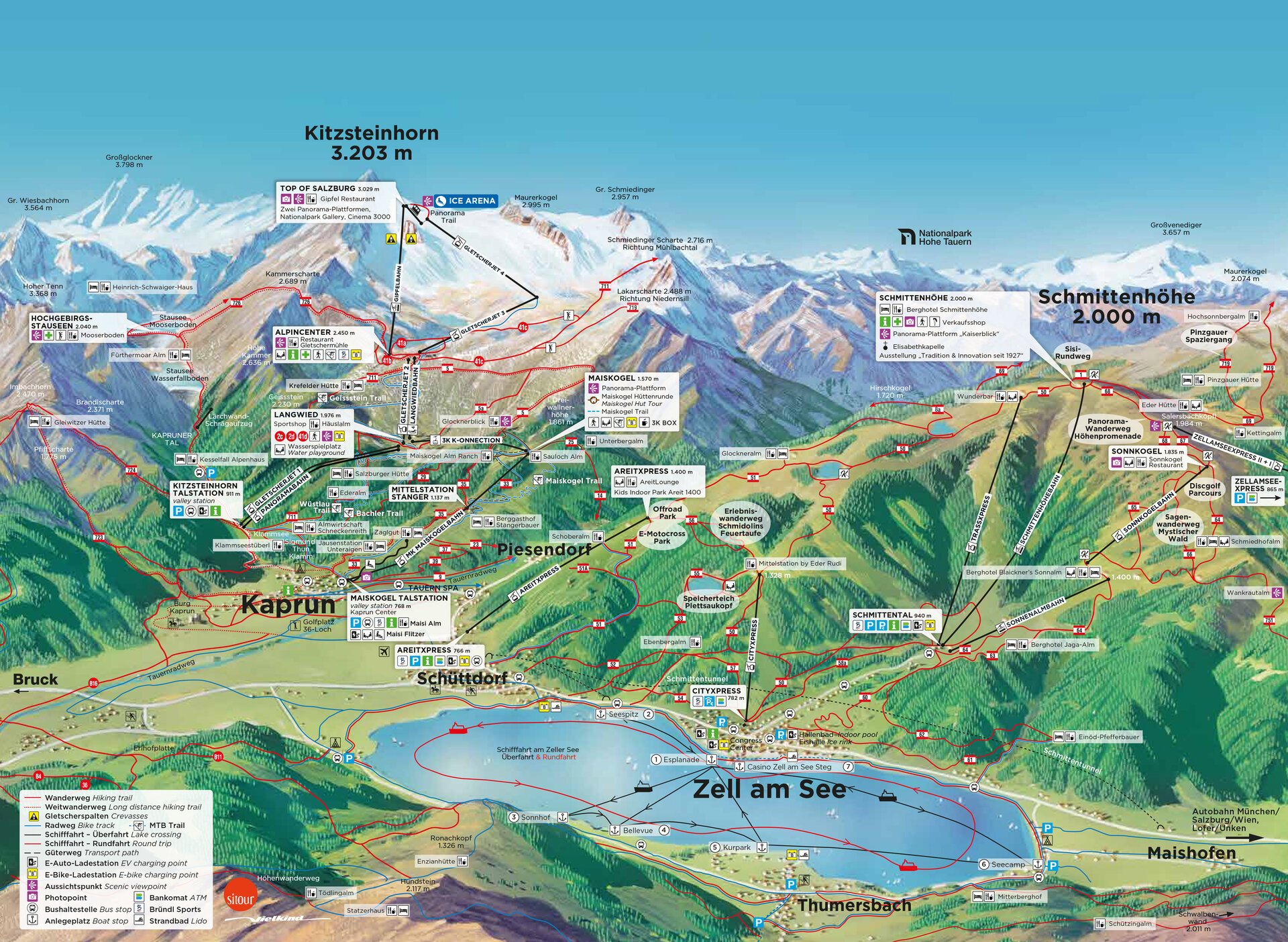
The Kaprun valley runs south from the municipality of Kaprun into the mountains. It does not end at a village but at a barrier. The last point you can reach in your own car is called Kesselfall: a car park, the ticket office for the reservoirs, the Alpenhaus as an inn, and behind it the road that is closed to private traffic.
There is no village centre here, no shops, no church and no resident population in the usual sense. That matters, because everything else follows from it: Kesselfall is an access point, not a base. Anyone spending a week in the region stays in Kaprun and drives up here once.
The second thing to know in advance: all of this is seasonal. The ascent to the reservoirs is a summer operation; outside the season Kesselfall is simply the end of a closed road. The exact operating dates change every year with the snow, which is why no date is given here — check with the operator before you set off.
The way up
From Kesselfall you no longer drive yourself. The route to the reservoirs is a chain of three links, and it is the reason the trip takes longer than the map distance suggests:
- A bus through the Lärchwand tunnel from the Alpenhaus to the valley station of the inclined lift at around 1,209 metres.
- The Lärchwand inclined lift up to roughly 1,640 metres — the ride many people come for in the first place.
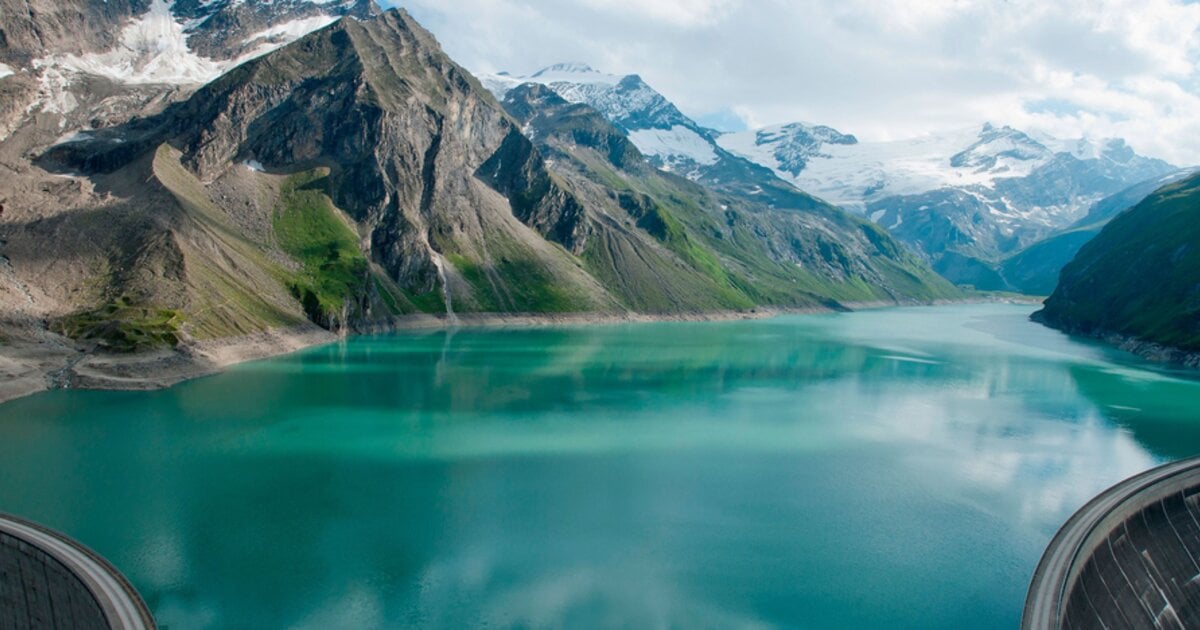
- A second bus to the Mooserboden at around 2,040 metres, where the dam walls stand.
Budget generously. Each link in that chain has its own departure times, and on fine August days waiting is added to them. For timetable, prices and duration we have a separate page: Kaprun high mountain reservoirs — getting there, duration and season.
Getting as far as Kesselfall
By car: from Kaprun follow the signs towards the Hochgebirgsstauseen, then about six kilometres of mountain road to the car park at the end. Parking is free.
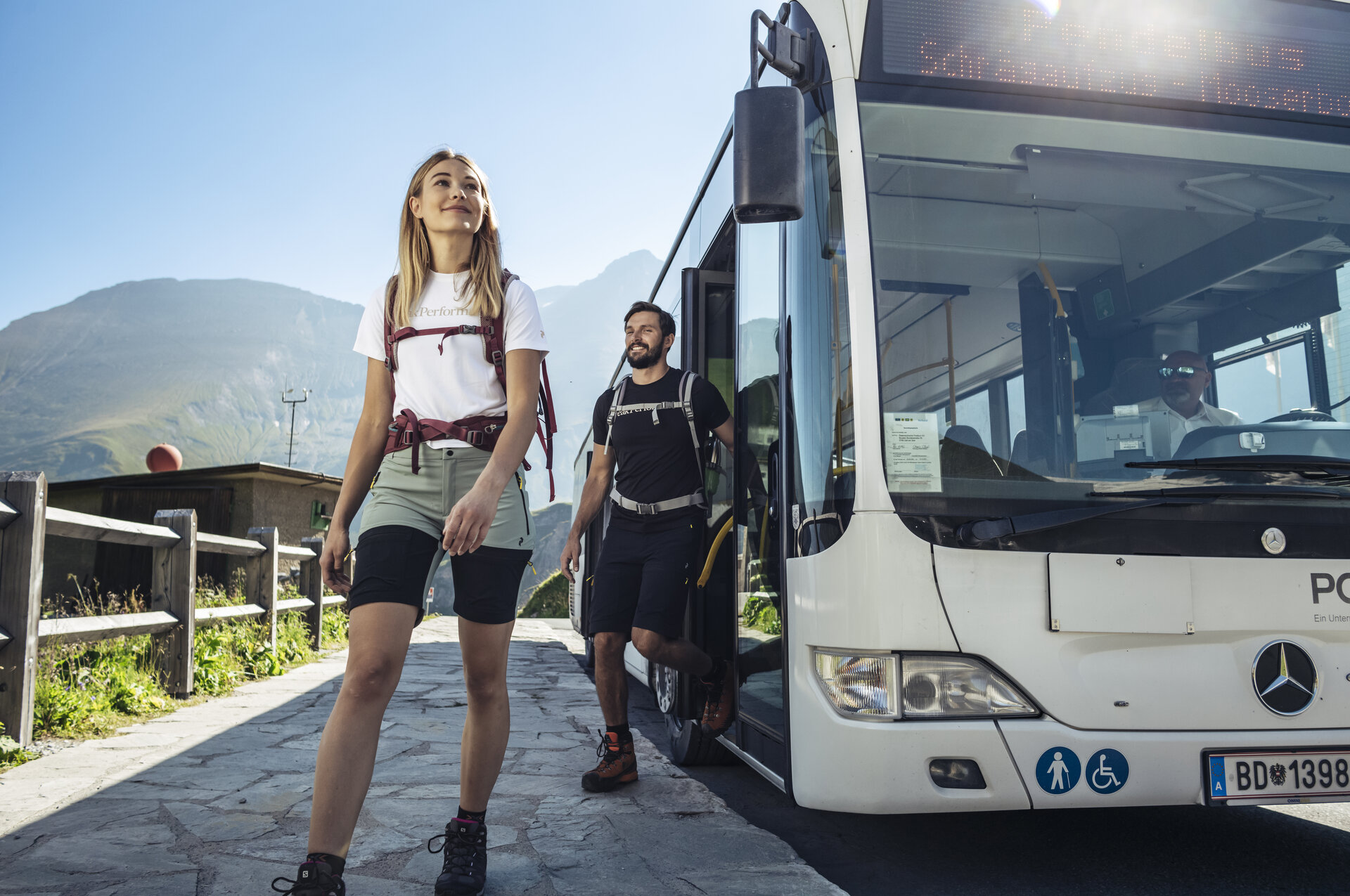
By bus: line 660 runs from Zell am See to the Kesselfall-Alpenhaus stop. That is the calmer option, because it spares you the mountain road and the hunt for a space — and on hot days the car park genuinely does fill up. Timetables are with the Salzburg transport authority.
One practical point that is often missed: the Sigmund-Thun-Klamm gorge lies on the way up from Kaprun. If you want both in one day, plan the gorge for the way back — after the ascent most people have no energy left for a gorge, and it keeps its own opening hours.
Staying at Kesselfall
Honesty is more useful here than a list: at Kesselfall itself there is essentially the Alpenhaus, and that is a mountain inn at the end of a road, not somewhere to spend a week. There is no village structure, no supermarket, and no connection back down the valley in the evening.
For almost every trip the right answer is therefore: stay in Kaprun and come up here. From Kaprun you are at the car park in under a quarter of an hour, you have restaurants and shops in the evening, and you are close to the Kitzsteinhorn and the TAUERN SPA at the same time. Which location in the region suits what is set out in our overview of the places.
Staying up here really only makes sense in one case: if you want to be first up the next morning and spend the day on the mountain. That is mountaineering logic, not holiday logic.
Who the trip is worth it for — and who it is not
First, what could spoil the day for you:
- You only have half a day. Then do not go up. The chain of bus, inclined lift and bus takes time in both directions; half a day covers the journey and the frustration, not the time at the top.
- You are coming outside the summer season. Then you are standing at the end of a closed road. That is not a surprise anyone wants to discover on site.
- You are not good with heights. The inclined lift and the dam walls are exactly what they sound like. If that unsettles you, there is little joy up there.
- You are expecting a village. There is none. Kesselfall is a car park with a view and an inn.
And what it is the right decision for:
- Anyone who wants one full day in the high mountains without having to climb there. That is precisely what this infrastructure was built for.
- People interested in engineering. Power station construction, dam walls and an inclined lift on a rock face — that is the real attraction, not the scenery alone.
- Families with older children. The journey itself is the experience. With toddlers and a pushchair, all the changing becomes hard work.
- Anyone looking for walks that start above 2,000 metres without the climb to get there.
In short: Kesselfall is the door, not the destination. The destination sits 1,000 metres above it — and the door is shut in winter. Further destinations within reach are collected in our overview of excursions around Zell am See-Kaprun.
Frequently Asked Questions
Is Kesselfall a village?
No. Kesselfall is the end of the mountain road in the Kaprun valley: a free car park, the ticket office for the reservoirs and the Kesselfall-Alpenhaus at roughly 1,040 metres. There is no village centre, no shops and no resident population in the usual sense.
How do you get to Kesselfall?
By car from Kaprun, following the signs towards the Hochgebirgsstauseen, then about six kilometres of mountain road to the car park at the end. By public transport, line 660 runs from Zell am See to the Kesselfall-Alpenhaus stop.
How do you continue from Kesselfall to the reservoirs?
In three steps: a bus through the Larchwand tunnel to the valley station at around 1,209 metres, the Larchwand inclined lift up to roughly 1,640 metres, and then a second bus to the Mooserboden at around 2,040 metres. Your own car goes no further than Kesselfall.
Can you stay overnight at Kesselfall?
In practice only at the Alpenhaus, and that is a mountain inn at the end of a road rather than somewhere to spend a holiday week. For most trips Kaprun is the right base; from there the car park is under a quarter of an hour away.
Is Kesselfall reachable in winter?
The ascent to the reservoirs is a summer operation. Outside the season Kesselfall is the end of a closed road. Operating dates shift each year with the snow, so check with the operator before setting off.