Key facts at a glance
Canyoning takes you down a water gorge by abseiling, sliding and jumping, in the Salzburg region mostly around Golling an der Salzach and often combined with rafting. The jumps are almost always optional. From Zell am See it is a whole day with one and a half to two hours of driving.
In short: Canyoning is the more demanding sibling of rafting: you drop into a gorge and work your way down it by abseiling, sliding and jumping. In the Salzburg region it is mostly run around Golling an der Salzach, often as a full-day combination with rafting. From Zell am See that is a whole day with roughly one and a half to two hours of driving — and the most intense water experience the area offers.
Transparency notice: this article contains advertising links to GetYourGuide. If you book through them we receive a small commission — the price stays exactly the same for you.
What canyoning actually is
The word sounds like an extreme sport, which puts off plenty of people who would manage it comfortably. In practice canyoning is a guided descent through a water gorge — downhill, with the stream, in a wetsuit and helmet, secured by a guide.
Four kinds of movement alternate: abseiling down waterfall steps, sliding along rock chutes polished smooth by the water, jumping into pools — and simply walking or scrambling through the gorge. The decisive point for anyone hesitating: the jumps are almost always optional. There is normally a way to downclimb or abseil past every jump. If you dislike heights you can still do a full trip.
Why the Salzburg region suits it
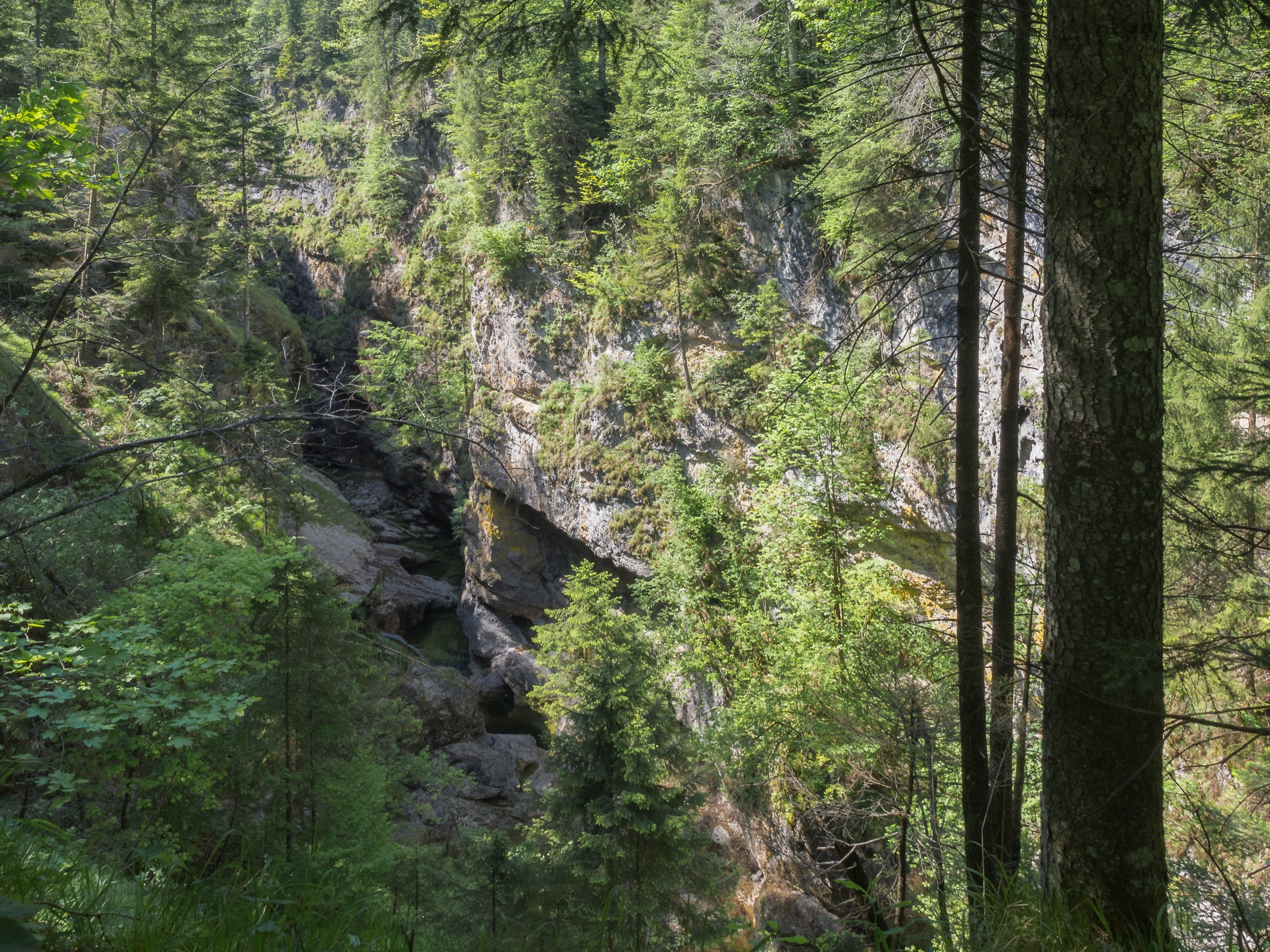
The limestone ranges around Golling and the Pass Lueg are cut through with narrow, deeply incised gorges — the same geology that produced the Golling waterfall and the well-known Salzachöfen gorge. For canyoning that means tight, water-polished rock passages with reliable flow right through the summer.
If you know the Sigmund-Thun gorge in Kaprun you have a good picture of the landscape — except that there you walk on a boardwalk above the water, and in canyoning you are in it.
Check availability & priceThe most common format in the Salzburg region combines canyoning and rafting into a full-day programme with lunch. For first-time visitors that makes sense: you get both disciplines in one day, at one base, with one drive.
Requirements, realistically
Operators like to phrase this invitingly. Honestly it is:
- Swimming is mandatory. Not athletically — but you must feel secure in moving water.
- Basic fitness is enough. If you can manage a three-hour mountain walk you can manage a beginner trip.
- Minimum age is usually around 12 to 14 depending on the trip. For families with younger children, rafting is the better fit.
- Narrow passages come with the territory. If you are strongly claustrophobic, raise it with the operator beforehand.
Cold is the most underestimated factor. Gorge water rarely exceeds about ten degrees even at the height of summer. The wetsuit compensates as long as you keep moving; during long waits at an abseil station it turns uncomfortable quickly. Small groups are noticeably more pleasant than large ones.
Season and weather
The season normally runs from about May to September, with the core in high summer. Unlike rafting, canyoning is more strictly weather-dependent: with thunderstorms forecast or heavy rain it is cancelled, consistently. A gorge can rise within minutes in a sudden downpour — which makes a cancellation here a mark of quality, not an annoyance.
Practical consequence: book canyoning early in your stay so a fallback date remains. And keep a bad-weather plan ready — the TAUERN SPA in Kaprun is the obvious one.
The day from Zell am See
Reckon on this: a 9am meeting point around Golling means leaving Zell am See at about 7:30am — roughly 80 kilometres on the B311 and the A10. The trip itself, with kit, approach, gorge and return, fills a good seven to eight hours. You are back in the early evening.
That is a whole holiday day, not one item among several. Plan nothing else for it — least of all an evening concert in Salzburg.
Kit: what is provided, what you need
Wetsuit and jacket, harness, helmet and buoyancy aid are provided. Bring:
- Swimwear for underneath and a towel
- Sturdy trainers that are allowed to get wet — the single most important item. Sandals and pool slides are unsuitable; some operators hire out canyoning boots, so ask first.
- A complete change of clothes, socks included
- Something to eat if lunch is not included
Phone and camera stay in the car. Even waterproof cases do not reliably survive a slide; guides normally take photographs themselves.
More of what can be booked in the region is in booking tours in Zell am See.
Frequently Asked Questions
Do you have to jump when canyoning?
No. The jumps are almost always optional: there is normally a way to downclimb or abseil past every jump. If you dislike heights you can still complete a full trip.
What do you need to go canyoning?
Being a confident swimmer is mandatory, but you do not need to be athletic. If you can manage a three-hour mountain walk you can manage a beginner trip. The minimum age is usually around twelve to fourteen depending on the operator.
How cold is the water when canyoning?
Gorge water rarely exceeds about ten degrees even in high summer. The wetsuit compensates as long as you keep moving, but during long waits at an abseil station it turns uncomfortable quickly, which is why small groups are more pleasant than large ones.
Is canyoning cancelled in rain?
Yes, consistently. With thunderstorms forecast or heavy rain a gorge can rise within minutes, so a cancellation is a mark of quality. Book canyoning early in your stay so a fallback date remains.
What shoes do you need for canyoning?
Sturdy trainers that are allowed to get wet. That is the single most important item of kit. Sandals and pool slides are unsuitable. Some operators hire out canyoning boots, so ask before booking. Wetsuit, harness, helmet and buoyancy aid are provided.