Key facts at a glance
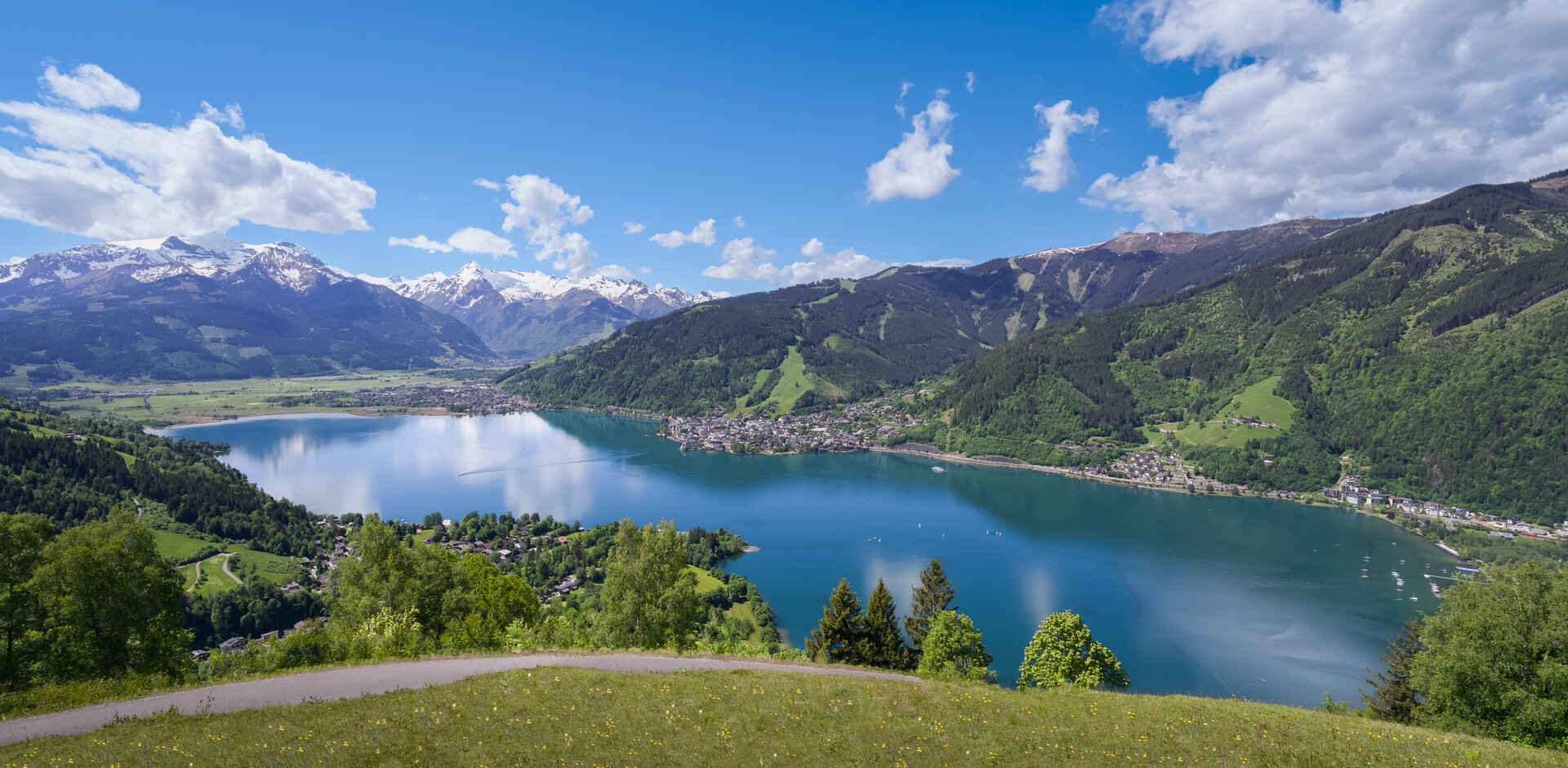
Zell am See is one of the few Alpine towns where arriving by train genuinely works: the station is in the middle of the town, minutes from the old town and lake promenade. From Salzburg it is a direct journey of a good hour and a half, from Munich three to four hours with one change, from Vienna about five. It becomes cheap via the contingent OeBB Sparschiene, which must be booked early and binds you to the booked train. The real sticking point is the last mile: Kaprun, Schuettdorf and Thumersbach need a bus, shuttle or taxi, and the guest card generally covers the buses.
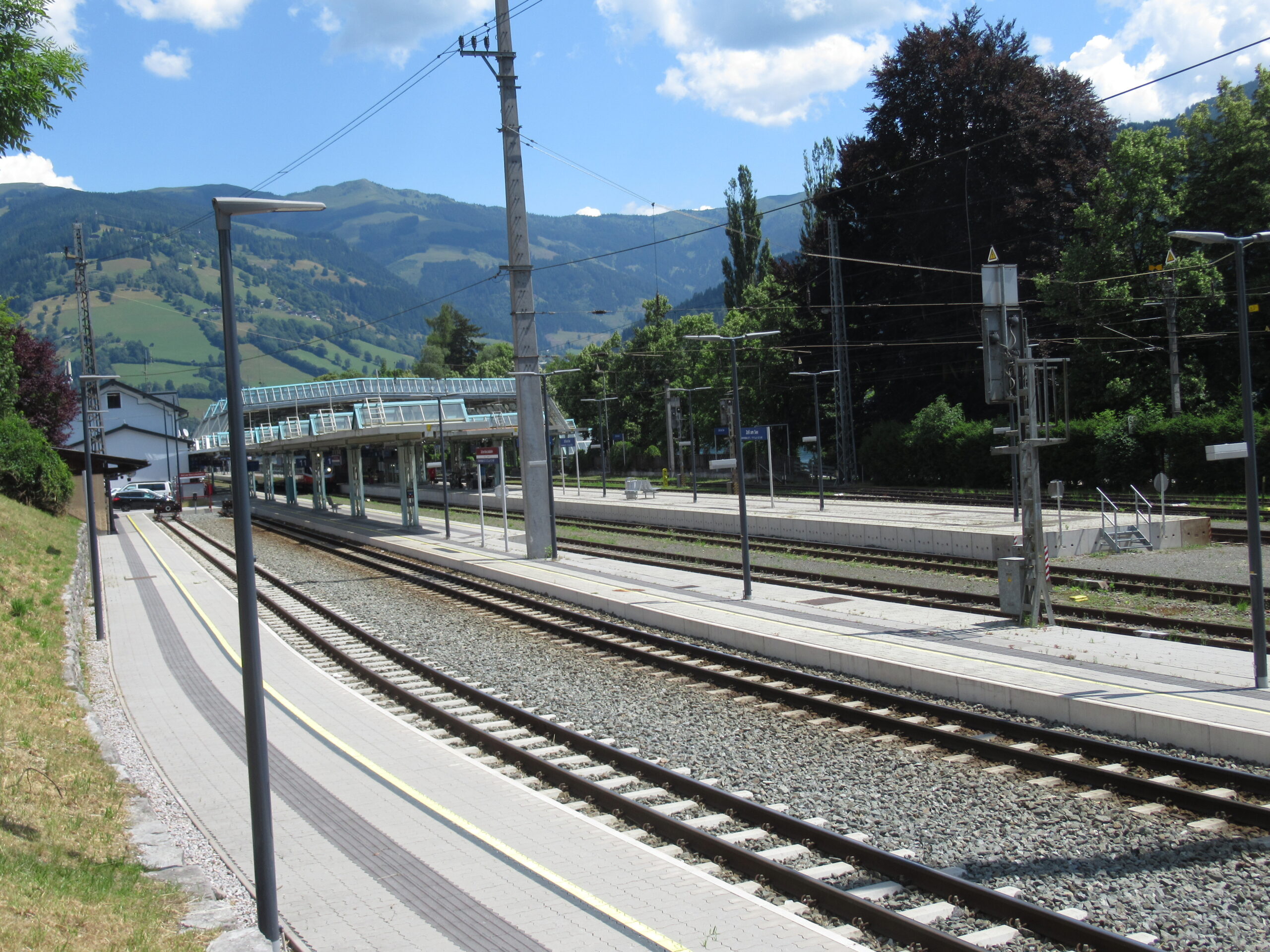
Zell am See is one of the few Alpine towns where arriving by train works without compromise: the station is right in the middle of the town, less than five minutes on foot from the lake promenade and the old town. From Salzburg you travel here without changing in a good hour and a half, from Munich with one change in around three to four hours, and from Vienna in about five. The sticking point is not the journey itself but the last mile: if your accommodation is in Kaprun, Schuettdorf or Thumersbach you will need a bus, hotel shuttle or taxi.
Why the train works better here than elsewhere
In many ski resorts the railway ends in the valley town and the actual holiday village lies another twenty kilometres and three hairpins higher up. Zell am See is different: the Salzburg-Tyrol line, the old Gisela railway, runs directly through the town. The station stands at the edge of the centre, and if you are staying in the centre, the old town or on the esplanade you simply wheel your case across. The base station of the Schmittenhöhe lift is a few minutes away by local bus.
The narrow-gauge Pinzgau local railway towards Mittersill and Krimml also starts at the same station, a small experience in its own right for trips into the upper Pinzgau and a genuine alternative to the car in summer.
Connections at a glance
- From Salzburg main station: the simplest option. Regional and long-distance trains run through several times a day, taking around an hour and a half.
- From Munich: normally via Salzburg, alternatively via Rosenheim and Woergl. With one change, roughly three to four hours.
- From Vienna: Railjet to Salzburg, then onwards. Allow around five hours in total. In peak season there are also through trains towards Tyrol that stop here.
- From Innsbruck: via Woergl, about two to two and a half hours. Often overlooked, but the shortest connection from the west.
- From Zurich or southern Germany: practically always via Innsbruck and Woergl or via Salzburg, so compare both options on your travel day.
These figures are orders of magnitude, not timetable data. Engineering works, season and day of the week shift them noticeably, especially on winter Saturdays when extra ski trains run.
Tickets: understand the Sparschiene rather than guessing prices
The OeBB sells part of its seats as contingent Sparschiene tickets. Each train has a limited quantity of cheap tickets, and the closer the travel day comes the more likely that contingent is used up. Book six to eight weeks ahead and you regularly pay a fraction of the standard fare. Booking usually opens about six months in advance.
- Train binding. The Sparschiene is valid only for the booked train. Miss it, for example because your flight is delayed, and the ticket is forfeited. With tight connections on arrival day the flexible ticket is the calmer choice.
- Exchange and cancellation are heavily restricted or excluded on the cheapest fares.
- Discount cards: the OeBB Vorteilscard pays off after only a few journeys a year, and the BahnCard does the same from Germany.
- From Bavaria: the Bayern-Ticket gets you cheaply to Salzburg main station, from where you need an Austrian ticket onwards. Whether that beats a through saver fare depends mainly on group size.
Luggage, skis and pushchairs
- On arrival Saturdays in peak season take an earlier train than you strictly need, as the midday trains are the fullest.
- Add a seat reservation on long-distance services, especially over Christmas, the February half-term and around Easter.
- Bicycles, unlike skis, need their own space reservation and are often limited on regional trains.
- Pushchairs fit in the multi-purpose areas, though a pushchair plus skis plus suitcases gets tight.
- The OeBB offers a door-to-door luggage service so cases and ski bags travel separately. Allow several working days and clear the address with your accommodation.
The last mile: from the station to your accommodation
- Centre, old town, esplanade: on foot, a few minutes. Manageable with a suitcase.
- Schuettdorf: around two and a half kilometres south. Local bus or taxi; unpleasant on foot with luggage.
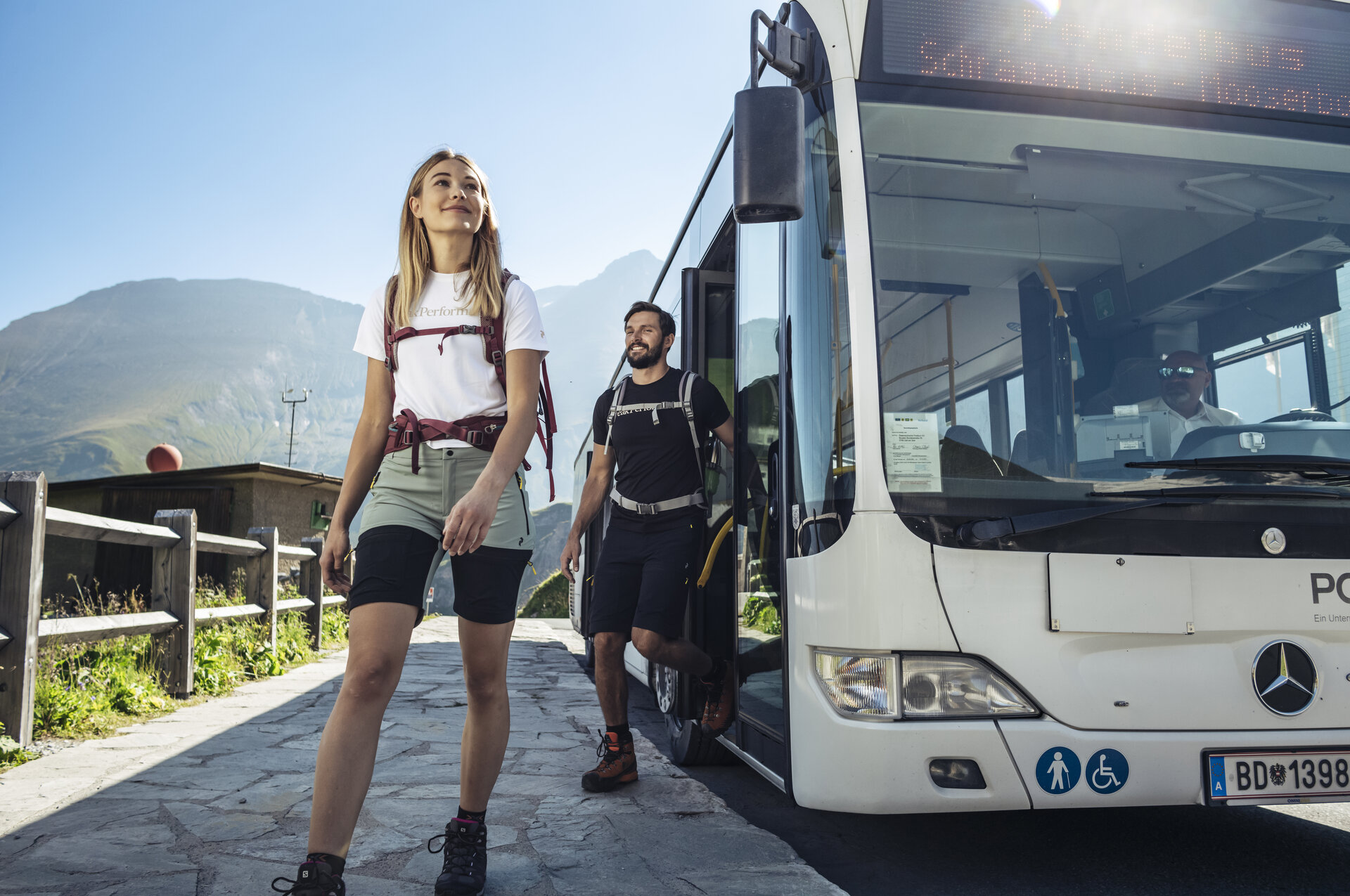
- Kaprun: no station of its own. The regional bus runs frequently during the day from the station forecourt, taking around a quarter of an hour. In the evening the service thins out, so check the last connection.
- Thumersbach: on the eastern shore. Bus around the lake, and in summer also the boat across the lake.
Important for your budget: from the first overnight stay guests generally receive a guest or mobility card covering the regional buses at no extra charge. Ask for it at check-in and have them show you which lines are included, as details differ between summer and winter.
Arrival day in practice
Trains almost always arrive before check-in time. Rather than sitting at the station, leave your luggage at the hotel and spend the afternoon by the lake or in the old town. Two things are still worth doing on arrival day in winter: ski hire and shopping.
Rental shops are busiest on arrival day between 3pm and 6pm; reserve online and you collect in minutes. For shopping, the Austrian reality applies: supermarkets close on Sundays and public holidays. Arriving on a Sunday, shop at your interchange station or plan the first evening in a restaurant. It also makes sense to buy the ski pass online in advance; how the tariffs work is explained under ski pass prices.
Flight plus train: Salzburg and Munich
Salzburg airport is the obvious combination. A trolleybus runs from the terminal to the main station in about twenty minutes, where you change to the train. Allow generously: with baggage reclaim, bus and platform change, two hours of buffer between landing and your booked train is realistic, especially with a train-bound ticket. From Munich airport you take the S-Bahn into the city and continue via Salzburg, a long but uncomplicated chain.
Who the train suits, and who it does not
The train is the better choice if you are staying in the centre or near the station, have skiing, hiking and the lake as your main programme, and want to manage without a car. You also avoid hunting for parking entirely, a subject covered under parking in Zell am See.
It is less suitable if you are staying somewhere remote, plan many day trips beyond the region, or travel with very small children and a lot of luggage. The honest weighing-up is in do you need a car in Zell am See?. A middle way works well: arrive by train and hire a car for one or two excursion days.
Frequently Asked Questions
How long does the train take from Salzburg to Zell am See?
Around an hour and a half, mostly without changing. Salzburg main station is the key hub for arrivals from the north and east. The exact time depends on the train type and engineering works, so the current OeBB timetable is the reliable source.
Is there a station in Kaprun?
No. Kaprun has no passenger rail connection. The nearest station is Zell am See, from where a regional bus runs frequently during the day towards Kaprun and the Kitzsteinhorn, taking about a quarter of an hour. In the evening the service thins out considerably.
Can I take skis on the train free of charge?
Skis and snowboards count as hand luggage with the OeBB and cost nothing extra. The bottleneck is space: on arrival Saturdays in peak season the ski racks on regional trains are full. Take an earlier train and reserve a seat on long-distance services. Bicycles need their own space reservation.
Why is the Sparschiene sometimes so much cheaper?
Because only a limited contingent of cheap tickets is sold per train. The closer the travel day, the more likely it is used up. Six to eight weeks of lead time often halves the price. The drawback is train binding: the ticket is valid only for the booked train.
Do I still need a car once there?
For skiing, hiking, the lake and the lifts, the ski bus, local bus and guest card are quite sufficient. A car pays off mainly for day trips beyond the region. A good middle way is to travel by train and hire a car for one or two excursion days.
How far is the station from the centre?
A few minutes on foot. The station, old town and esplanade are close enough to walk with a suitcase. It is further only to Schuettdorf and Thumersbach, served by local buses, and in summer Thumersbach is also reachable by boat.