Key facts at a glance
Ski amadé and the Ski ALPIN CARD do not overlap: no Ski amadé area lies in Zell am See-Kaprun. Which pass is worth it is therefore decided by your accommodation. Only the Ski ALPIN CARD includes a glacier. There is no single-area winter pass for the Schmittenhöhe or the Kitzsteinhorn, so even short stays run on the Ski ALPIN CARD; only the Maiskogel comes cheaper.
In short: this question is almost always asked the wrong way round. Ski amadé and the Ski ALPIN CARD are not competing for the same guest, because not one single Ski amadé area lies in Zell am See-Kaprun – and the Ski ALPIN CARD is valid in no Ski amadé area. Which pass “is worth more” is therefore decided ninety per cent by your accommodation, not by the pass. If you are staying in Zell am See or Kaprun, Ski amadé is not an offer for you, it is a day trip. The comparison only becomes real while the accommodation is still open – and then it is not about kilometres of piste, but about driving time and snow reliability.
The two passes side by side
Both are multi-area passes, but they are built differently: the Ski ALPIN CARD combines three neighbouring areas, Ski amadé five regions spread across two federal states.
| Ski ALPIN CARD | Ski amadé | |
|---|---|---|
| Areas | 3: Skicircus Saalbach Hinterglemm Leogang Fieberbrunn, Schmittenhöhe, Kitzsteinhorn & Maiskogel | 5 regions: 12 Peaks (formerly Salzburger Sportwelt), Schladming-Dachstein, Gastein, Hochkönig, Großarltal |
| Kilometres of piste | 408 | up to 760 |
| Lifts | 121 | 260 |
| Resort towns | 3 | 17 |
| Glacier | yes – Kitzsteinhorn | no |
| Valid in Zell am See-Kaprun | yes | no |
| Usable without a car | partly – 2 of 3 areas | no |
Why 760 against 408 is the wrong sum
On paper Ski amadé has almost twice as many kilometres of piste. But that figure describes the total of a network, not what you can reach from your breakfast table. And both passes have the same problem: a large share of those kilometres lies too far away to use on a normal ski day.
With the Ski ALPIN CARD this is easy to work out. Of the 408 kilometres, roughly 130 are local to Zell am See-Kaprun – the Schmittenhöhe and the Kitzsteinhorn. By far the largest share falls to the Skicircus in the Glemmtal, some 30 to 40 minutes away by car and not reachable on skis. Anyone arriving without a car is paying for kilometres they will never see.
With Ski amadé the effect is stronger, not weaker. The five regions do not adjoin one another: between Schladming-Dachstein in Styria and Gastein in the Salzburg Pinzgau lie a state border and the Tauern pass. No guest skis those 760 kilometres in a week. Realistically you use one region, perhaps two – and then what you have on any given day stands against a single Ski ALPIN CARD region, not against the combined total.
The useful measure is therefore not the total kilometre count, but this: how many kilometres of piste can you reach in under 30 minutes in the morning? By that reckoning the big network passes sit far closer together than the brochures suggest.
When Ski amadé is the better choice
- You are staying in a Ski amadé region. That is the real reason, and it is a mundane one: in Flachau, Schladming, Bad Gastein or Maria Alm, Ski amadé is your local pass.
- You are planning a touring trip with changing accommodation. Ski amadé plays to its strength when you move hotel – three nights in Gastein, three in Schladming, say. Then the 760 kilometres stop being a brochure number.
- You want to take in thermal baths. Gastein combines a ski area and thermal water in one region – an argument the Ski ALPIN CARD does not have.
- You are travelling in high season and want alternatives when it is busy. More regions means more places to escape to – provided you are willing to drive.
When the Ski ALPIN CARD is the better choice
- You are staying in Zell am See or Kaprun. Then the question is settled before it is asked.
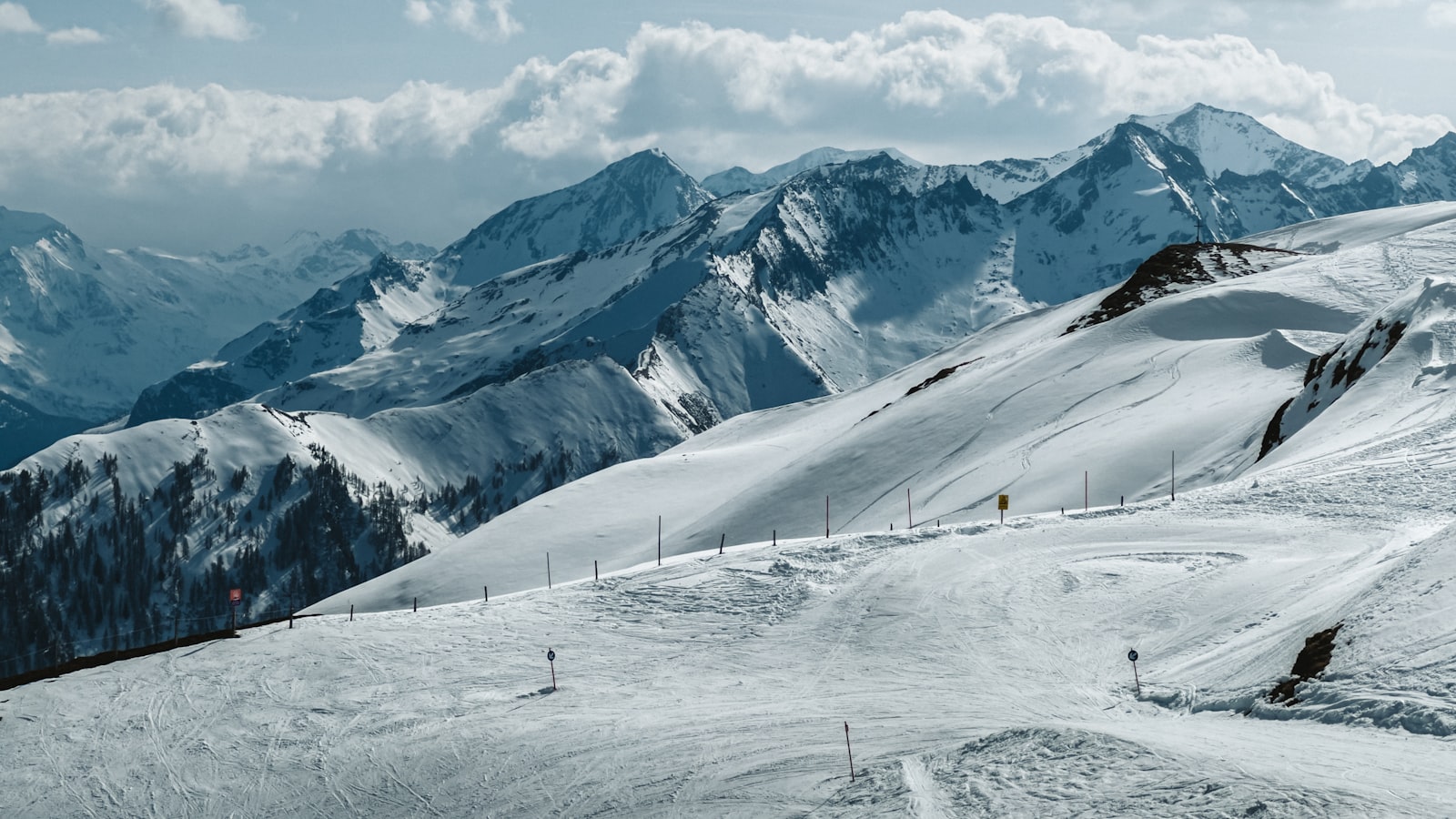
- You are coming early or late in the season. The Kitzsteinhorn is the only glacier ski area in SalzburgerLand; its top station stands at 3,029 metres. Ski amadé has no glacier. In December with a thin snow base, and again in spring, that is not a detail but the difference between skiing and not skiing.
- You want to switch plans in bad weather without driving far. Fog in the valley? Go up to the glacier. A storm on the glacier? Into the trees on the Schmittenhöhe. Zell am See and Kaprun are 15 to 20 minutes apart depending on traffic.
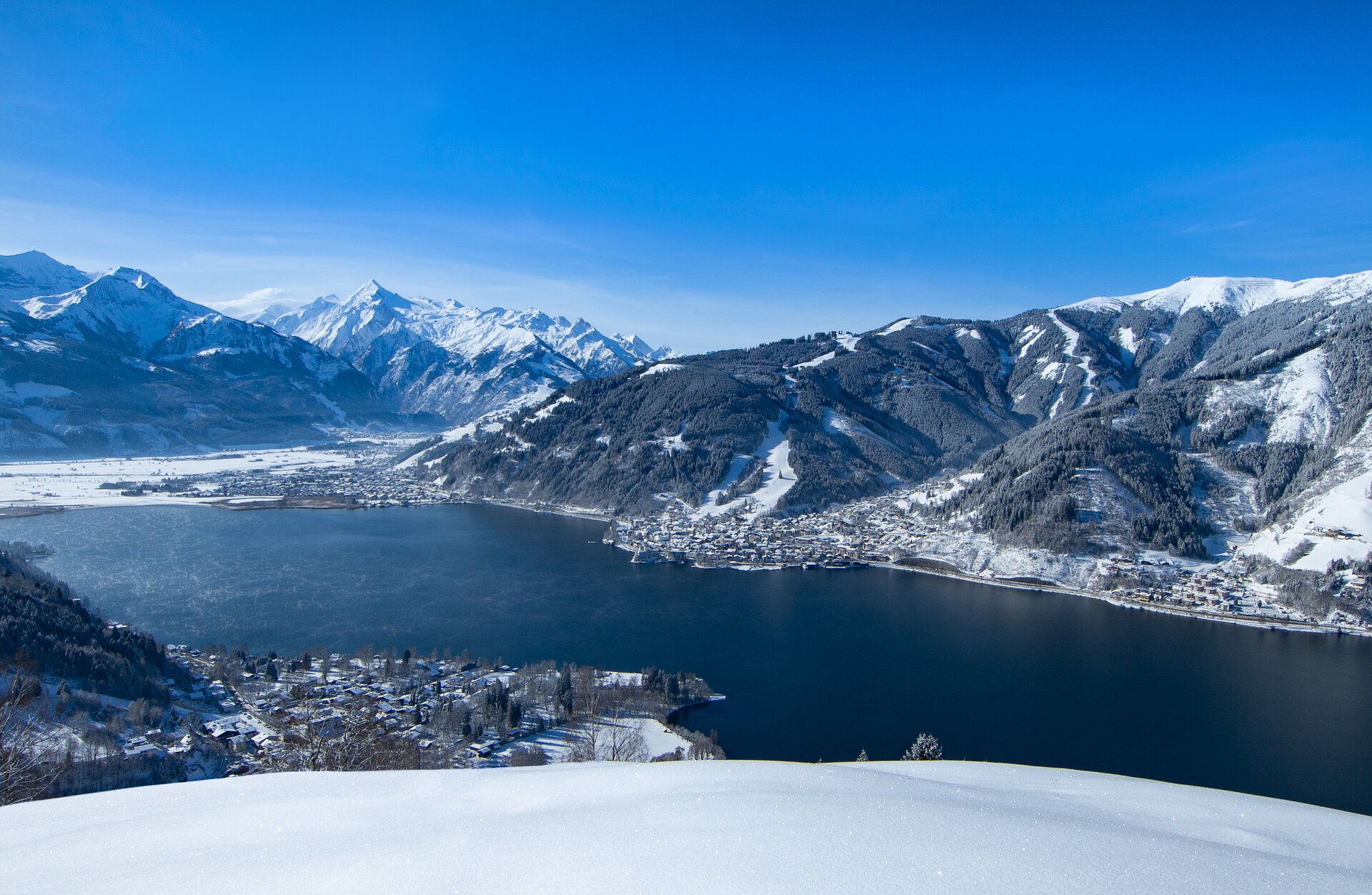
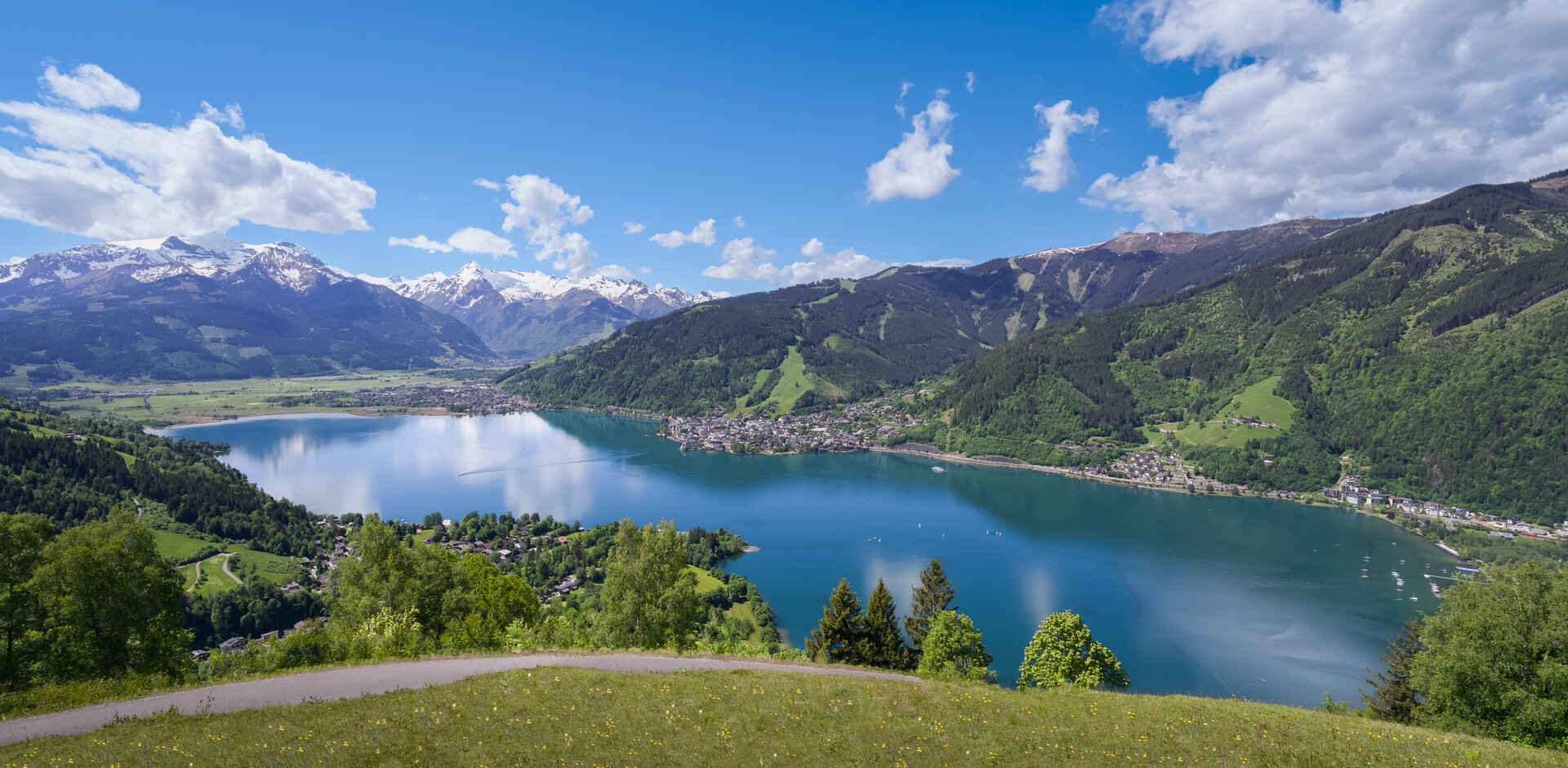
- You want the lake and the high mountains in one holiday. The Schmittenhöhe skis with a view over Lake Zell and more than 30 three-thousand-metre peaks, and the valley run ends within walking distance of town.
If you are only staying two or three days
This is the most common case, and it rarely appears in comparisons: for two or three ski days in Zell am See-Kaprun there is no choice between networks to make. Ski amadé is not valid here, and in winter the lift companies sell no single-area pass for the Schmittenhöhe or the Kitzsteinhorn – even a weekend runs on the Ski ALPIN CARD. The Skicircus is part of the price; it only becomes worth the drive from around four to six ski days, and with a car.
The one way to ski for less is on the family mountain: with younger children, or on your first days on skis, the Maiskogel day ticket in Kaprun will do, and from 5 December it is valid on the Lechnerberg as well. How those tariffs are structured – birth years rather than ages, multi-day tapering, dynamic prices depending on when you buy – is set out in understanding ski pass prices. What the Ski ALPIN CARD covers in detail is explained in our overview of the Ski ALPIN CARD.
The decision in five lines
| Your situation | Recommendation |
|---|---|
| Accommodation in Zell am See or Kaprun already booked | Ski ALPIN CARD – Ski amadé is out |
| Accommodation in Flachau, Schladming, Gastein, Maria Alm | Ski amadé – the Ski ALPIN CARD is out |
| Accommodation still open, December or spring | Zell am See-Kaprun, for the glacier |
| Accommodation still open, high season, touring trip planned | Ski amadé, for the five regions |
| Two or three ski days with small children | Maiskogel day ticket – otherwise the Ski ALPIN CARD for the days you ski |
Why there are no prices here
Both networks work with dynamic, time-dependent tariffs: the same ski day costs noticeably less bought online in advance than spontaneously at the lift ticket office, and the point in the season shifts the price further. For 2026/27 there is therefore no single “correct” price that could be written into a table – any figure here would be wrong the day after publication.
Only the operators themselves are binding: alpincard.at for the Ski ALPIN CARD, schmitten.at and kitzsteinhorn.at for the individual mountains, skiamade.com for Ski amadé – in each case the official ticket shop. Compare there for your specific dates; that is the only sum that counts.
If you are planning the winter holiday more broadly – getting there, ski buses, what to do in bad weather – the overview is in our winter guide to Zell am See-Kaprun. Ways to spare the holiday budget are collected under Zell am See-Kaprun on a budget.
Frequently Asked Questions
Which ski pass is worth more: Ski amadé or the Ski ALPIN CARD?
Your accommodation decides that, not the pass. No Ski amadé area lies in Zell am See-Kaprun, and the Ski ALPIN CARD is valid in no Ski amadé area. If you are staying in Zell am See or Kaprun you take the Ski ALPIN CARD; if you are staying in Flachau, Schladming, Gastein or Maria Alm you take Ski amadé. A genuine comparison is only possible while the accommodation is still open.
Is the Ski ALPIN CARD valid in the Ski amadé areas?
No. They are two separate networks. The Ski ALPIN CARD covers the Skicircus Saalbach Hinterglemm Leogang Fieberbrunn, the Schmittenhöhe in Zell am See, and the Kitzsteinhorn and Maiskogel in Kaprun. Ski amadé covers five different regions: 12 Peaks, Schladming-Dachstein, Gastein, Hochkönig and Großarltal. There is no overlap.
Ski amadé has up to 760 kilometres of piste and the Ski ALPIN CARD 408 - does that make Ski amadé the better offer?
Not automatically, because both figures are network totals. With the Ski ALPIN CARD only around 130 of the 408 kilometres are local to Zell am See-Kaprun; the rest lies in the Glemmtal, some 30 to 40 minutes away by car. With Ski amadé the five regions lie further apart still, partly across a state border. The useful measure is how many kilometres of piste you can reach in under 30 minutes in the morning - by that reckoning the two passes sit far closer together.
Which of the two ski passes includes a glacier ski area?
Only the Ski ALPIN CARD. The Kitzsteinhorn above Kaprun is the only glacier ski area in SalzburgerLand, with its top station at 3,029 metres. Ski amadé has no glacier. For trips in December with a thin snow base, and in spring, that is the most important difference between the two passes.
Is a network pass worth it at all for two or three ski days?
In Zell am See-Kaprun the question does not arise: in winter there is no separate ski pass for the Schmittenhöhe or the Kitzsteinhorn, so two or three ski days also run on the Ski ALPIN CARD. The Skicircus comes with it - on such a short stay you will usually leave it out. Only families and beginners ski for less, with the Maiskogel day ticket.