
There is no single price for a bed in Zell am See. The same room in the same house costs roughly twice as much in the February half-term weeks as it does in the third week of January. That is the useful thing to know before you compare a single offer: your rate is set by your travel dates and by which side of the valley you sleep on, long before the property itself comes into it. This page walks through the levers in the order they actually matter, so that the figures on the map further down read as a market rather than as a shock.
The four levers, in order of size
- When you come. Nothing else on this page moves the number as much. Shifting a week is worth more than any discount code.
- Where in the valley you sleep. Between the lakefront and a village twelve kilometres down the Salzach the gap is large enough to change which category you can afford.
- What kind of accommodation. Hotel, garni, apartment, private room and hostel are not the same market, and the cheapest nightly rate is not always the cheapest holiday.
- Which channel you book through. Real, but the smallest of the four — and mostly because entire categories are invisible on some channels, not because the same room costs less on another.
Everything below is about the first three. The fourth gets its own section at the end.
When you come
Rates here follow school calendars, not the weather. Four windows are reliably expensive:
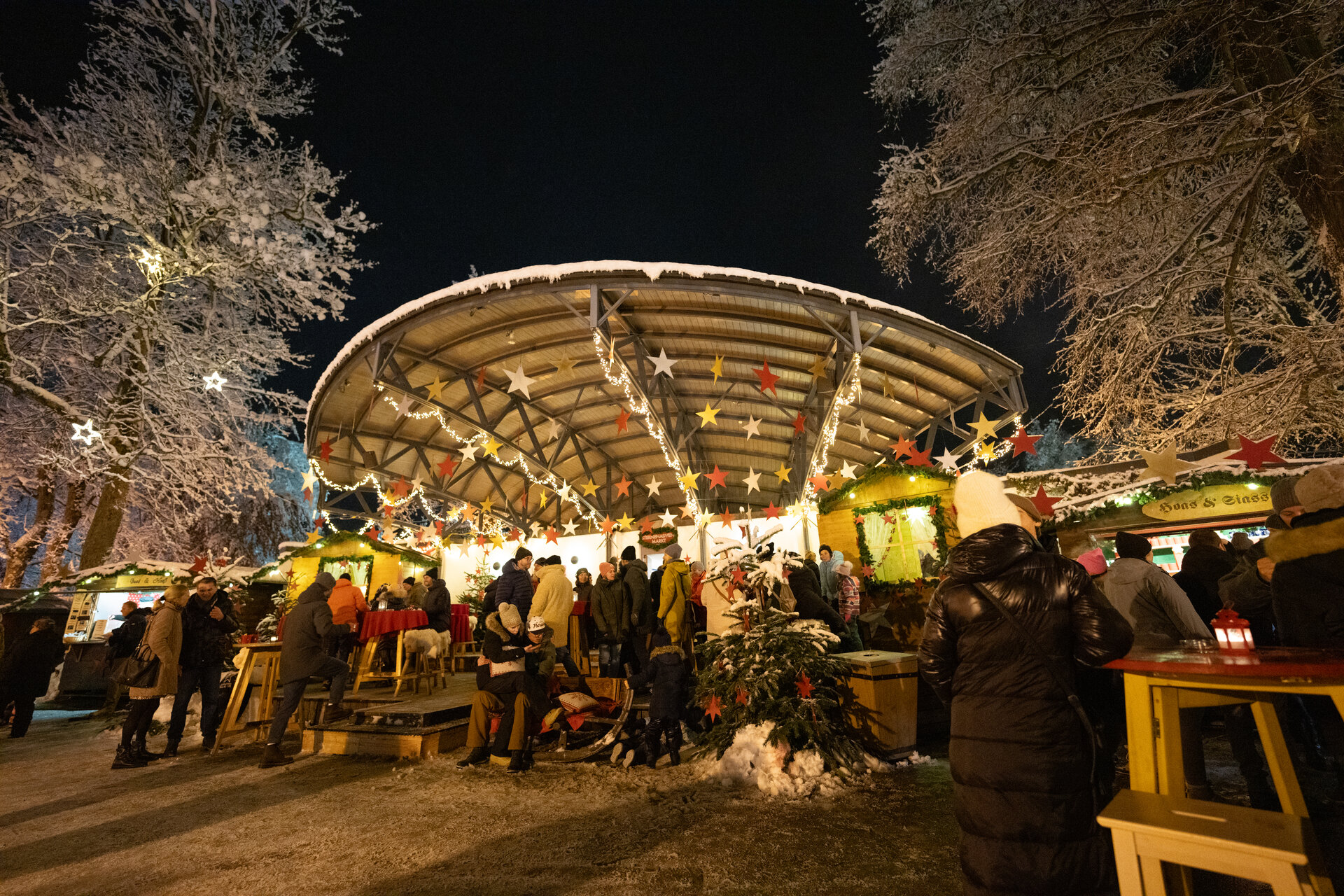
- Christmas to early January. The peak of the winter year.
- The February half-terms. Bavaria, Vienna, the Netherlands and Denmark set off one after another over several weeks. In the centre of town, this is the hardest period to find anything at a sensible price.
- Easter week. Shorter, but priced like the February peak.
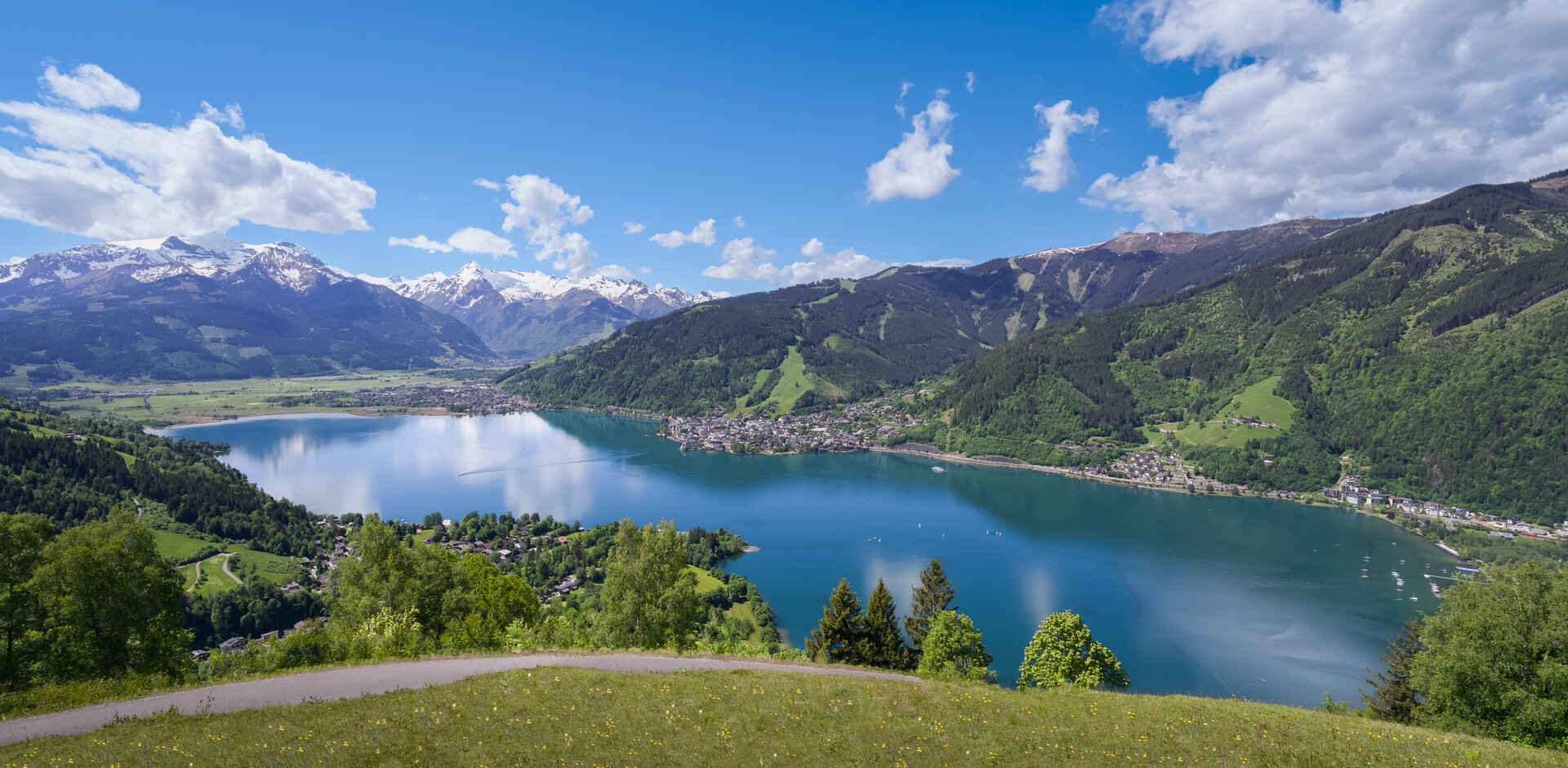
- July and August. The summer peak, driven by the lake — Lake Zell is warm enough to swim in from July into September, and the town is busiest for exactly those weeks.
The windows in between are where the same bed costs distinctly less:
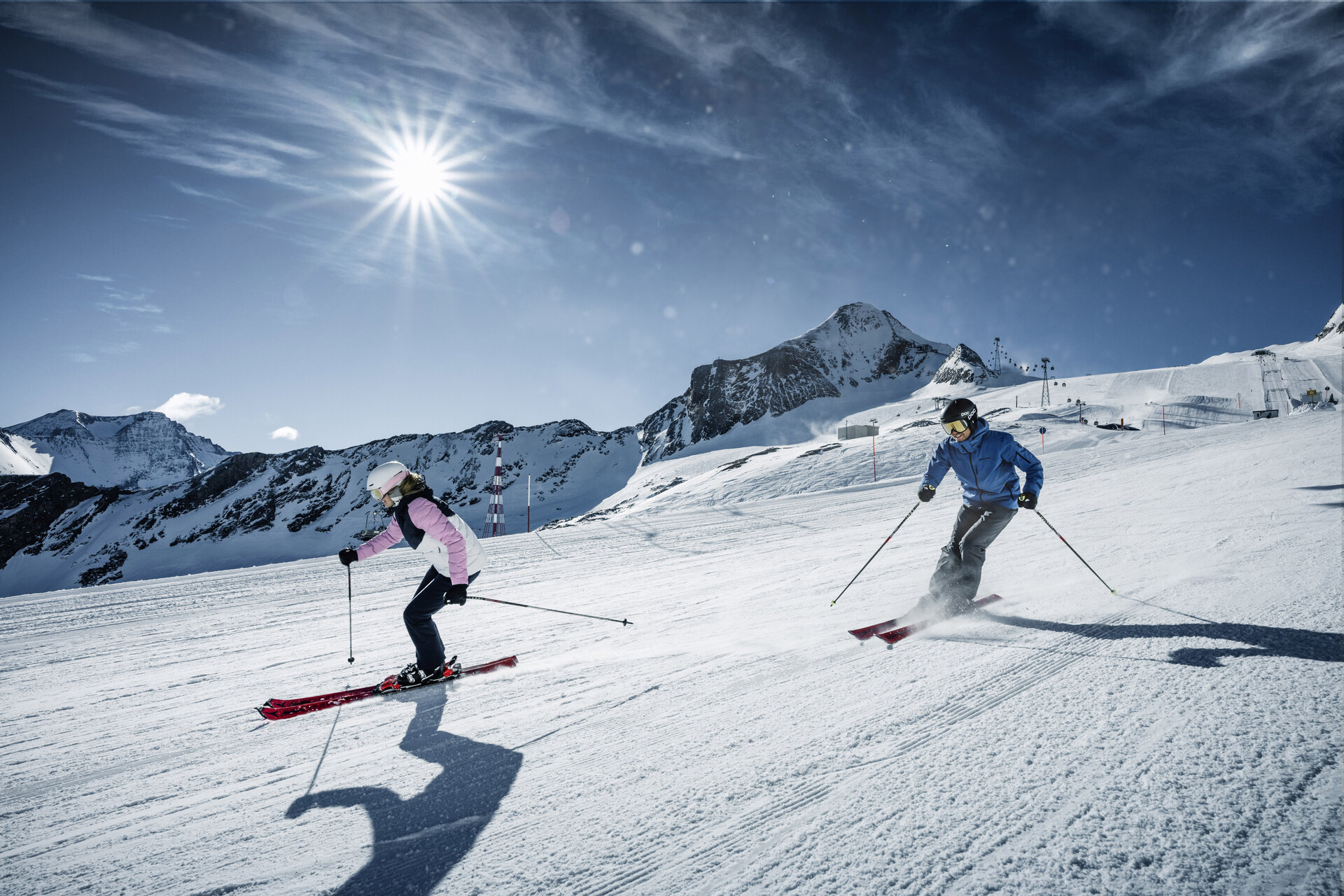
- The first half of December. Lifts running, Advent under way, prices not yet at Christmas level. The trade-off is snow cover in the valley: on the Kitzsteinhorn glacier that is a non-issue, on the Schmittenhöhe early in the season it sometimes is.
- The two or three weeks after Epiphany. In practice the best value of the whole winter: full operation, reliable snow, half-empty lifts, moderate rates.
- From mid-March. Long days, soft afternoons, cheap beds — in return the valley turns green and the skiing moves uphill.
- Late May, June, September and early October. The mountains are open, the lake is swimmable at the end of that range, and you are paying shoulder-season money for it.
- November. The cheapest month of the year, and the reason is honest: much of the region stands still.
If your dates are fixed by school holidays, skip ahead — the next section is the lever you still have.
Transparency notice: this article contains advertising links to Booking.com, DiscoverCars.com. If you book through them we receive a small commission — the price stays exactly the same for you.
Where you sleep: the price ladder
Roughly from most to least expensive, with what you actually give up at each step:
- Directly on the lake, Zell am See. The shortest walk to the water and the highest rates in the region. You are paying for the address.
- The town centre. Everything on foot — station, promenade, the Schmittenhöhe lifts by bus in minutes. Still expensive, but you need nothing else to get around.
- Schüttdorf — the southern edge of town, still Zell am See, noticeably cheaper. Bus and the local railway are on the doorstep. The most honest compromise in the region.
- Thumersbach — the eastern shore, facing the town across the water. The finest view of the Schmittenhöhe there is, quiet evenings, and every morning begins with a bus or a drive around the lake.
- Kaprun — its own village with its own price level, at the foot of the Maiskogel and the Kitzsteinhorn. Cheaper than central Zell am See without feeling remote. Its own prices are broken down on the Kaprun accommodation page.
- Bruck, Fusch, Piesendorf and Niedernsill — the real price breakers. In return your evenings happen somewhere nothing is happening. For a family that collapses into bed at eight that is no loss; for a couple who came for the promenade it is.
Whether the bottom of that ladder is usable depends entirely on the next section.
Grand Hotel Zell am See — the top of the ladder
A 131-room house with its own bathing access on the lake, a lake bar and an in-house brewery. One caveat worth asking about before you book: air conditioning is fitted only in some room categories, not throughout.
Check availabilityHotel-Garni Seestrand — two rungs down
A garni house on the eastern shore at Thumersbach: room and breakfast, no restaurant, no evening programme. What you give up is the position relative to the lifts — every ski day starts with a bus or a drive around the lake.
Check availabilityThe map is loaded from Stay22 only when you click. Doing so also loads Google Maps and discloses your IP address to those providers.
Transparency notice: this article contains advertising links to Booking.com, DiscoverCars.com. If you book through them we receive a small commission — the price stays exactly the same for you.
The Guest Mobility Ticket changes what "down the valley" costs
Since 1 May 2025, every guest in Zell am See-Kaprun receives the Guest Mobility Ticket from the first night — free, handed over by your host at check-in, digitally in the regional app or printed. It is valid all year, winter included, and covers public transport across the whole province of Salzburg: ÖBB trains, SVV regional buses, and the Pinzgauer Lokalbahn between Zell am See and Krimml. Children under six need no ticket at all.
That is what makes the cheap end of the ladder reachable. Piesendorf and Niedernsill sit on the Pinzgauer Lokalbahn; Bruck and Fusch are on the regional bus. You can stay there and reach Zell am See without a car.
Most ski buses are included too: by the tourist board’s own ski-bus page, the Guest Mobility Ticket is valid on line 660 between Zell am See and Kaprun and on lines 70, 71 and 680 around Zell am See. Only two feeder shuttles are the exception: line Z4 (Seespitz – areitXpress) and the zellamseeXpress shuttle (Viehhofen – Schönleitenbahn) take a valid Ski ALPIN CARD alone. Within Kaprun, the K line and the village bus are free for everyone regardless. In practice: even without a ski pass, train, regional bus and most ski buses get you a long way; only those two shuttles need the pass. If you are booking in Niedernsill, read the timetable before you confirm. The wider question of whether you need a car at all is answered here.
What is not in the price you compared
The rate you compare is rarely the rate you pay, and these items are why the apparently cheaper property often ends up level with the dearer one:
- Local tourist tax. Charged per person per night, usually not shown in the portal price. Kaprun has resolved a staged increase to € 3.50 from 1 November 2026 and € 4.00 from 1 November 2027; Zell am See sits in a similar range. What binds is what the municipality publishes and what appears on your invoice. For four people over six nights, expect a mid two-figure sum.
- Mobility levy. € 0.50 per person per night from age 15, running to April 2027 and rising to € 1.10 afterwards. This is what funds the Guest Mobility Ticket above — the rare surcharge that pays for itself if you use it.
- Final cleaning. Apartments only, charged once. On three nights it is the item that makes self-catering uneconomic; from five nights it barely registers.
- Minimum stays and fixed changeover days. In high season many houses require five or seven nights, often with Saturday arrival. Wanting Tuesday to Friday in February costs you twice: less choice and a higher nightly rate.
- Ski pass, rental and lessons. Nothing to do with your bed, and in winter by far the largest block of the budget. The detail is in the ski pass price breakdown.
Which category is actually cheaper
- Hotel garni or guesthouse. Room and breakfast, no restaurant. The classic way to afford a good house in a good position by eating dinner out. Works in Zell am See, where a restaurant is a walk away; works badly in a hamlet with no inn.
- Apartment or holiday flat. The biggest lever for families and groups — not because of the nightly rate but because of breakfasts and dinners. Four people, six days, self-catered, and you are several hundred euros apart. Count the cleaning fee in.
- Private rooms and farm stays. The cheapest thing that still includes breakfast, and the part of the market worst represented on the international portals. You will almost always need a car.
- Youth hostel. Zell am See has a year-round hostel directly on the lakeshore in Seespitzstraße, with en-suite rooms, a breakfast buffet, a ski room and rental on site. It takes families. For many travellers it is the cheapest sensible bed in the region.
- Half board. Sometimes a saving, sometimes not. Check whether the per-person surcharge is below what you would spend eating out, and whether you want to be at the table at half past six. With small children it is usually the better call; with teenagers, rarely.
Two of the options above — farm stays, and the cheaper villages down the valley — assume a car. If that is your plan, price the rental alongside the room rather than after it:
Compare rental carsWhere to search
Four routes exist, and the usual mistake is using only one of them.
| Channel | Strength | Weakness | Use it when |
|---|---|---|---|
| Large booking portals | Best overview, genuine reviews, free cancellation as the default | Shows almost only hotels and larger apartment houses | You are comparing and want cancellation open |
| The region’s own portal (booking.zellamsee-kaprun.com) |
Over 900 properties including private rooms, farm stays, hostels and campsites | No comparison beyond the region, fewer reviews | You are after the cheap categories the portals never show |
| Direct with the house | Negotiable on longer stays; cots, ski storage and special requests settled in one email | No comparison, stricter cancellation, deposit usual | You already know which house you want |
| Holiday-rental platforms | Widest choice of apartments and chalets | Cleaning fees visible only at the last step; fixed changeover days | You are four or more and want to cook |
The useful order: understand the market on a large portal, hunt the cheap categories on the regional one, then check the property’s own site before confirming — not because it is always cheaper, that myth is stubborn, but because it tells you what is actually included.
In short
Move your dates if you can; the second and third weeks of January and the shoulder months either side of summer are where the money is. If you cannot move them, move down the ladder — Schüttdorf and Thumersbach first, then Kaprun, then the villages down the valley, which the Guest Mobility Ticket makes reachable without a car, most ski buses included. Take an apartment if there are four of you. Search two channels, not one. And compare the total for the whole stay, tourist tax and cleaning included, rather than the nightly rate.
If you would rather be handed a shortlist than a method, the hotel recommendations do that by travel type. For winter specifically, staying cheaply in the ski season goes deeper, and Plan Your Trip covers everything either side of the booking.
Frequently Asked Questions
How much does accommodation in Zell am See cost?
There is no single figure, because the same room changes price by a factor of roughly two across the year. Your dates decide most of it: Christmas, the February half-terms, Easter week and July to August are the expensive windows, while November, the weeks after Epiphany, mid-March and the shoulder months either side of summer are markedly cheaper. Where you sleep decides the rest, from the lakefront at the top down to Bruck, Fusch, Piesendorf and Niedernsill at the bottom. The map on this page shows live rates for your own dates.
When is accommodation in Zell am See cheapest?
November is the cheapest month of the year, for the honest reason that much of the region stands still. For a stay where everything is open, the two or three weeks after Epiphany are the best value in winter, mid-March the next best, and late May, June, September and early October the best in the warm half of the year.
Is it cheaper to stay in Kaprun than in Zell am See?
Generally yes. Kaprun is its own village with its own price level and sits below central Zell am See, while still being at the foot of the Maiskogel and the Kitzsteinhorn. Cheaper again are Bruck, Fusch, Piesendorf and Niedernsill down the valley.
Do I pay tourist tax on top of the room rate?
Yes. Local tourist tax is charged per person per night and is usually not included in the price shown on a booking portal. Kaprun has resolved a staged increase to EUR 3.50 from 1 November 2026 and EUR 4.00 from 1 November 2027; Zell am See sits in a similar range. A mobility levy of EUR 0.50 per person per night from age 15 is added on top, running to April 2027 and rising to EUR 1.10 afterwards.
Can I stay outside Zell am See without a car?
Yes. Every guest receives the Guest Mobility Ticket free from the first night, valid all year across the province of Salzburg on OeBB trains, SVV regional buses and the Pinzgauer Lokalbahn between Zell am See and Krimml. Piesendorf and Niedernsill are on the Lokalbahn, Bruck and Fusch on the regional bus. It also covers most ski buses, such as line 660 between Zell am See and Kaprun; only the Z4 shuttle (Seespitz – areitXpress) and the zellamseeXpress shuttle from Viehhofen need a valid Ski ALPIN CARD.