Key facts at a glance
Austria has no state-run halal certification, so halal status is something you verify with each business rather than look up. Middle Eastern restaurants and grocers cluster along Loferer Bundesstrasse, Brucker Bundesstrasse and the town centre. Self-catering is the most reliable option, and Austrian supermarkets label ingredients in detail.
Part of our complete guide: Restaurants in Zell am See
Why we do not simply publish a list of halal restaurants
You will find plenty of websites offering a definitive list of halal restaurants in Zell am See. We checked several of them against each other in August 2026, and they disagree. Two different restaurants are currently listed at the same street address by two different directories, which means at least one of those entries is out of date. Several listings describe a restaurant’s halal status as resting on “verbal assurance” from staff, sometimes recorded years ago.
Restaurants in a seasonal resort town change hands often. A kitchen that sourced certified halal meat under one owner may not under the next, and nobody updates the directory. For a question as important as this one, an outdated list is worse than no list at all. So this guide gives you the geography, the vocabulary and the questions instead. Those stay true even when a particular restaurant does not.
How halal certification actually works in Austria
This is the single most useful thing to understand before you arrive. Austria has no government halal authority. There is no official register, no legally protected seal, and no state inspection of halal claims. Several private certification bodies operate in Austria and in neighbouring Germany, and a restaurant or butcher may hold a certificate from one of them, but displaying one is voluntary.
In practice this means three things:
- A sign in a window reading “halal” is a claim by the business, not a certified fact. It may well be accurate. It has simply not been verified by anyone official.
- The absence of a sign does not mean the food is not suitable. Many small businesses that source halal meat never advertise it.
- The only reliable method is to ask the business directly, specifically about the meat supply, and to decide for yourself how much weight the answer carries.
Imported meat is common in Austrian kitchens, and halal-slaughtered lamb and chicken are widely available through wholesalers. A restaurant sourcing halal meat is entirely normal here. It is the verification, not the availability, that requires effort.
Where the Middle Eastern food cluster is
Zell am See has hosted a substantial number of visitors from the Gulf states each summer for roughly two decades, and the food scene has responded. Reporting in The National in July 2025 named Ali Baba, Shiraz and Al Khalij among the town’s Middle Eastern restaurants, and Aydin Supermarket as a grocer stocking dates, halva, maamoul, spices, hummus and a range of halal products. That reporting also noted that more than a dozen shops and grocers in Zell am See and neighbouring Kaprun now cater to Middle Eastern visitors.
We are naming those businesses because a reputable newspaper named them on a specific date, not because we have independently confirmed their current certification or even their current opening. Treat it as a starting point dated July 2025, and verify on arrival.
Geographically, the pattern is stable and more useful than any individual name. Middle Eastern, Turkish and Persian kitchens and the associated grocers concentrate in three places: the Loferer Bundesstraße as you come into town from the north, the Brucker Bundesstraße corridor to the south, and the pedestrian centre around the Stadtplatz and Seegasse near the lake. Walking those three areas will show you what is actually trading this season, which no website can tell you reliably.
The questions worth asking, and how to ask them
Staff in Zell am See are thoroughly used to this conversation and will not find it unusual. Ask about the supply chain rather than asking “is it halal”, because the second question invites a reflexive yes.
Useful questions:
- Where do you buy your meat, and is it halal-slaughtered? — German: Woher beziehen Sie Ihr Fleisch, und ist es halal geschlachtet?
- Do you have a certificate from your supplier? — German: Haben Sie ein Zertifikat vom Lieferanten?
- Is the chicken and lamb halal, or only some dishes? — German: Sind Huhn und Lamm halal, oder nur einzelne Gerichte?
- Do you cook with wine or alcohol in the sauces? — German: Kochen Sie mit Wein oder Alkohol in den Saucen?
- Is the fryer used for pork as well? — German: Wird die Fritteuse auch für Schweinefleisch verwendet?
That last one matters more than people expect. A kitchen may source halal meat and still use one shared fryer for everything, including pork schnitzel. Whether that is acceptable is your judgement to make, but you cannot make it without asking.
Self-catering and the supermarkets
Many Gulf families in Zell am See stay in apartments rather than hotel rooms, and cook for themselves at least some of the time. This is the most reliable approach, and it is easier here than in most Alpine resorts.
The mainstream Austrian chains you will see are Billa, Spar and Hofer, with Lidl and Penny also present in the wider region. None of them is a halal shop, but all of them carry a great deal that is straightforwardly suitable: fresh produce, fish, eggs, rice, pulses, bread, and a good dairy range. Austrian supermarkets label ingredients thoroughly and in detail, which works in your favour.
The independent Turkish and Middle Eastern grocers are where you will find halal-labelled meat, and they are also where the familiar store-cupboard items are: proper rice varieties, dates, tahini, spice blends, flatbread and sweets. Their stock and their opening hours vary by season, and they are busiest in July and August.
Reading Austrian food labels
A few things regularly catch visitors out in Austrian shops. Ingredients are listed in German, but the words you need are few and quickly learned.
- Gelatine is listed as Gelatine and is usually porcine unless stated otherwise. It appears in sweets, gummy products, some yoghurts, desserts and capsules. Look for Rinder-Gelatine (beef) or products labelled vegetarisch.
- Rennet in cheese is Lab. Cheese made without animal rennet is often labelled mikrobielles Lab or vegetarisches Lab. Many Austrian hard cheeses use animal rennet.
- Pork is Schweinefleisch, and Speck means cured pork, which turns up in many traditional dishes including dumplings and salads.
- Alcohol appears as Alkohol, Wein, Rum or Weingeist, including in cakes, sauces and some flavourings and vanilla extracts.
- Lard is Schmalz, still used in some baked goods and traditional cooking.
Products labelled vegan avoid all of the above animal-derived issues at once, and the vegan range in Austrian supermarkets is now substantial. For many visitors that label is the fastest practical filter.
Eating on the mountain and by the lake
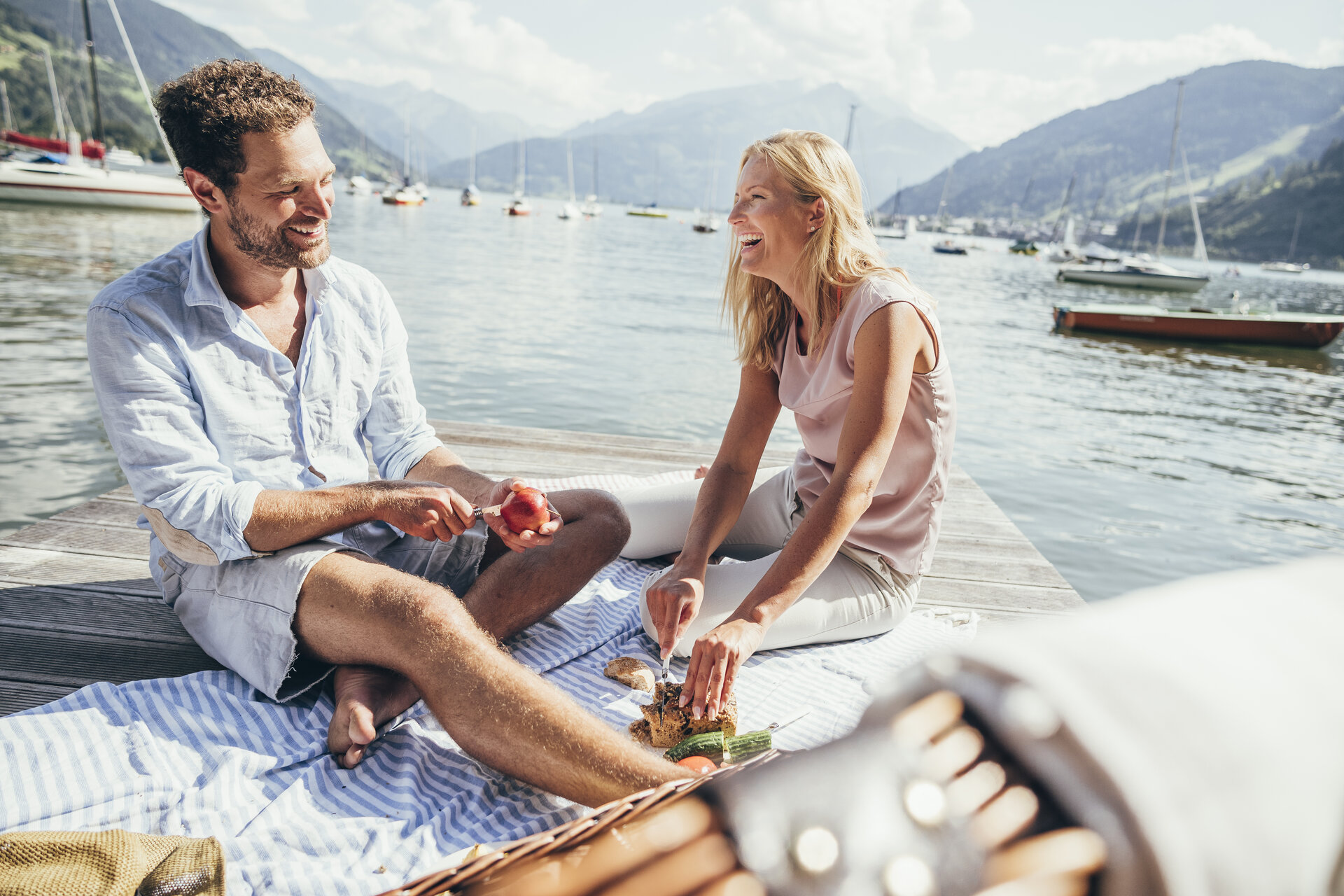
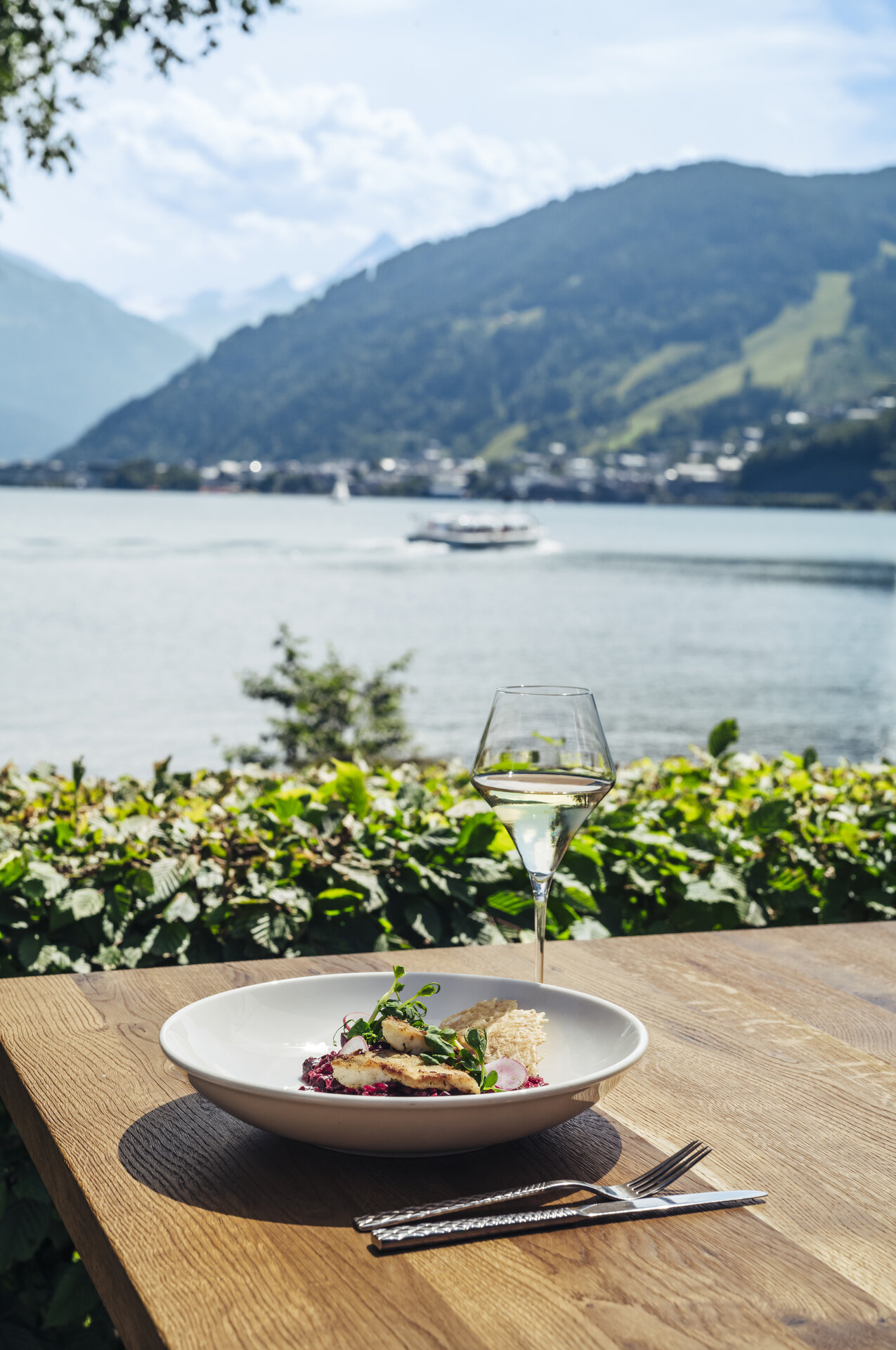
Mountain restaurants at the top of the cable cars, and the lakeside cafés, are generally traditional Austrian operations serving traditional Austrian food. Halal meat should not be assumed at any of them. This is not a problem if you plan a little: the reliable options on almost every Austrian menu are freshwater fish, cheese dumplings and cheese noodles (Kasnocken or Käsespätzle, though check the rennet question), potato dishes, salads, and the substantial range of sweet dishes such as Kaiserschmarrn and Apfelstrudel. Many families simply bring food up the mountain with them, which is entirely normal here.
You should also expect alcohol to be served in most Austrian restaurants, including family ones and mountain huts. Restaurants that do not serve alcohol at all exist in Zell am See but are the exception, and they are mostly within the Middle Eastern cluster described above. If an alcohol-free environment matters to you, it is worth asking when you book rather than on arrival.
A realistic plan for your first day
Arrive, and do the food shop before anything else. Find the nearest large supermarket for staples and produce, then walk one of the three streets described above to see which grocers and restaurants are trading this season. Ask two or three of them the supply-chain questions directly. Within an hour you will have a far more accurate picture than any directory can give you, and it will be current.
Your accommodation is also a genuinely good source. Hotels and apartment operators in Zell am See have been hosting Muslim guests every summer for twenty years, they know which kitchens currently source halal meat, and they have no reason to mislead you. Ask at reception.
If self-catering is your answer, book a unit with a kitchen
Everything above points the same way: a kitchen of your own removes the problem rather than managing it. That is a decision made at booking, not on arrival, and only some properties here offer it. The Kaprun side has the most — free-standing chalets with full kitchens sleeping up to eight, and apartment buildings with one-, two- and three-room units — while several family hotels have self-catering flats attached. Our guide to hotels and chalets on the Kaprun side lists which of them have a real kitchen rather than a kettle, and the family hotel guide covers the ones with apartments attached to a hotel.
Related guides
- Indoor activities in Zell am See-Kaprun — what to do when the weather turns
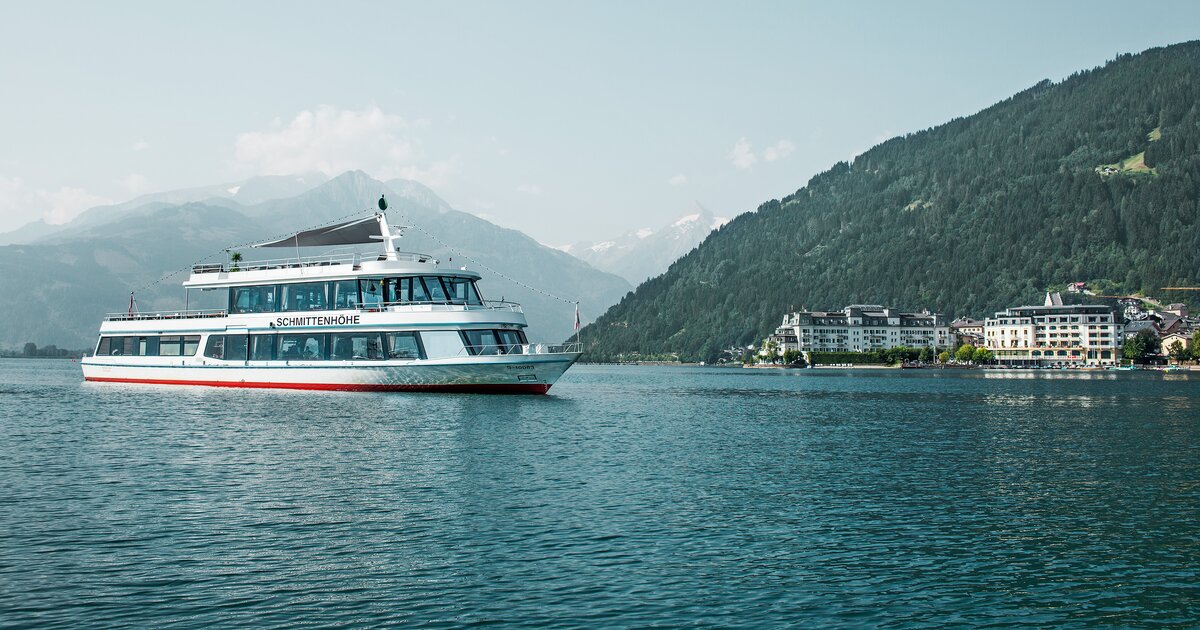
- Boat trips on Lake Zell — the lake cruises and how the season works
- TAUERN SPA Kaprun — the thermal spa in Kaprun
- The 10 most beautiful sights in Zell am See
- Prayer facilities around Zell am See — where to pray, and the Saalfelden mix-up
- Summer weather in Zell am See — what to expect and what to pack
- Shopping and city life in Zell am See — including the Sunday closing rule
- Family activities without hiking — cable cars, the lake and the spa
Researched and written in August 2026. Restaurant ownership, opening hours and halal sourcing change frequently in a seasonal resort. Everything in this guide that concerns a specific business should be re-checked on arrival — the methods and vocabulary will keep working regardless.
Frequently Asked Questions
Is there certified halal food in Zell am See?
There is no state halal certification in Austria, so no official register exists. Private certifiers operate, and some businesses hold their certificates, but displaying one is voluntary. The reliable approach is to ask the business directly about its meat supplier rather than looking for a seal.
Which supermarkets in Zell am See sell halal products?
The mainstream chains, Billa, Spar and Hofer, are not halal shops but carry plenty that is suitable, including produce, fish, eggs, rice, pulses and dairy. Halal-labelled meat is generally found at the independent Turkish and Middle Eastern grocers in town.
How do I check whether a restaurant is really halal?
Ask about the supply chain rather than asking whether the food is halal. Useful questions cover where the meat is bought and whether it is halal-slaughtered, whether the supplier provides a certificate, whether alcohol is used in sauces, and whether the fryer is shared with pork.
What German words matter on food labels?
Gelatine is usually porcine unless marked Rinder-Gelatine. Lab means rennet, with mikrobielles Lab indicating a non-animal source. Schweinefleisch is pork and Speck is cured pork. Alkohol, Wein and Weingeist indicate alcohol. Schmalz is lard. Products marked vegan avoid all of these at once.
Do mountain restaurants in Zell am See serve halal food?
Mountain and lakeside restaurants are generally traditional Austrian operations, and halal meat should not be assumed. Reliable options on most menus include freshwater fish, cheese and potato dishes, salads and sweet dishes such as Kaiserschmarrn. Many families also bring their own food up the mountain.