
Key facts at a glance
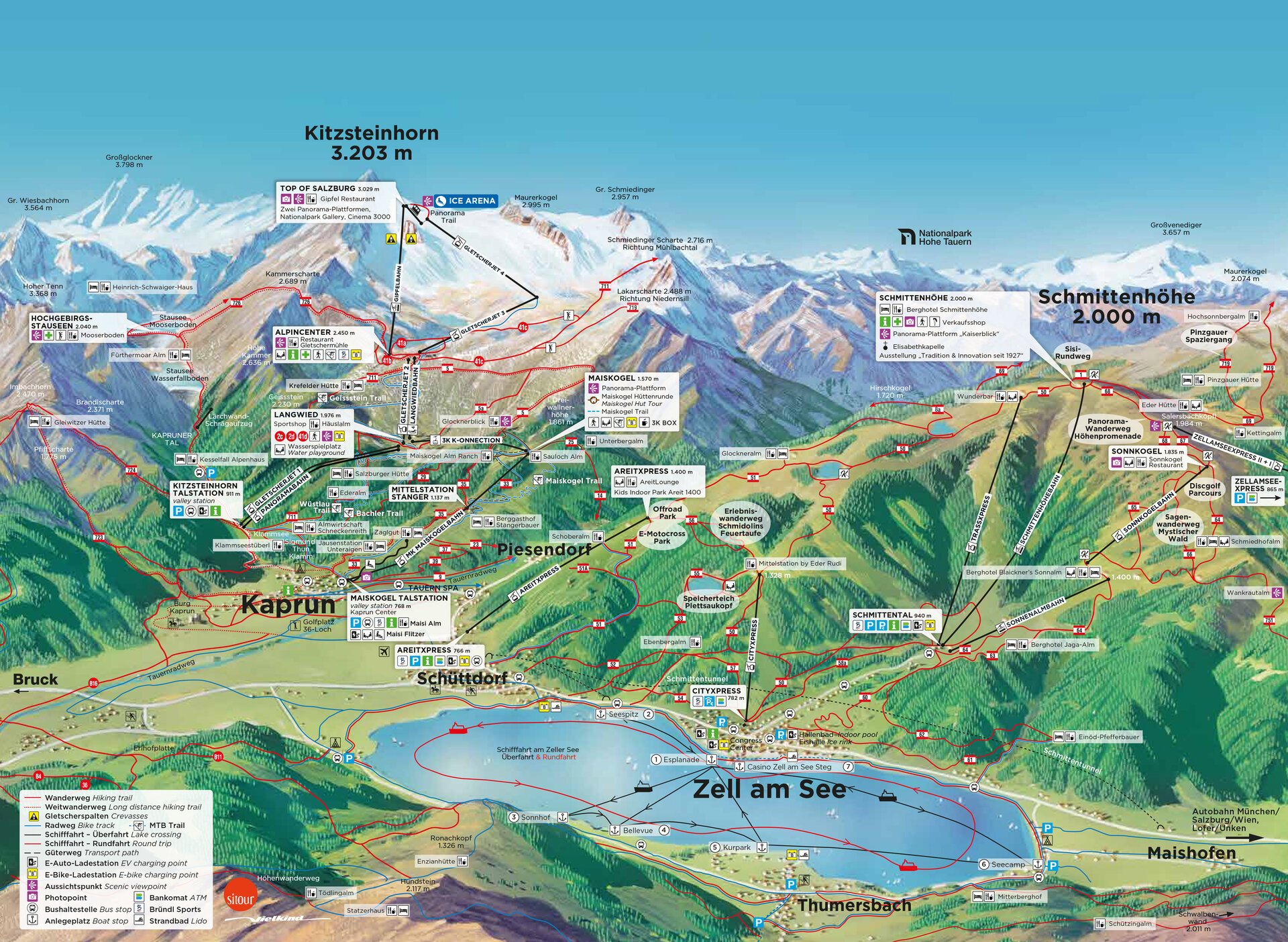
Five spots cover the region: the lakeside promenade and Thumersbach for the mirrored postcard view, the Schmittenhöhe for a panorama of 30 three-thousanders, the Kitzsteinhorn at 3,029 m for glaciers, and the Kaprun reservoirs for turquoise water against dam walls. Still, windless mornings give the best reflections.
| Spot | Altitude | Best light | Getting there | Subject |
|---|---|---|---|---|
| Lakeside promenade and Elisabethpark | 750 m | First light, windless morning | On foot from the town centre | The Hohe Tauern wall mirrored in Lake Zell |
| Thumersbach, eastern shore | 750 m | Early morning, still water | Lakeshore path or boat | The classic postcard: town on the water, Schmittenhöhe behind |
| Schmittenhöhe | 1,965 m | Clear day, midday to late afternoon | Schmittenhöhebahn cable car | More than 30 three-thousanders out to the Grossglockner |
| Kitzsteinhorn, Gipfelwelt 3000 | 3,029 m | Any clear day, works year-round | Glacier lifts from Kaprun | Glaciers and snow-capped peaks |
| Kaprun high mountain reservoirs | About 2,040 m | Midday, when the water reads turquoise | Lifts and tunnel buses, summer only | Dam walls against the high-alpine backdrop |
Zell am See-Kaprun is one of the most photogenic corners of Austria: a deep-blue lake, rugged three-thousanders and the eternal ice of the Kitzsteinhorn all sit close together. Here are the most beautiful photo spots in the region — from the classic lake view to the glacier panorama — plus tips for the best light.
Interactive map
The map is loaded from Mapbox only when you click. Doing so discloses your IP address to Mapbox (USA) and stores an identifier in your browser.
Lakeside promenade & Elisabethpark
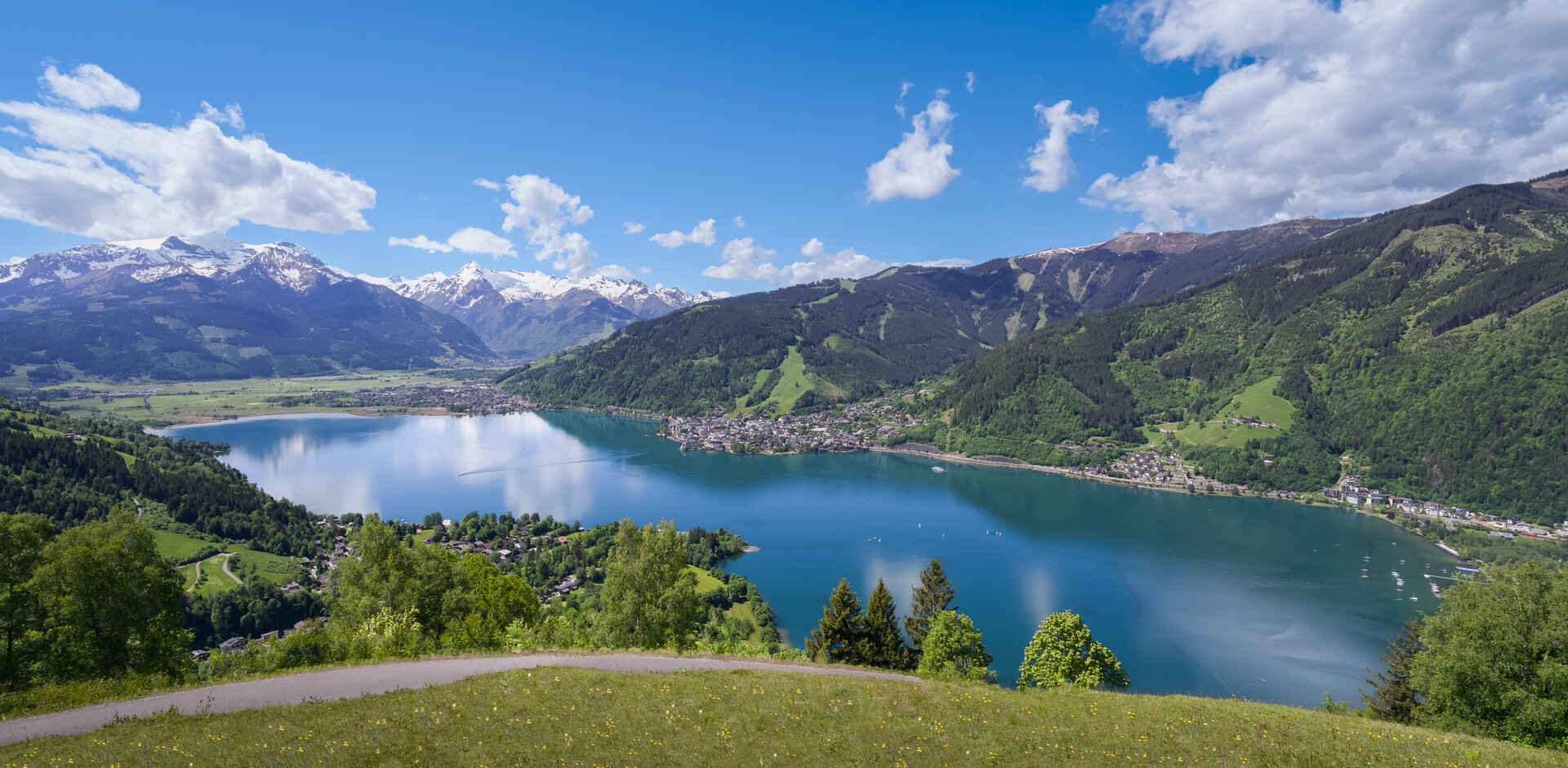
The easiest and at the same time most beautiful photo spot is right in town: from the lakeside promenade and Elisabethpark you look south down the crystal-clear Lake Zell at the wall of the Hohe Tauern that closes its far end — the Hoher Tenn and the Schneespitze on the skyline. On a windless morning the mountains mirror in the water — a perfect postcard scene, especially at first light.
Thumersbach: the postcard view
On the opposite shore in Thumersbach you get the classic view back towards Zell am See — the town on the waterfront with the Schmittenhöhe rising behind it. This is where the finest reflections appear when the lake lies still. The spot is easy to reach on the lakeshore path or by boat.
Schmittenhöhe: a panorama of 30 three-thousanders
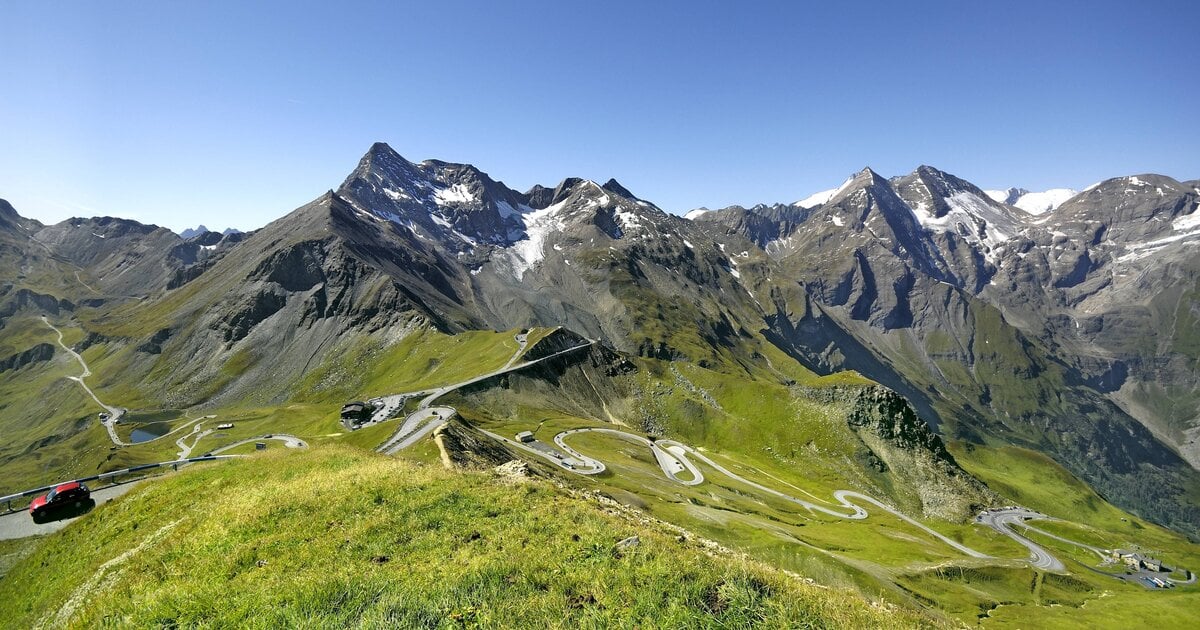
If you are after the big mountain panorama, take the cable car up the Schmittenhöhe. From the summit the view stretches across more than 30 three-thousand-metre peaks all the way to the Grossglockner. The famous Trass panorama is one of the most impressive viewpoints in the Alps — ideal on a clear day.
Kitzsteinhorn: Gipfelwelt 3000
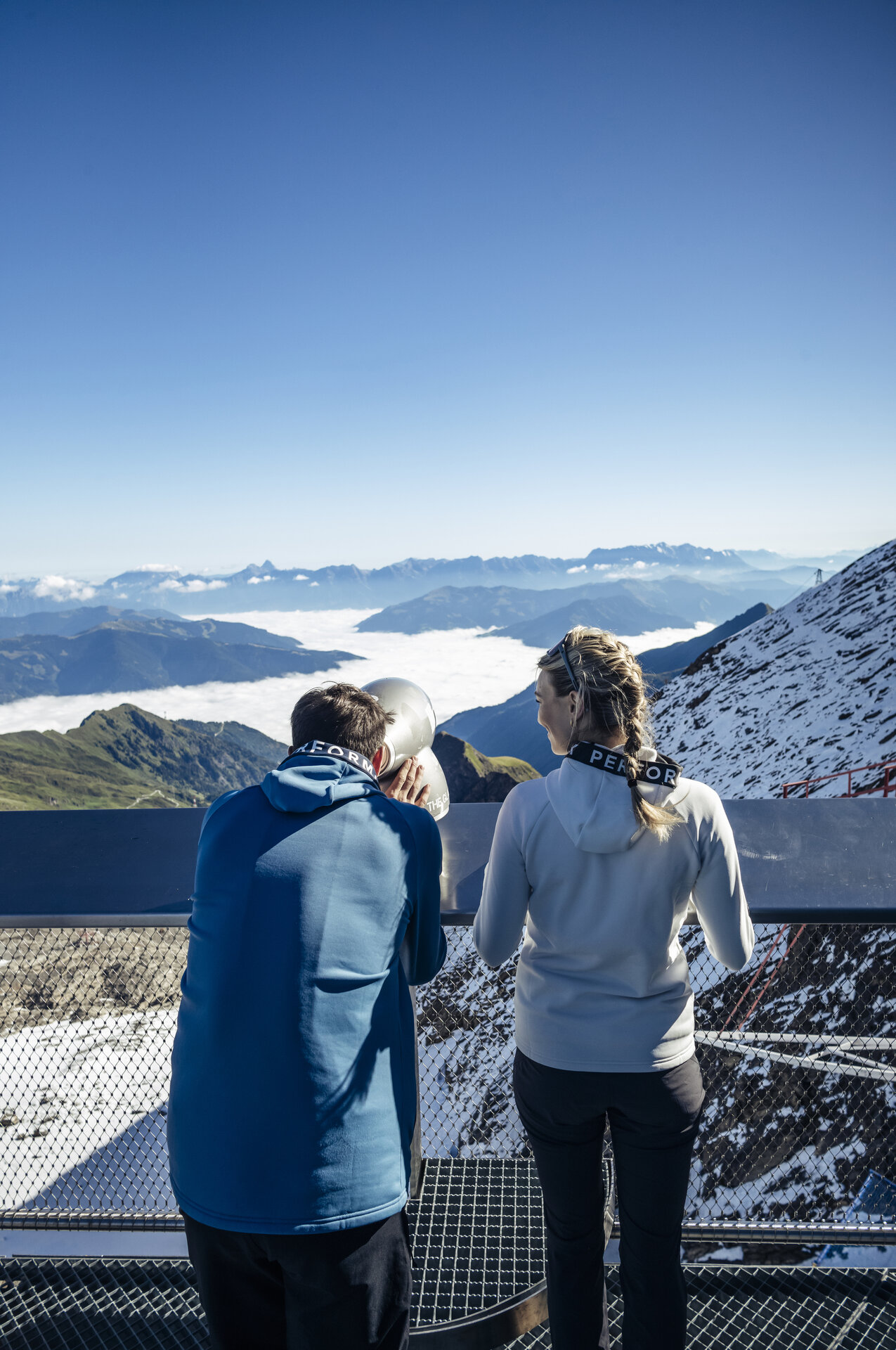
On the Kitzsteinhorn the glacier lift carries you up to the Gipfelwelt 3000. From the “Top of Salzburg” viewing platform at 3,029 metres you can photograph glaciers, snow-capped peaks and, on clear days, an endless sea of mountains. A spot that works all year round.
The Kaprun high mountain reservoirs
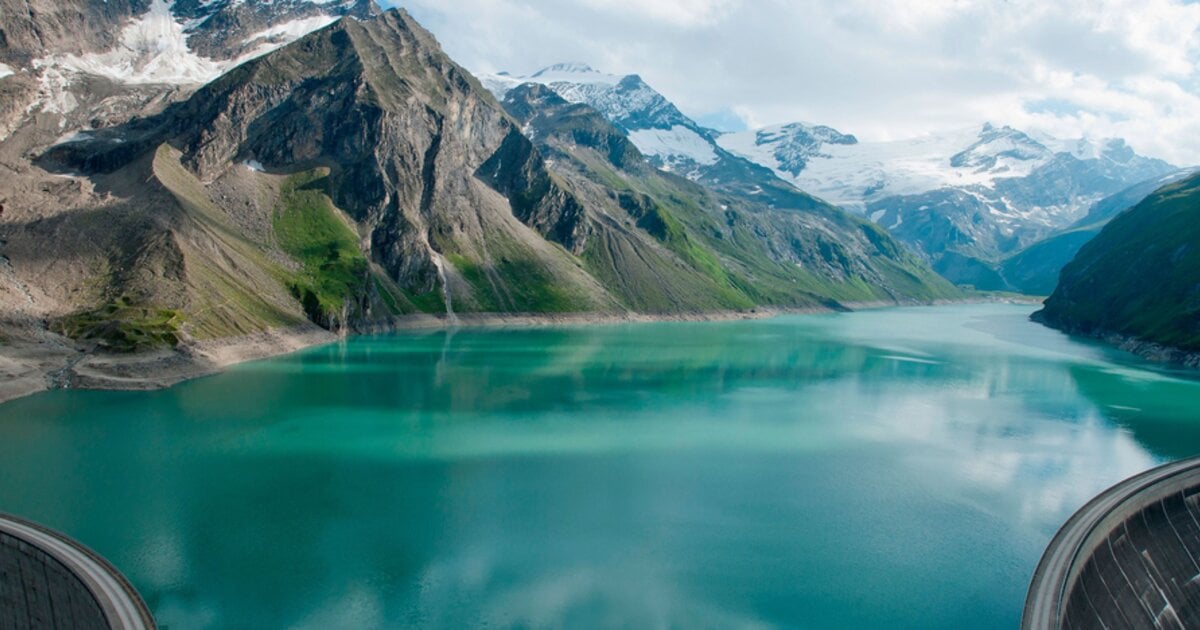
High above the Kaprun valley, the high mountain reservoirs glow turquoise between the peaks at around 2,040 metres. The mighty dam walls and the water against the alpine backdrop make a spectacular subject — reachable via the lifts and tunnel buses in summer.
Tips for the best photos
- Golden hour: Shortly after sunrise and before sunset the light is softest — ideal for lake reflections.
- Use the calm: For clear reflections in Lake Zell, the early morning is best, when the water is still.
- Plan for altitude: It is considerably cooler on the Schmittenhöhe and Kitzsteinhorn — don’t forget warm clothing.
From the lake to the glacier, Zell am See-Kaprun offers subjects for every season. Find more ideas in our summer adventures and the Zell am See-Kaprun travel guide.
Frequently Asked Questions
Where is the best photo spot in Zell am See?
The classic postcard view works from Thumersbach on the eastern shore and from the lakeside promenade: a calm lake, the town on the water and the Schmittenhöhe behind it. Early morning gives the strongest reflections.
When is the best light for photography here?
The golden hour just after sunrise and before sunset. For lake reflections you want a windless early morning while the water is still; for the mountain panoramas you want a clear day with good visibility.
Where can you photograph Lake Zell with the mountains reflected?
From Thumersbach on the eastern shore, and from the lakeside promenade and Elisabethpark in town. Both need a windless morning, because any breeze breaks the reflection. Thumersbach gives you the town in the frame as well as the mountains.
What is the best viewpoint for the mountain panorama?
The Schmittenhöhe at 1,965 metres, reached by cable car. The view takes in more than 30 peaks above 3,000 metres as far as the Grossglockner, and the Trass panorama is among the most impressive viewpoints in the Alps.
Can you photograph glaciers in Zell am See-Kaprun?
Yes, from the Gipfelwelt 3000 viewing platform on the Kitzsteinhorn at 3,029 metres. The glacier lifts run year-round for sightseeing, so it is one of the few spots here that works in any season.
Do you need a drone for good photos here?
No. All five spots in this guide are ground-level and reachable by lift, boat or on foot. Austria also regulates drone flying, and much of this region sits near a national park boundary, so check the current rules before you fly anything.
What should you bring for photography at altitude?
Warm clothing above all. It is considerably colder on the Schmittenhöhe and the Kitzsteinhorn than at the lake, roughly half a degree per 100 metres of ascent, which leaves the glacier around 14 degrees cooler than the shore you started from.