Key facts at a glance
The ski pass is a product family, not a single price. The Ski ALPIN CARD (Schmittenhöhe, Kitzsteinhorn, Skicircus, around 400 piste kilometres) only pays off from roughly four to six ski days and only with a car or ski bus. For weekend trips a single-area pass is almost always cheaper. Prices are dynamic: the time of purchase, the season and the day of the week determine the amount, and buying in advance reliably saves money. All figures here are explicitly approximate ranges as of July 2026; only the lift companies own tariffs are binding.
Part of our complete guide: Zell am See–Kaprun in Winter: Ski Holidays & Winter Magic
In short: the ski pass in Zell am See-Kaprun is not a single product but a product family, and that is exactly where most price comparisons fail. If you only ski the Schmittenhöhe or only the Kitzsteinhorn, you do not need the big Ski ALPIN CARD. If you want both mountains plus the Skicircus Saalbach Hinterglemm Leogang Fieberbrunn, it works out considerably cheaper than separate passes. On top of that, dynamic, time-dependent pricing has applied for some years: the same ski day costs noticeably less bought online in advance than spontaneously at the ticket office. This article deliberately explains the logic behind the tariffs rather than playing at being a price list, since binding figures only ever come directly from the lift companies.
The product landscape: three ski pass worlds in one region
In skiing terms Zell am See-Kaprun is not a single unit but an association of independent lift companies, each with its own tariffs:
- Schmittenhöhe (around 1,965 m), the classic local mountain directly above Zell am See. Broad descents, plenty of forest, valley runs down into the town. Details on the mountain itself are in the article on the Schmittenhöhe.
- Kitzsteinhorn and Maiskogel, the glacier ski area above Kaprun, top station at 3,029 m, reachable continuously from the centre of Kaprun since the K-ONNECTION was built. How the pistes are distributed there is set out in the piste and glacier guide for Kaprun.
- Skicircus Saalbach Hinterglemm Leogang Fieberbrunn, the large neighbouring area in the Glemmtal, around 30 to 40 minutes away by car.
The Ski ALPIN CARD is the combined pass across all three areas and brings around 400 piste kilometres onto one card. It is sold both as a day ticket and as a multi-day pass from two consecutive days upwards.
ALPIN CARD or single area: who really needs what?
The honest answer: most guests do not need it. The supplement over a single-area pass is manageable, but it only pays off if you actually use it.
- A single Schmittenhöhe pass is enough if you are staying in Zell am See, have no car and are well served by the nearly 80 piste kilometres on the local mountain. Typical for families with smaller children and for anyone who finishes the ski day at 3pm.
- A single Kitzsteinhorn pass is the choice for snow reliability in December and spring, for freeriders, and for anyone to whom altitude matters more than piste kilometres.
- The Ski ALPIN CARD pays off in practice from about four to six ski days, and only if you are mobile. Without a car or a willingness to use the ski bus the Skicircus portion goes unused, and then you are paying for kilometres you never see.
Rule of thumb: a weekend trip is almost always cheaper with the single area. From a full holiday week with changing weather the combined pass becomes interesting, because you can switch to the glacier when there is fog in the valley and into the Glemmtal when it is stormy on the glacier.
Why the same ski day costs different amounts
The Salzburg lift companies have, like almost all large Austrian ski areas, moved to time-dependent pricing. Concretely that means:
- The time of purchase counts, not just the ski day. Booking in autumn for February costs less than booking the evening before at your hotel, and considerably less than queuing at the lift ticket office.
- The season counts. The second half of January and March are noticeably cheaper than Christmas, New Year and the February half-term weeks.
- The day of the week counts for some products too: Sunday to Friday tends to be quieter and cheaper than Saturday, the main arrival day.
This is not a trick but capacity management. For you it simply means the ski pass is the one item in a ski holiday where booking early reliably saves money, unlike accommodation or ski hire where early-booking discounts fluctuate more. Further approaches to saving in the region are in our article Zell am See-Kaprun on a budget.
Multi-day tapering: why 6 days is cheaper than 3 times 1 day
Multi-day passes are not calculated linearly. The first day is the most expensive and each additional day costs less. In practice the daily average of a 6-day pass is roughly 20 to 30 per cent below the price of a single day ticket.
Two things follow that many people overlook:
- If you are skiing five days anyway, the sixth day is almost always the cheapest ski day of the week, so it is worth taking rather than planning a rest day and buying a day ticket later.
- Multi-day passes are tied to consecutive days. A break day in the middle costs you the discount. If you want to plan a rain or rest day, put it at the beginning or the end; ideas for that are under winter activities without skiing.
Tariff groups and age limits: the principle
The lift companies work not with your age at the time of travel but with years of birth. So the tariff page does not say a phrase like children up to 15, but gives a specific year. That matters, because a child whose birthday falls in January stays in the same category for the whole season.
The usual tiering takes this form:
- Small children under about six: usually free or a symbolic amount, often only when accompanied by a paying adult.
- Children: roughly half the adult rate.
- Young people up to about 18: an intermediate rate, frequently around 75 to 80 per cent of the adult price.
- Seniors: in Salzburg usually from a year of birth around 60 to 65, mostly at youth-rate level. Photo ID is required at the ticket office.
On top of that come time-limited promotions. On the Schmittenhöhe past winters have included heavily discounted childrens Saturdays, and there are family and promotional days on individual dates. These promotions change from season to season and are not guaranteed, so check before you travel. What else speaks for families is in our family itinerary.
The extra costs that get lost in ski pass comparisons
If you only compare ski pass prices you will regularly underestimate the daily budget. These items come on top:
- Keycard deposit: a one-off deposit in the low single-digit euro range (as of July 2026), refunded when you return the card at a machine or the ticket office. The exact amount is set by the lift companies and published in their tariff conditions on schmitten.at, kitzsteinhorn.at and alpincard.at. Not a real cost factor, but a surprise at the counter.
- Ski depot at the base station: roughly 5 to 10 euros per day, cheaper with weekly packages. If you are staying in town and using the ski bus, it saves the daily carrying.
- Ski hire: depending on category, approximately 25 to 50 euros per day for adults, considerably less for children. Weekly prices are almost always the better sum.
- Ski lessons: group courses for children come to approximately 60 to 90 euros per day, private lessons a multiple of that.
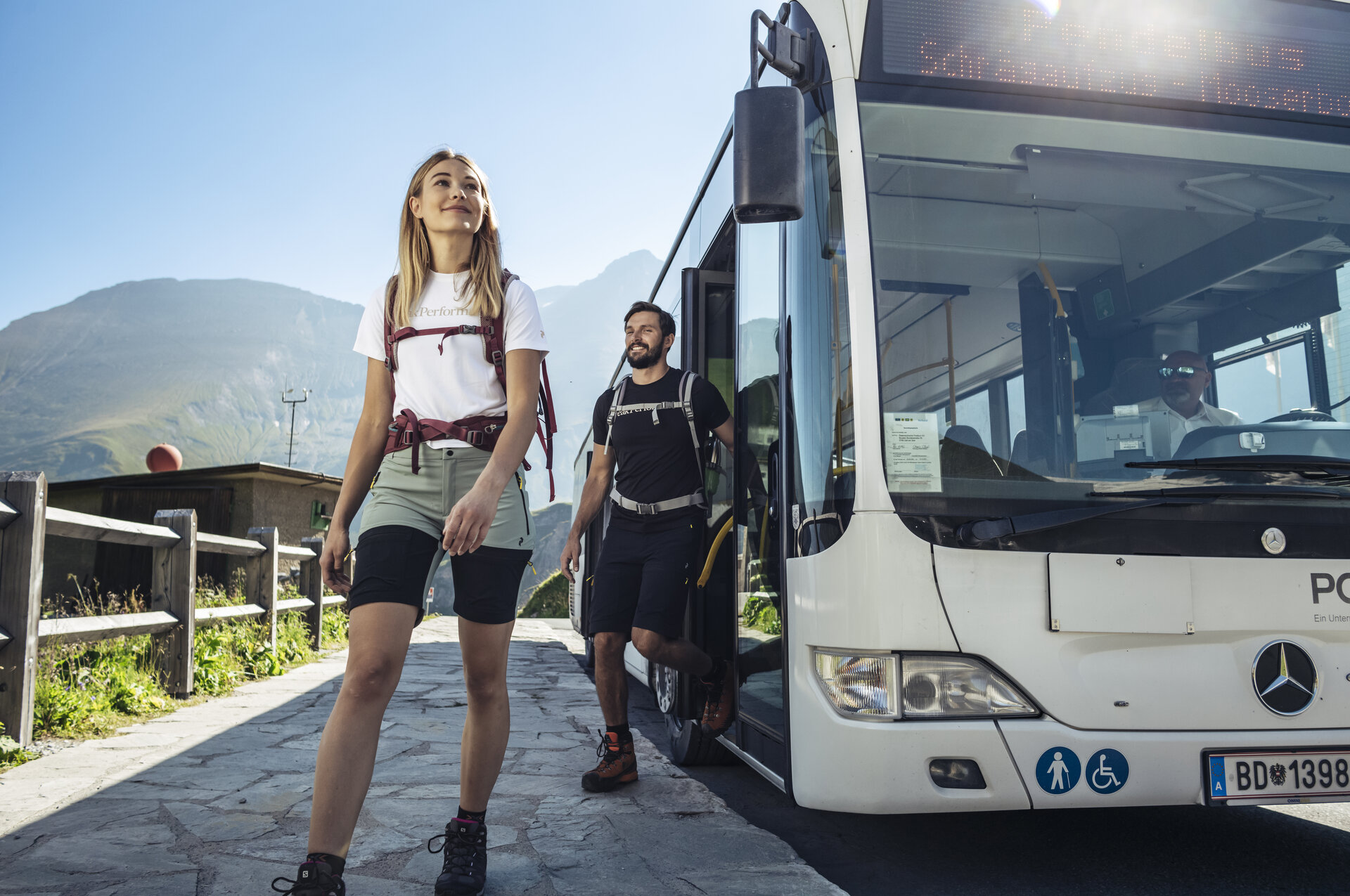
- Parking: at the base stations now largely chargeable or time-limited. The ski bus is generally included with the guest card and is usually the better choice.
Reckon realistically with a noticeable supplement on the bare ski pass once hire and lessons are added; for a family that can nearly double the budget. Plan that buffer in and there will be no nasty surprises. An inexpensive alternative for individual days, incidentally, is cross-country skiing in the region, where the trails are largely free.
On the order of magnitude, and the necessary disclaimer
So that you can calculate at all: an adult day ski pass in a top Salzburg ski area has recently been roughly in the region of approx. 65 to 80 euros, and a 6-day pass roughly in the region of approx. 330 to 400 euros. The Ski ALPIN CARD sits above each. These are orders of magnitude for your travel budget, not tariffs.
Important: all figures in this article are explicitly approximate ranges as of July 2026 and serve only as rough orientation. Because of dynamic pricing there is in any case no single correct price for the 2026/27 season; the actual amount depends on the time of purchase, the date and the product. Only the lift companies own tariffs are binding: schmitten.at for the Schmittenhöhe, kitzsteinhorn.at for the Kitzsteinhorn and Maiskogel, and alpincard.at for the Ski ALPIN CARD, each in the official ticket shop. Please never book on the basis of the figures here, but always on the basis of the current tariff page.
If you are planning the winter holiday more broadly, covering the journey, accommodation, ski buses and a bad-weather programme, the overview is in our winter guide for Zell am See-Kaprun.
Frequently Asked Questions
Do I really need the Ski ALPIN CARD for Zell am See-Kaprun?
In most cases no. In practice it only pays off from about four to six ski days, and only if you are mobile. Without a car or a willingness to take the ski bus into the Glemmtal, the Skicircus portion goes unused. For a weekend, or for families with smaller children, a single pass for the Schmittenhöhe or the Kitzsteinhorn is almost always the better sum.
Why does the same ski day cost different amounts?
Because the Salzburg lift companies, like almost all large Austrian ski areas, use time-dependent pricing. What matters is the time of purchase (early online is cheaper than at the lift ticket office), the season (the second half of January and March are cheaper than Christmas and the February half-term) and in part the day of the week. That is capacity management, not chance.
From when is a multi-day pass worth it versus day tickets?
Practically immediately. Multi-day passes are calculated on a sliding scale: the first day is the most expensive and each additional day costs less. The daily average of a 6-day pass is roughly 20 to 30 per cent below that of a single day ticket. Important: the days must be consecutive, so put a rest day at the start or the end, not in the middle.
How do the child and youth rates work?
The lift companies calculate by year of birth, not by age on the day of travel, so the tariff page states a specific year. Small children under about six usually ride free or for a symbolic amount, children pay roughly half, and young people up to about 18 pay around 75 to 80 per cent of the adult rate. There are also changing promotions such as discounted childrens Saturdays on the Schmittenhöhe, but these are not guaranteed.
What costs come on top of the ski pass?
A keycard deposit (a low single-digit euro deposit, refunded when you return the card), a ski depot at the base station (roughly 5 to 10 euros per day), ski hire (approximately 25 to 50 euros per day for adults), ski lessons (childrens group courses approximately 60 to 90 euros per day) and parking at the base stations. The ski bus is usually included with the guest card and is often the better choice than the car.
Where do I find the binding prices for 2026/27?
Only directly from the lift companies in their official ticket shops: schmitten.at for the Schmittenhöhe, kitzsteinhorn.at for the Kitzsteinhorn and Maiskogel, and alpincard.at for the Ski ALPIN CARD.